Learn & Explore/Species/Sea Turtles
Sea Turtles
Discover Hawai‘i’s sea turtles, and learn how conservation protects these iconic species and their ocean home.
Sea Turtles
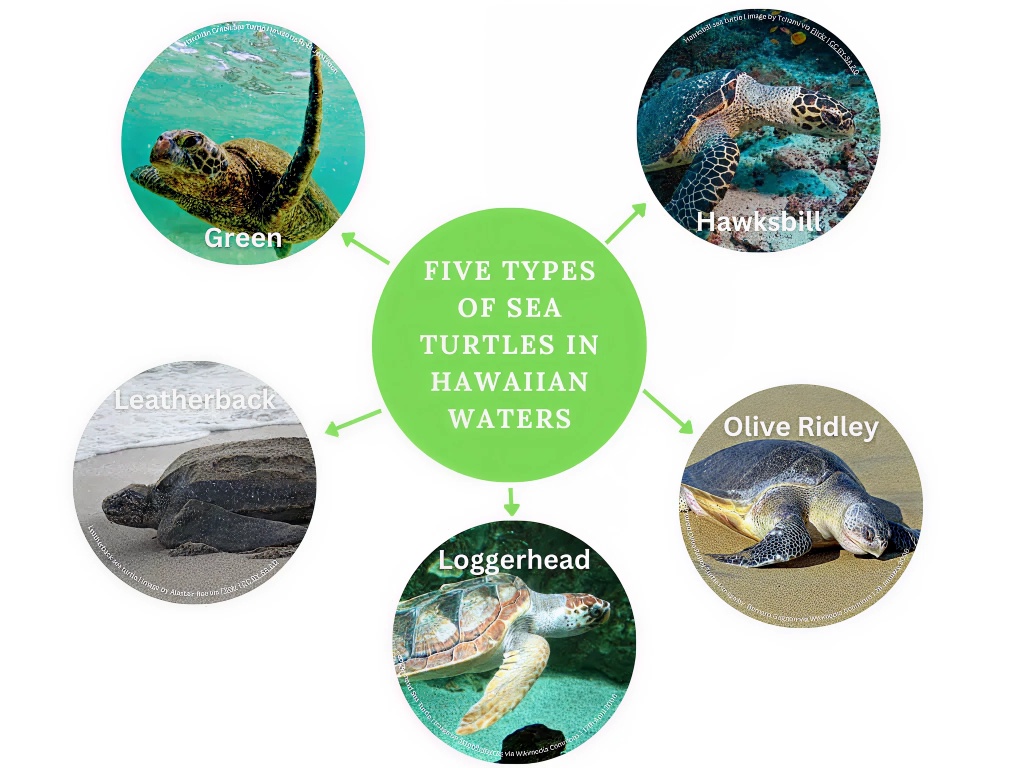
Sea turtles have been around since the time of the dinosaurs. It’s estimated that the first marine turtles existed 120 million years ago. Now, there are seven different species of sea turtles throughout the world. These reptiles, which breathe air, are found worldwide in tropical and subtropical ocean waters. Five of these sea turtle species inhabit Hawaiian waters: the green (honu, or Chelonia mydas), hawksbill (honu‘ea, ʻea or Eretmochelys imbricata), leatherback (Dermochelys coriacea), loggerhead (Caretta caretta), and olive ridley (Lepidochelys olivacea).
The green sea turtle or “honu” is the most commonly encountered sea turtle species on reefs (and beaches) in Hawaiʻi. Hawksbills or “honu ʻea” (or sometimes called ʻea) are the second most common, however they are rarely observed due to their low population numbers. Leatherbacks, loggerheads, and olive ridley sea turtles are rarely seen in the nearshore coastal waters, but they may be seen further offshore in pelagic waters, primarily outside of state jurisdiction (which extends three miles seaward from the Hawaiian Archipelago.
All sea turtles in Hawai‘i are protected by the Endangered Species Act (ESA) and additionally protected by Hawai‘i Revised Statutes Chapter 195D (HRS) and Hawai‘i Administrative Rules (HAR) 13-124. Globally, their levels of protection vary by species, country, and the various subpopulations of each species.

Green Sea Turtle
Hawaiian name: Honu
Scientific name: Chelonia mydas
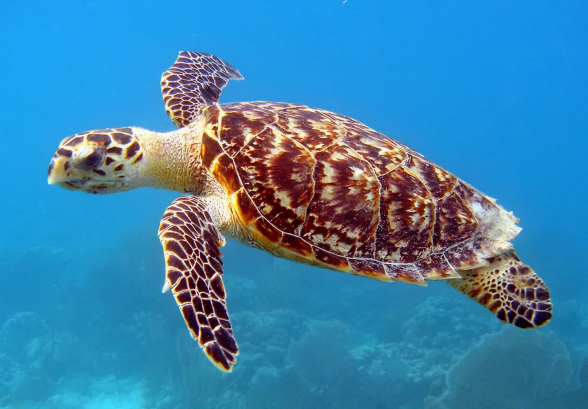
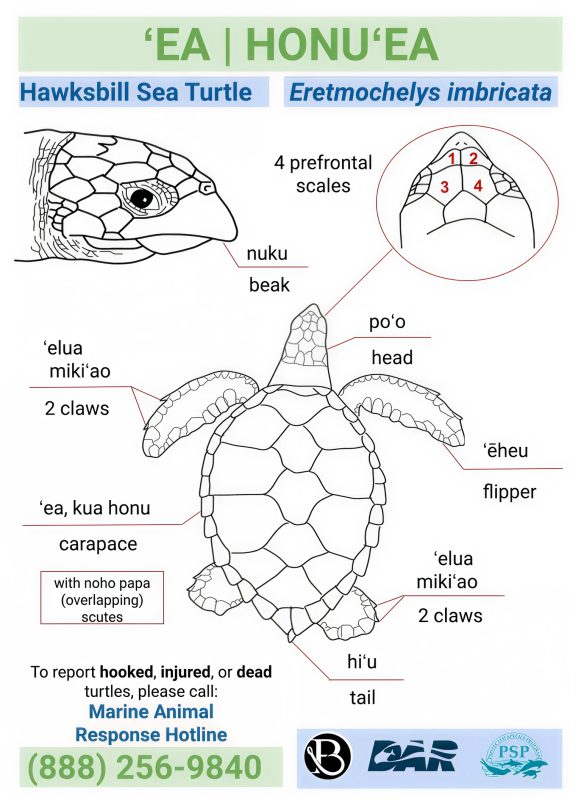
Hawksbill Sea Turtle
Hawaiian name: Honu ʻea (or ʻea)
Scientific name: Eretmochelys imbricata
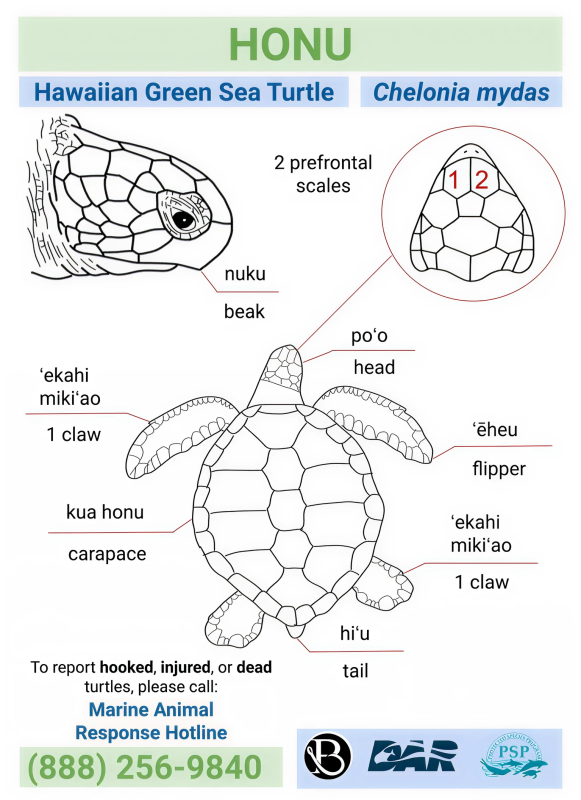
Hawksbill or Green? How to Tell the Difference
| Green Turtle (Honu) | Hawksbill Turtle ('Ea / Honu'ea) | |
|---|---|---|
| Head and Beak | Have a rounded head | Have a narrow head and pointed beak |
| Scales Between the Eyes | Have two scales | Have four scales |
| Shell (Carapace) | Their shell has adjoining scutes (like tiles) and smooth edges | Their carapace has overlapping scutes (like roof shingles) and serrated edges |
| Flipper Claws | Have one claw per flipper | Have two claws per flipper |
| Hatchling Color | Dark gray with white trim on the flippers | Brown |
| Size | Tend to be a bit larger | Tend to be a bit smaller |
| Basking | Do bask | Do not bask |
| Adult Behavior on Land | Sometimes observed on land (since they bask) | Not typically observed on land unless an adult female is nesting at night or they are injured, sick, or deceased |
How to Protect Sea Turtles
Discover simple ways to safely observe, protect, and help sea turtles, from keeping your distance to reporting emergencies, and make a positive impact on Hawai‘i’s marine life.