Connect with Us/Get Involved/Report Marine Mammal Stranding
Report Marine Mammal Stranding
Submit reports of stranded, injured, or distressed marine mammals to help ensure a timely response.
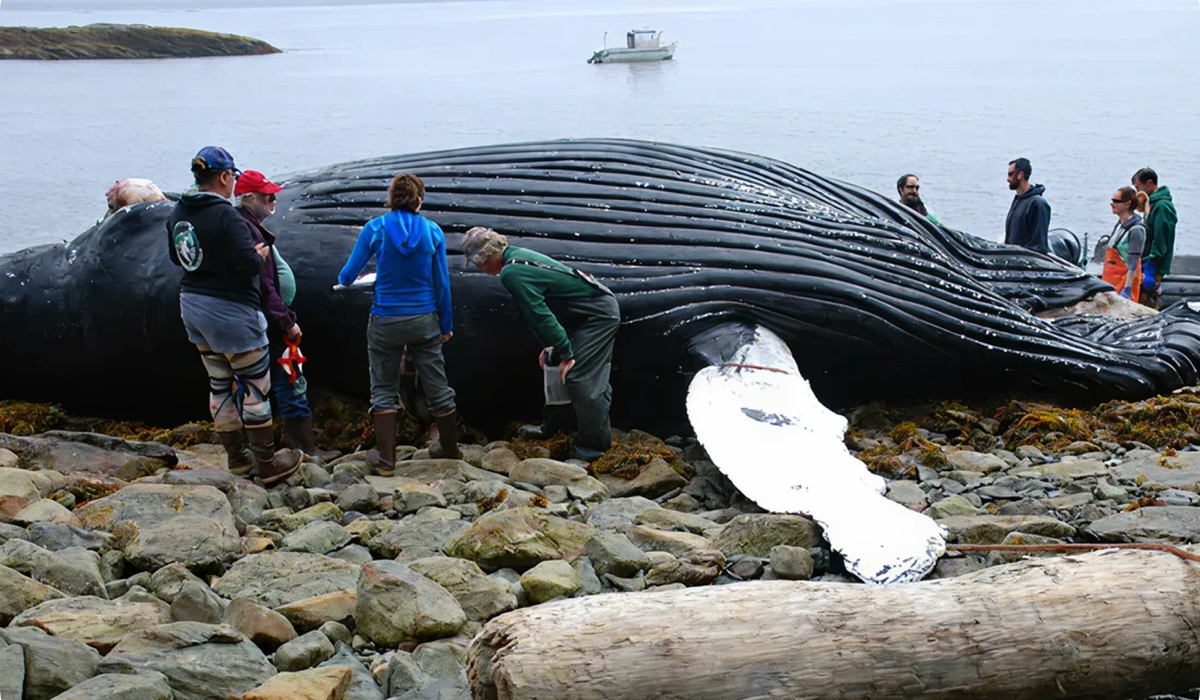
If You See an Entangled or Stranded Marine Mammal
If you observe a marine mammal that is entangled in rope or net, or if it appears stranded or in distress, please follow these guidelines:
Call the 24-hour NOAA Marine Wildlife Hotline immediately: 1-888-256-9840
Stay Near the Animal (If Safe): If it is safe for you to do so, stay in the area to keep track of the animal until a trained response team can arrive.
Do NOT Attempt to Untangle or Help on Your Own:
Never try to untangle a marine mammal on your own or without permission and guidance from NOAA.
Attempting to save an entangled whale, dolphin, or seal without proper training can lead to serious injury or drowning.
Marine Mammal Viewing Distance Guidelines
Remember to maintain a safe and legal distance from all marine mammals for your safety and their protection. Getting too close may constitute a federal or state violation if the animal is disturbed.
Species
Distance
Notes
Humpback Whale
At least 100 yards
Federal law prohibits approach by any means (boat, kayak, swimming, drone, etc.).
Spinner Dolphins
At least 50 yards
Federal law prohibits swimming with, approaching, or remaining within this distance.
Hawaiian Monk Seals
Recommended: At least 50 feet (15 meters)
On land and in water. Stay 150 feet (45 meters) from mothers and pups, and stay behind any signs or barriers.
All Other Dolphins and Small Whales (e.g., False Killer Whales)
At least 50 yards (45 meters)
General Recommendation
At least 50 feet
If maintaining this distance isn’t possible, move away carefully, avoiding sudden movements.
Drone/UAS Guidance
The noise and close proximity of drones can harass and stress marine wildlife. Please adhere to the NOAA guidelines:
Avoid buzzing, hovering, landing, taking off, or taxiing near marine mammals.
Maintain a 1,000-foot minimum altitude when viewing marine mammals from the air in manned aircraft (Federal law requires this for humpback whales in Hawai‘i).
Remember that drones (UAS) may be prohibited in areas like U.S. National Parks that provide habitat for marine mammals.