Learn & Explore/Programs & Initiatives/Sport Fish Restoration
Sport Fish Restoration
Empowering conservation and catch-ups — funding fish, habitat, and access for all anglers.
Sport Fish Restoration Projects
- Hawai‘i’s Division of Aquatic Resources (DAR) receives $3.5–4 million annually from the U.S. Fish and Wildlife Service’s Sport Fish Restoration (SFR) Program.
- 85% of the funding supports projects that conserve and enhance fish populations, their habitats, and related sport-fishing opportunities.
- The remaining 15% is dedicated to boating access projects.
- The program operates on a “user pays, user benefits” model of resource management. as depicted in this diagram.
- The following list highlights several DAR projects funded through the SFR Program.
Fish Aggregating Devices (FADs)
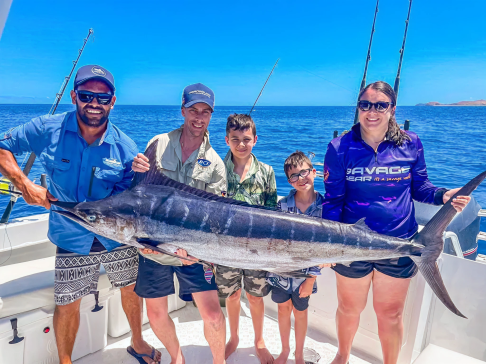
- Several pelagic species — such as mahimahi, tuna, ono, and billfish — are naturally attracted to floating objects, though the exact reasons differ by species.
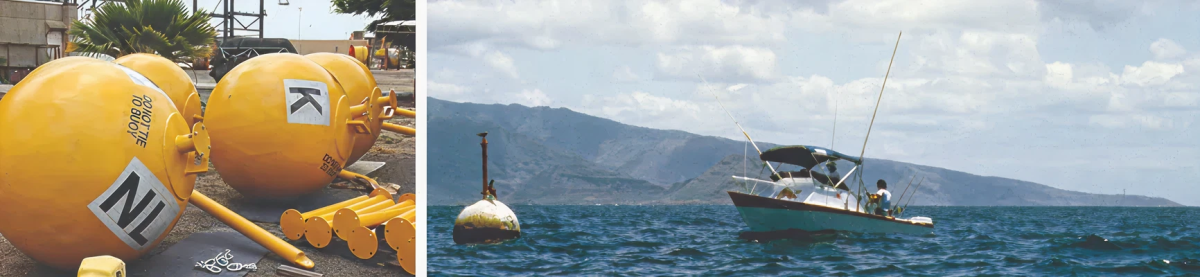
- Fisheries biologists use this behavior by deploying Fish Aggregating Devices (FADs) around the Main Hawaiian Islands.
- These FADs make it much easier for fishers to find and catch these pelagic species.
- Locations for FADs are chosen in collaboration with local fishers.
- Sites range from 2 to 29 miles offshore, in water depths from 650 to nearly 10,000 feet.
Freshwater Fishing
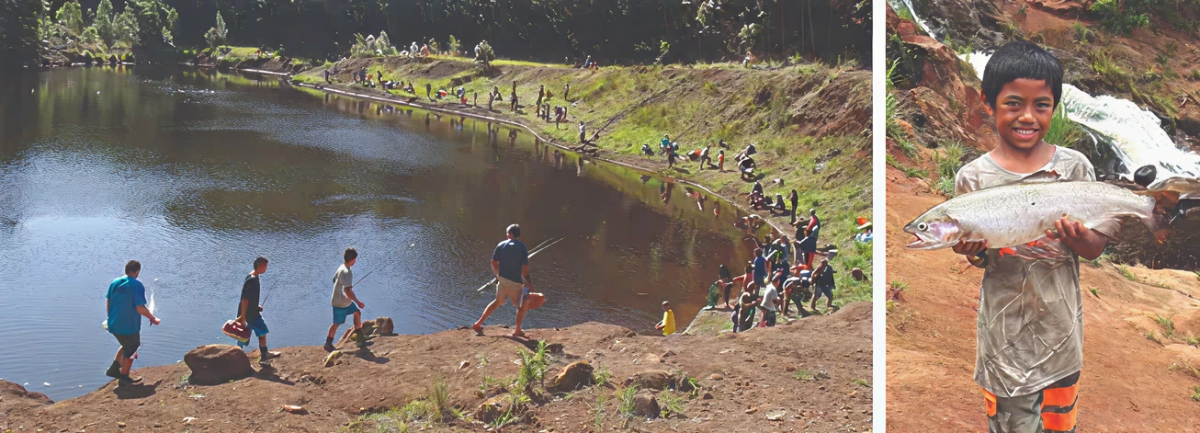
- To create freshwater fishing opportunities for both residents and visitors, Hawai‘i intentionally introduced several sport fish species into select reservoirs designated as Public Fishing Areas (PFAs).
- DAR raises rainbow trout from eggs to fingerlings, then ships the young fish from O‘ahu to the Koke‘e PFA on Kaua‘i for stocking.
- An annual open season for trout fishing is announced early each year.
- DAR also supports the Wahiawā Middle School Hatchery on O‘ahu, which raises largemouth bass and bluegill sunfish.
- These fish are stocked into the Wahiawā PFA, which has a year-round open season.
Artificial Reefs
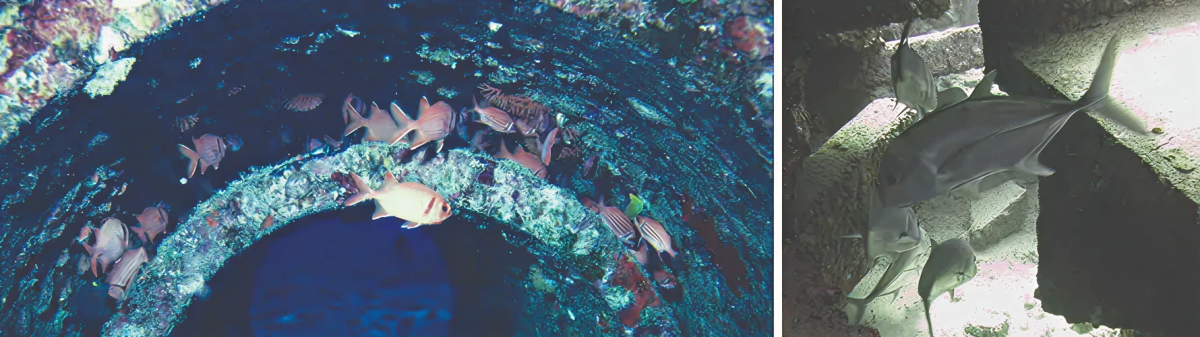
- Hawai‘i has a narrow band of natural coral reefs and few shallow underwater shelves, which limits recreational fishing opportunities in nearshore areas.
- Artificial reef modules are placed in these areas to provide essential shelter for various fish species.
- These modules also create new settlement areas for corals, coralline algae, and invertebrates where none previously existed.
Fish and Habitat Surveys
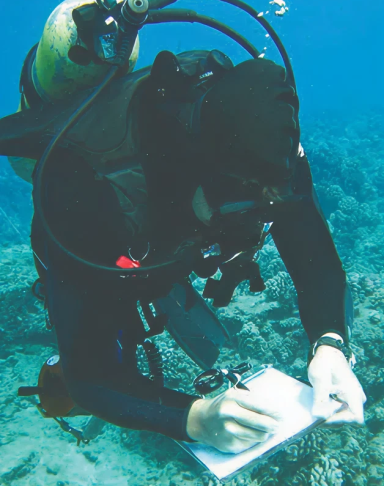
- Aquatic biologists conduct numerous fish and habitat surveys each year across marine managed areas and control sites statewide.
- These surveys provide essential data on the status and trends of Hawai‘i’s nearshore marine environment.
- The information helps resource managers determine how to sustainably manage fisheries and support long-term recreational fishing.
Estuary Investigations
- Estuaries — where streams meet ocean tides — are vital ecosystems that support many juvenile fish species.
- These areas also supply important nutrients to nearshore reefs.
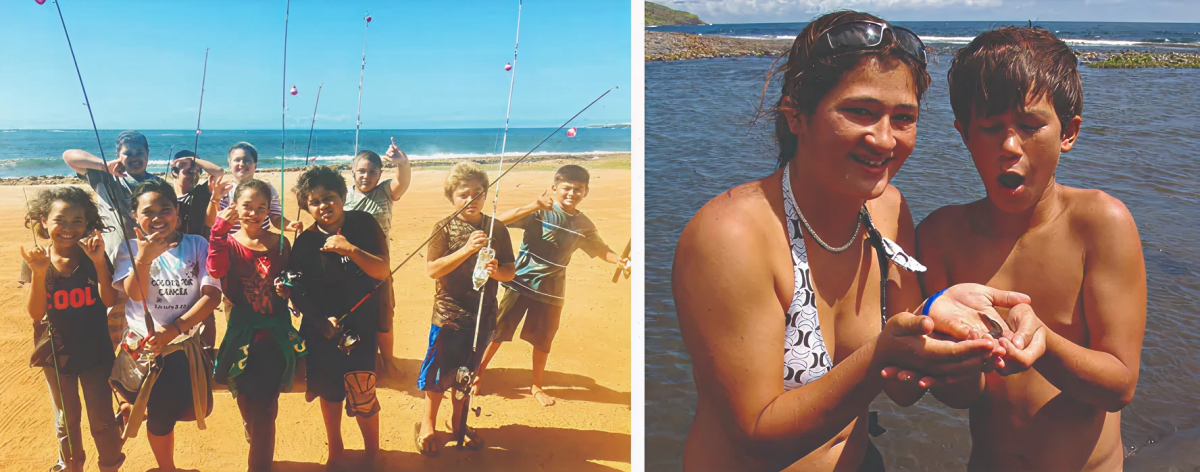
- Biologists conduct surveys at multiple estuary sites statewide, monitoring water quality and using cast nets at fixed sampling stations.
- Sampling provides information on the relative numbers of native versus introduced species.
- DAR collaborates with community groups and partner organizations to restore estuaries, improve habitat for juvenile fish, and monitor how fish respond to environmental changes.
Technical Guidance
- DAR offers technical guidance and assistance to private individuals, companies, and Federal/State/County agencies.
- The team reviews project plans that could potentially harm aquatic resources.
- DAR also investigates incidents such as fish kills, oil spills, and other pollution events.
- They document these impacts and work to mitigate damage to marine and estuarine ecosystems.
Education
- DAR’s education section provides programs that help teachers, students, community groups, and the public understand aquatic resources and how to conserve them.
- The Fishing Education program introduces adults and children to fishing, emphasizing conservation and responsible practices.
- Education specialists support teacher workshops, give classroom presentations, and lead field experiences on fisheries management and conservation topics.
- They also speak at fishing clubs, community groups, and participate in public events statewide.
- The section creates and distributes educational materials across multiple formats, including print, web, and video.
Hawai‘i Marine Recreational Fishing Survey (HMRFS)
- Fishing in Hawai‘i is a popular recreational activity for residents and tourists, and also an important subsistence food source for many local families.
- Despite its cultural and economic importance, only commercial fishers are required to report their catch to DAR monthly.
- The overall impact of recreational fishing is greater than that of commercial fishing, making accurate data on sport-fish stocks essential for proper management.
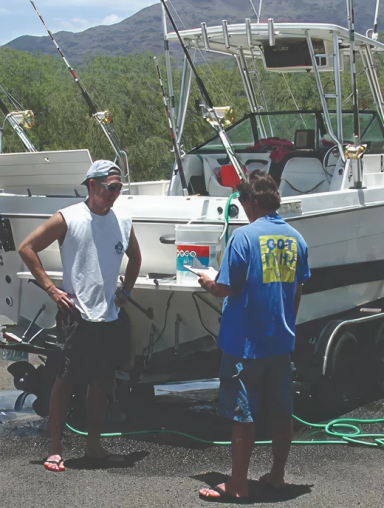
- The HMRFS program collects catch and effort data using field surveyors stationed at boat ramps and shoreline fishing sites statewide.
- Data analysis helps managers create effective measures to maintain healthy, productive fisheries that support recreational fishers.