Permanent seafloor structures that enhance marine habitat and support sustainable fisheries in Hawai‘i.
Artificial Reefs
The Hawai‘i Division of Aquatic Resources (DAR) Artificial Reef Program enhances marine habitat by placing environmentally appropriate structures on the seafloor. These structures create habitat for reef‑associated and bottomfish species in areas where natural relief is limited, supporting sustainable fisheries and fishing opportunities statewide.
What Are Artificial Reefs?
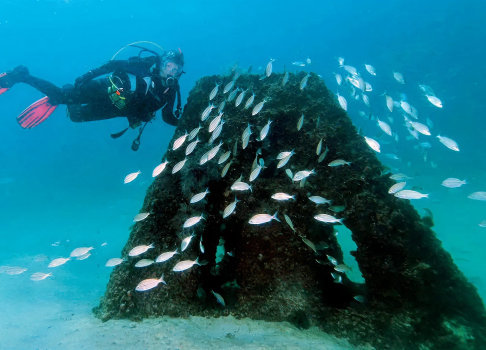
Artificial reefs are permanent seafloor structures designed to mimic natural reef habitat. They increase habitat complexity and provide shelter, feeding areas, and spawning grounds for fish and invertebrates.
Artificial reefs are placed directly on the seafloor and are intended to benefit reef‑associated and bottom‑dwelling species.
Program History
In 1957, the Territory of Hawai‘i began exploring the use of artificial structures to improve fisheries in areas with limited natural habitat.
The State’s first artificial reef was installed in 1961 at Maunalua Bay, off Kahala, O‘ahu (approximately 74 acres). Additional deployments followed:
1963
Keawakapu, Maui (54 acres)
Wai‘anae, O‘ahu(141acres)
1972
Kualoa, O‘ahu (1,727 acres)
1986
‘Ewa Deepwater Artificial Reef(31 acres)
Program Benefits
Artificial reefs provide ecological and fisheries benefits, including:
Enhanced habitat in areas with limited natural structure
Increased fish biomass, often up to 20 times greater than pre‑deployment conditions
Increased species diversity, commonly up to five times greater
Improved fishing opportunities for reef and bottomfish species
Reduced pressure on natural reef ecosystems
Materials Used
Materials used in artificial reef construction have evolved over time to improve durability and environmental performance.
Earlier Materials
1961–1963
Decommissioned car bodies
1964–1985
Concrete pipe, barges, and a decommissioned minesweeper
Transitional Materials
1985–1991
Concrete and tire modules, derelict concrete material, barges, and large truck tires
Current Materials
1991–Present
Concrete z‑modules (primary material)
Barges
Derelict concrete material
Select small vessels
All materials are reviewed to ensure they are stable, durable, and suitable for long‑term marine use.
About Concrete Z‑Modules
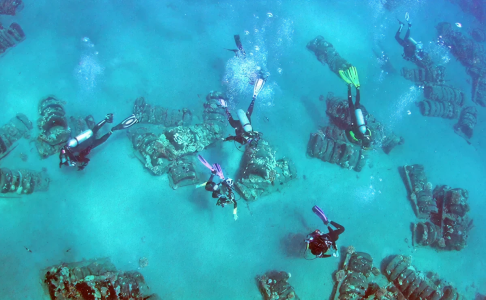
Concrete z‑modules are the primary component of modern artificial reef deployments in Hawai‘i.
Dimensions: 4 feet × 8 feet
Elevated on 12‑inch legs on opposing ends
Weight: approximately 2,800 pounds
Reinforced with 90 linear feet of ½‑inch rebar
Approximate cost: $130 per module
A typical deployment includes 1,300–1,800 modules, with an average project cost of approximately $230,000, including tug and barge services. All modules are made using donated concrete, reducing overall program costs.
Other Materials and Partnerships
Much of the material used in artificial reef construction is donated by private companies and state or federal agencies, most commonly the U.S. Coast Guard and U.S. Navy.
These donations allow DAR to use non‑state funds as match for the Federal Sport Fish Restoration (Dingle‑Johnson) Program, helping support reef construction while limiting reliance on state funding.
Permitting and Environmental Review
Artificial reef projects require authorization from the U.S. Army Corps of Engineers, the lead federal agency responsible for artificial reef permitting under the National Fishing Enhancement Act of 1984.
Projects also undergo:
Coastal Zone Management federal consistency review
Department of Health water quality certification
Required environmental review under state and federal law
These processes ensure artificial reefs are designed and deployed responsibly.
Artificial Reef Locations
PDF maps and coordinates for artificial reef sites are available for download.
O‘ahu
‘Ewa
Kualoa
Maunalua
Wai‘anae
Maui
Keawakapu
(File sizes range from approximately 408 KB to 2.8 MB.)
Looking Ahead
Long‑term program goals include:
Expanding existing artificial reef sites
Establishing additional sites around the Main Hawaiian Islands
Progress toward these goals is limited by the cost and time required for environmental review, permitting, and construction. At present, the program does not have dedicated funding to pursue expansion.