

Science & Data/Reports/Commercial Fishing
Commercial Fishing
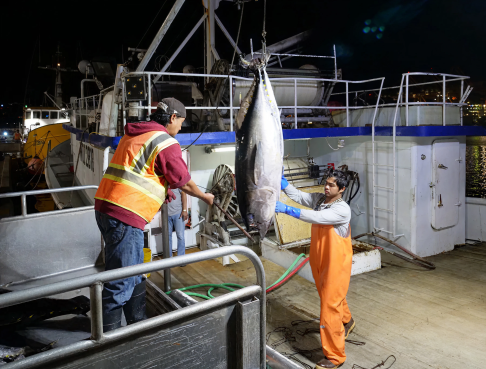
Licensed fishers supplying Hawaiʻi’s seafood — supporting sustainable harvest and resource monitoring.
Commercial Fishing in Hawaiʻi
Why These Reports Matter
Commercial fishing reports are the oldest and largest dataset collected by the Division of Aquatic Resources (DAR). Reports have been submitted continuously since a 1948, creating a over 70 years of data that track Hawaiʻi’s fisheries over time.
This information helps DAR and partner agencies manage nearshore and offshore fisheries for long-term sustainability. Accurate reporting by fishers ensures healthy fisheries for future generations.
Commercial Marine License
Anyone who a takes, sells, or offers marine life for sale must have a a Commercial Marine License (CML). This includes charter captains, crew, and fishing guides.
- You may also license a vessel with a Commercial Marine Vessel License (CMVL). If a vessel has a CMVL, crew members do not need individual CMLs.
- See the Licenses & Permits page for fees and details.
Definition: “Commercial purpose” means taking marine life for profit or livelihood, whether inside or outside Hawaiʻi, when the catch is sold, offered for sale, or transported for sale in the State.
- License fees:
- Residents (annual): $100
- Non-residents (annual): $250
- All license holders are required to report their fishing activity as a condition of their Commercial Marine License.

Fishing Report Requirements
Commercial fishers are required to submit reports as a condition of the Commercial Marine License. There may be additional reporting requirements based on other license, permit or registration requirements in addition to the ones listed below.
- Monthly Reports Required: Every license holder must submit a catch report each month, even if no fishing occurred.
- Deadline: Reports are due by the 10th day of the following month. (Example: January is due February 10th.)
- How to Submit: Reports can be filed online through the Fishing Report System.
Important: Failure to submit reports may lead to penalties, suspension or in extreme cases license revocation.
Commercial Marine Dealer License
Anyone purchasing local marine life directly from commercial fishers for resale must have a Commercial Marine Dealer License. There may be additional licenses or registrations required based on other business activities.
- License Fees: $100 annual
- All license holders are required to report their purchasing activity as a condition of their Commercial Marine License.
Dealer Report Requirements
Commercial dealers are required to submit reports as a condition of the Commercial Marine Dealer License. There may be additional reporting requirements based on other license or registration requirements in addition to the ones listed below.
- Weekly Report Requirement: Licensed dealers must submit weekly reports detailing all purchases from Commercial Marine License holders.
- Deadline: The reporting period runs Sunday to Saturday, with reports due by the following Tuesday.
- How to Submit: Reports can be filed online through the Online Dealer Report system.
Important: Failure to submit reports may lead to penalties, suspension or in extreme cases license revocation.
Online Dealer Reporting
DAR launched the Online Dealer Reports (ODR) site in 2019. Dealers can report purchases online and search CML validations. Adoption and satisfaction are high.
The Online Dealer Reports (ODR) system was launched in 2018 to make reporting easier for commercial marine dealers who buy directly from licensed fishers.
- Weekly Reporting: Dealers must submit purchase reports every week.
- Compliance: Reports must meet Civil Resources Violations System requirements.
- Public Tool: The ODR site also provides a tool to verify a fisher’s Commercial Marine License.
Fisheries Statistics
DLNR-DAR collects data to monitor and assess Hawai‘i’s aquatic resources. Data sources include:
- Fishing reports from license holders
- Marine life and habitat surveys
- Fish counts, creel surveys, port sampling, and other scientific studies
Collecting Commercial Fishing Data: Why It Matters
Hawai’i’s commercial fishing reports are the state’s oldest dataset, collected continuously since 1948.
- Helps provide to state and federal managers data for tracking long-term trends and guiding sustainable management decisions.
- Accurate and timely reporting by fishers is essential for ensuring fish availability for future generations.
- Assess the health of nearshore and offshore resources across Hawai’i’s Exclusive Economic Zone.
- Long-term Monitoring: Over 70 years of data allow managers to monitor both long-term history and inter-annual changes in Hawaiʻi’s fisheries.
- Sustainability Tool: Data is used to manage near-shore and offshore fisheries and to make critical decisions for long-term sustainability.
- Management Partnership: Accurate and timely reporting by fishers is essential for ensuring fish availability for future generations.
Data Privacy
- Public records include names, license numbers, and license types.
- Personal details (phone, address) are not shared.
- Individual report data is confidential unless the license holder consents.
- Public fisheries data is aggregated to protect sensitive details like fishing locations and pricing.