

Learn & Explore/Species/Marine Mammals/Hawaiian Monk Seal
Hawaiian Monk Seal
Hawaiian name: ‘īlioholoikauaua
Scientific name: Neomonachus schauinsladis
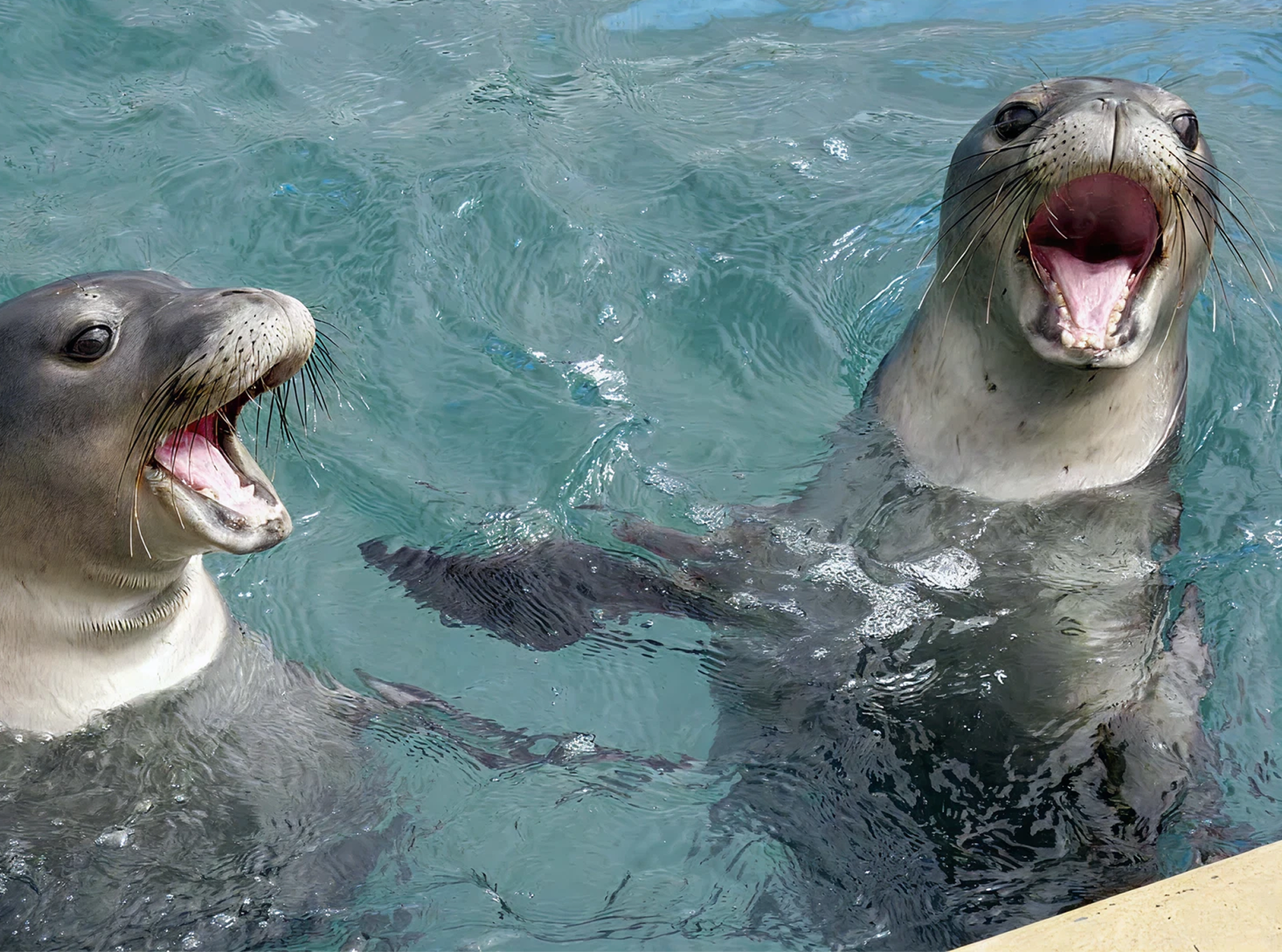
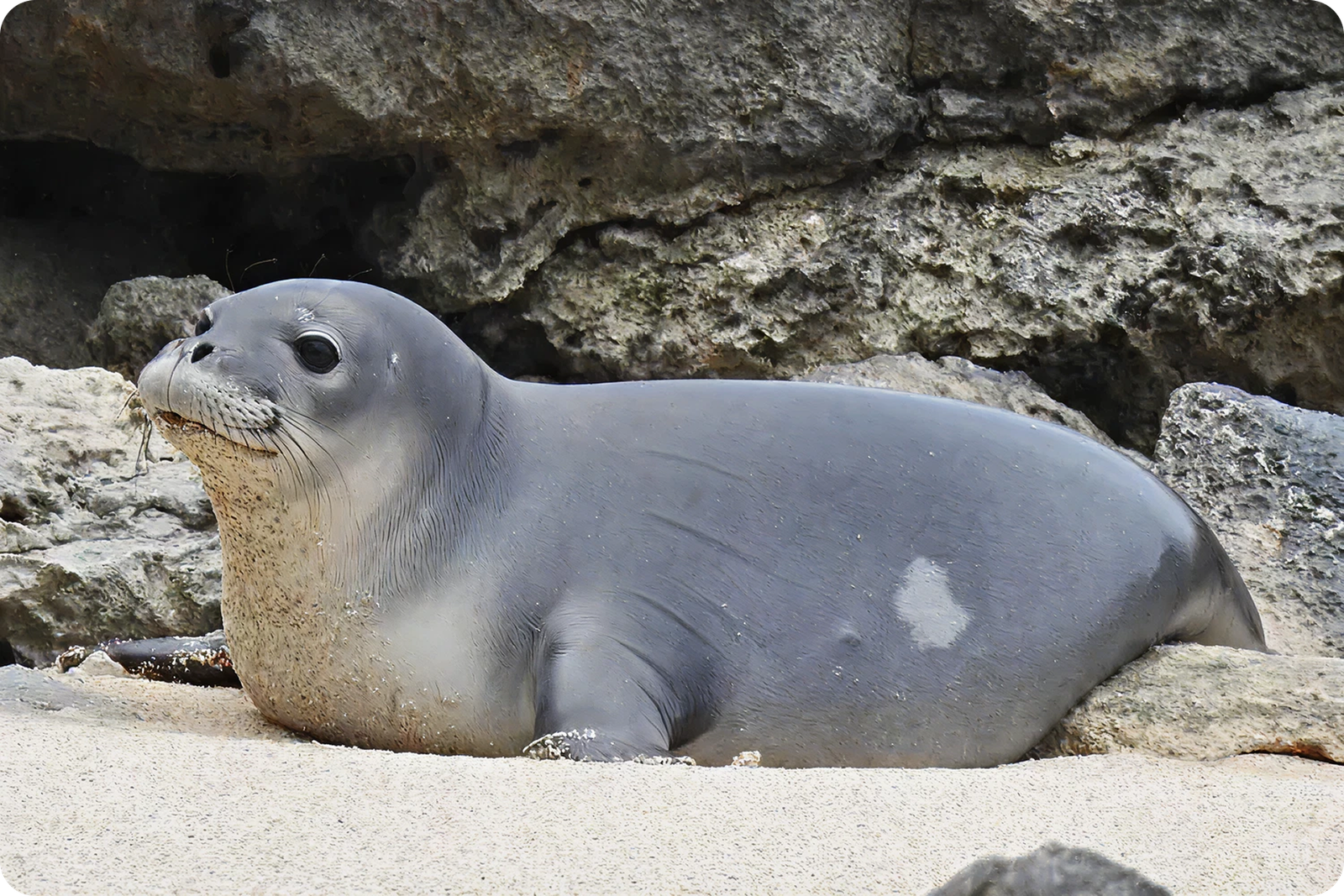
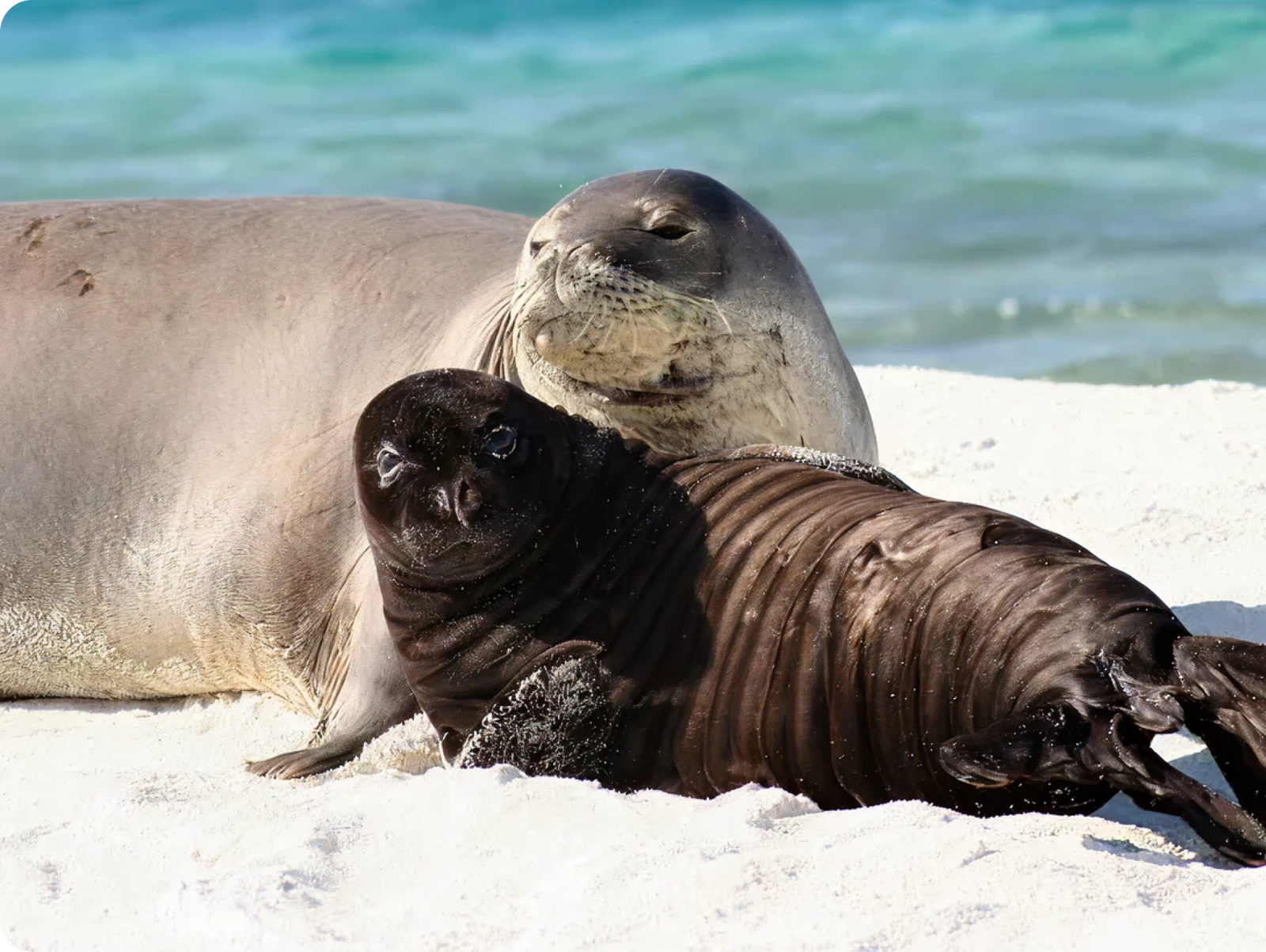
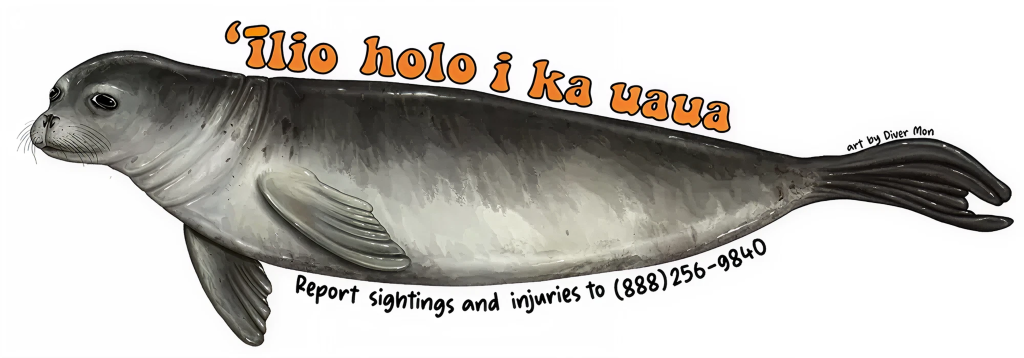
Hawaiian Monk Seal – Īlio-holo-i-ka-uaua – “Dog that runs in rough water”
Status and Protection
Hawaiian monk seals are among the most endangered marine mammals in the world. They are listed as endangered under the Endangered Species Act (ESA) and the International Union for Conservation Nature (IUCN).
The population significantly declined since the 1950s. Although they are now protected by federal and state laws, current drivers of this decline are not certain; however, the most likely culprit is inadequate prey availability [1]. It is currently estimated that the Hawaiian monk seal population is about 1,600 seals; about 1,200 seals reside in the remote Northwestern Hawaiian Islands (NWHI) and only about 400 in the Main Hawaiian Islands (MHI).
Hawaiian monk seals are protected federally by the ESA and the Marine Mammal Protection Act (MMPA), as well as locally by Hawai‘i Revised Statutes (HRS) Chapter 195D and Hawai‘i Administrative Rules (HAR) 13-124. The Division of Aquatic Resources shares overall management of these species with the National Marine Fisheries Service (NMFS).
The Hawaiian Monk Seal
QUICK FACTS
LENGTH
6-7 feet
LIFESPAN
Up to 30 years
THREATS
Disease, Fishing Gear & Marine Debris, Male Aggression, Loss of Habitat & Starvation, Intentional Killings
Description and Natural History
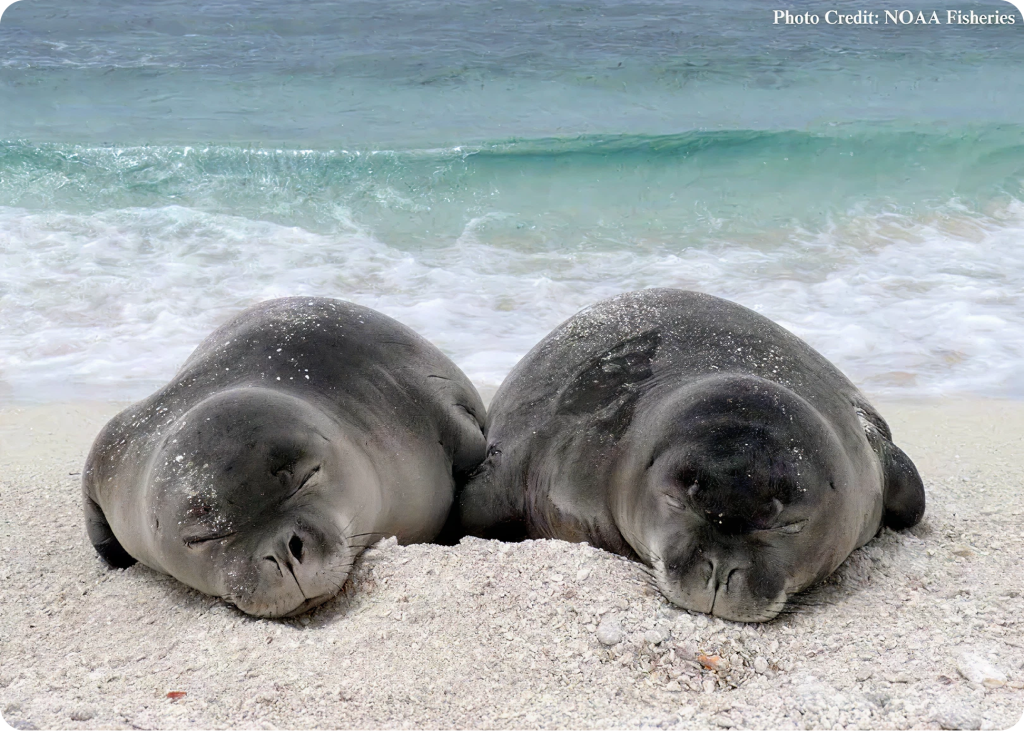
- Hawaiian monk seals belong to the Phocidae family, also known as earless seals
- Their coloring ranges from brown to light gray
- Adults can weigh over 600 lbs
- Females are typically slightly larger than males
- They can live up to 30 years
- The species is endemic to the Hawaiian archipelago, meaning it exists nowhere else in the world
- Historically, they were hunted to near extinction
- They were extirpated from the Main Hawaiian Islands (MHI) many years ago
- Despite federal and state protections, the population remains low due to ongoing natural and human-caused threats
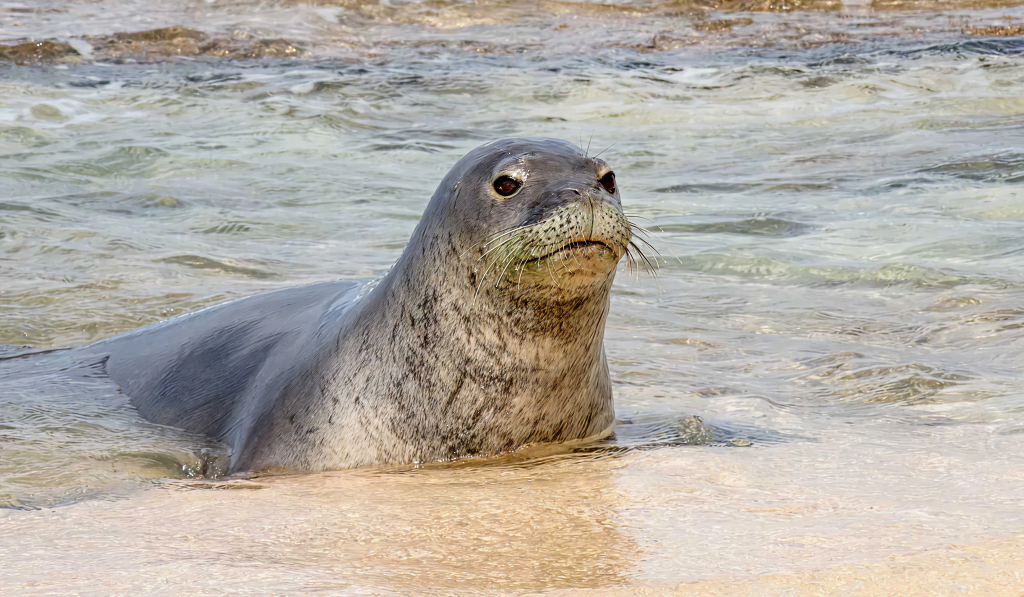
Diet and Habitat
- Hawaiian monk seals are generalist feeders, meaning they eat a wide variety of prey
- Their diet includes: Sea cucumbers, Eels, Octopus, Lobster, Various reef fish
- They have never been observed hunting pelagic fish such as mahi-mahi, ahi, or aku
- Monk seals can hold their breath for up to 20 minutes and dive deeper than 1,800 feet
- While foraging, they often flip rocks with their noses to uncover hidden (cryptic) prey
- Sharks and large predatory fish sometimes follow monk seals and steal fish that the seals flush into the open
- Monk seals spend about one-third of their time resting on land
- Preferred resting spots include: Sandy beaches, Tidepools, Rocky intertidal areas, away from heavy surf
Reproduction
- Hawaiian monk seals reach sexual maturity between 5–10 years of age
- Many females reproduce annually
- Each birth results in one pup
- Pups are typically born between February and July
- Newborn pups are black in color
- As they grow, pups gradually shift to gray and brown tones
- Mothers nurse their pups for about 5–6 weeks
- After weaning, pups begin foraging on their own
- Early foraging usually happens in shallow reefs near the pupping site
Threats
Disease
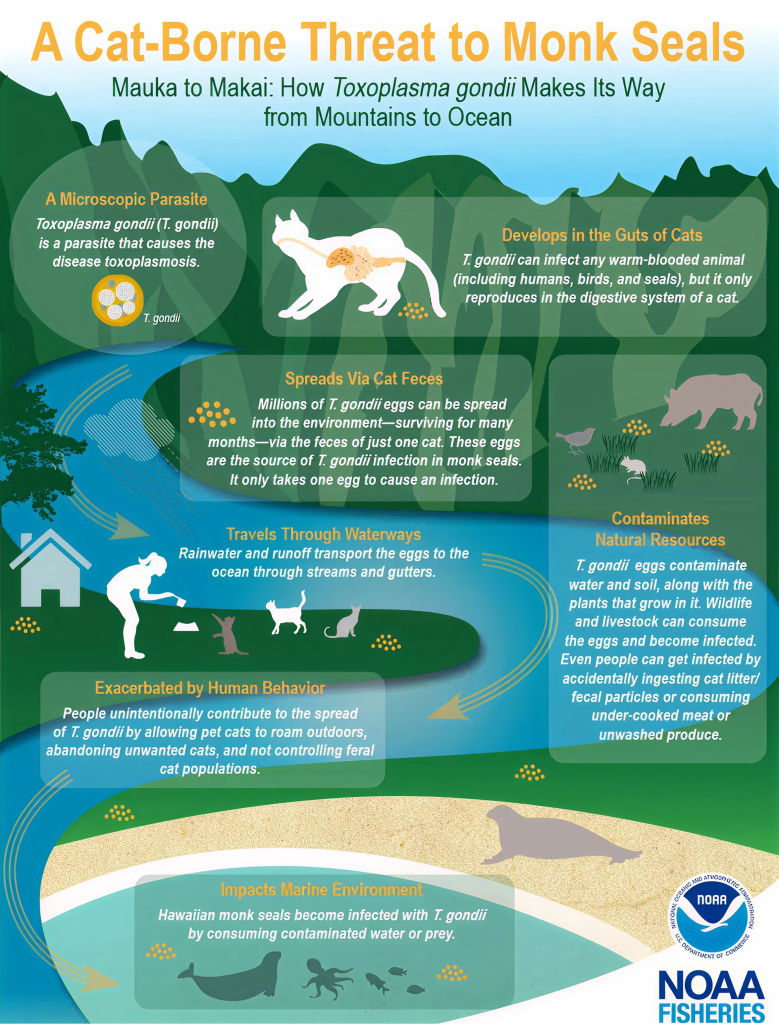
- One of the primary threats to Hawaiian monk seals is toxoplasmosis
- Toxoplasmosis is caused by an internal parasite called Toxoplasma gondii
- This parasite reproduces only in the intestines of cats
- Parasite eggs are shed through cat feces
- Hawai‘i’s large population of feral and free-roaming cats spreads the parasite into the environment
- The parasite can enter watersheds and ultimately infect monk seals
- Infected monk seals may suffer from: Inflammation and dysfunction of multiple organs, Loss of brain function, A weakened immune system, Death
- Keeping pet cats indoors and not feeding stray cats are among the most effective ways to protect monk seals
- Refer to the infographic beside to learn more about the life cycle of Toxoplasma gondii
Click here for more information about the image.
Learn more about toxoplasmosis and Hawaiian monk seals.
While toxoplasmosis is responsible for most disease-related deaths in Hawaiian monk seals, several other diseases, including distemper virus (morbillivirus), West Nile virus, and leptospirosis threaten them [1]. Morbillivirus can be spread from domestic dogs to monk seals via bite wounds, so keeping dogs on leashes can help prevent the spread of this disease [5]. Although NOAA currently has a vaccination program for morbillivirus, this disease is difficult to treat or prevent in Hawaiian monk seals.
Learn more about morbillivirus and the vaccination program.
Fishing Gear and Debris Entanglement
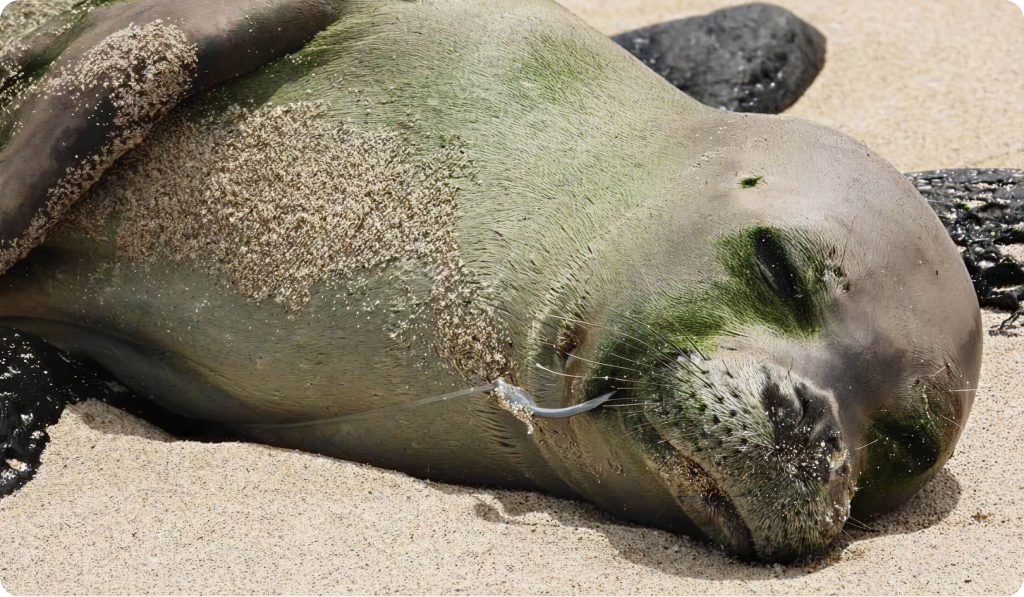
- Derelict and discarded fishing gear pose a serious threat to Hawaiian monk seals
- Hooks and entanglementcan lead to: Injury, Loss of critical movement or function, Death
- Hawaiian monk seals are entangled in marine debris more often than any other pinniped species
- In the Main Hawaiian Islands (MHI), these incidents often happen when:
- Seals try to feed from the lines of active anglers
- Nets, lines, hooks, and other gear are lost or discarded in the water
- Seals can become accidentally entangled when they come into contact with this debris
What to Do
- If you see an animal entangled in debris, call the 24-hour NOAA Marine Wildlife Hotline: 1-888-256-9840
- To report large marine debris on the shoreline that you cannot remove yourself, call: 833-4-Da-Nets
- You can also report marine debris in Hawai‘i through DLNR’s marine debris reporting form
Male Aggression
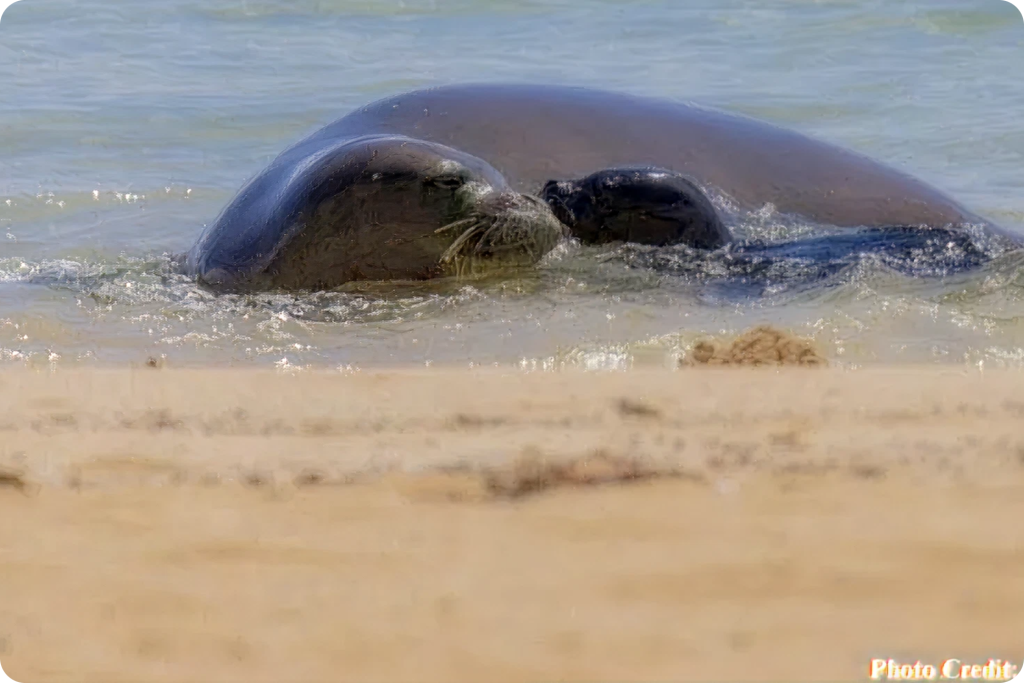
- Male aggression was a major factor in Hawaiian monk seal population decline, especially during the 1980s–early 1990s
- This behavior can cause severe injuries and death
Common Types of Male Aggression
- Male mobbing
- Groups of males attack other male and female seals
- Likely linked to a skewed sex ratio, with more males than females in the population
- Attacks on recently weaned pups
- Adult males attack juvenile seals
- Responsible for numerous deaths of both male and female juveniles
- Especially common in the Northwestern Hawaiian Islands (NWHI)
- Why This Matters
- The loss of young, healthy, or reproductively viable seals severely impacts population recovery
- Removing juveniles from the population slows the long-term recovery of the species
Habitat Loss
- Habitat loss is a growing threat to Hawaiian monk seals
- In the Northwestern Hawaiian Islands (NWHI), key habitats are being lost due to: Sea-level rise, Storm-driven beach erosion
- The loss of critical pupping beaches threatens the species’ overall recovery
- Extreme storms, such as Hurricane Walaka (2018), have already: Severely damaged French Frigate Shoals, Reduced important areas where monk seals live and give birth
- In the Main Hawaiian Islands (MHI), additional threats include: New coastal infrastructure, Increased human activity on pupping beaches
- These disturbances can disrupt or prevent successful birthing and nursing
Harassment and Intentional Killings
- Harassment of Hawaiian monk seals occurs across the Main Hawaiian Islands
- Includes touching, feeding, swimming near, or disturbing seals
- This behavior harms seals and puts people at risk
Keep Your Distance
-
Stay at least 50 feet away from monk seals
-
Stay 150 feet away from mothers with pups
- Mothers are highly protective — do not approach or enter the water nearby
Serious Violations
- Rare cases of intentional killing have occurred
- As of 2018: 4 deaths from gunshot wounds, 8 deaths from blunt force trauma
Report It
- DLNR DOCARE: 1-643-DLNR (3567)
- NOAA Hotline: 1-888-256-9840
Hawaiian Monk Seal FAQs
What Should I Do If I See a Hawaiian Monk Seal?
Consider the following:
- Stay calm and observe from a distance. Most monk seals on land are just resting (“hauling out”). Scars, eye mucus, or patchy fur from molting are normal.
- Give the seal space. Keep at least 50 feet away. Use the Rule of Thumb: if the seal is covered by your thumb with one eye closed, you’re far enough. Do not touch, feed, or disturb the seal.
- Keep dogs on a leash. Dogs can injure seals or spread disease and may be seriously harmed by seals.
- Report all sightings. Even healthy seals should be reported to help scientists track the population.
- Report immediately if the seal looks injured or entangled. Call the 24-hour NOAA Marine Wildlife Hotline: 1-888-256-9840 and keep your distance.
There’s a monk seal on the beach, and it looks sick – what should I do?
Most monk seals on shore are healthy and resting. Mucus around the eyes, scars, or lying very still are normal. Keep your distance and do not disturb the seal.
If you see clear signs of injury (open wounds, entanglement in rope or net), call the 24-hour NOAA Marine Wildlife Hotline: 1-888-256-9840.
What should I do if I see a marine mammal entangled in a rope or net?
Immediately call the 24-hour NOAA Marine Wildlife Hotline: 1-888-256-9840.
If it’s safe, stay nearby to monitor the animal until trained responders arrive.
Do not attempt to untangle it yourself — this is dangerous and can result in serious injury or death.
What should I do if I accidentally hook a monk seal while fishing or if I see a hooked seal?
Call the 24-hour NOAA Marine Wildlife Hotline: 1-888-256-9840 immediately and follow their instructions.
If you can’t call, cut the line as close to the seal as safely possible — don’t put yourself or others at risk. Less line increases the seal’s chance of survival.
To prevent this, follow fisheries interaction guidelines and consider using barbless hooks.
Why should we protect Hawaiian monk seals?
Hawaiian monk seals are native to Hawaiʻi and found nowhere else in the world. Archaeological records show they have lived here for hundreds of years.
They feed mainly on bottom-dwelling reef species and do not hunt pelagic fish like mahi-mahi or ahi.
As top marine predators, monk seals help maintain healthy reef ecosystems, supporting balance and productivity in Hawaiʻi’s local fisheries.
How can I help protect Hawaiian Monk seals?
Here are some of the best ways you can help monk seals in your everyday life:
- If you see them, respect their space.
- Report any sightings or injuries to the 24-hour NOAA Marine Wildlife Hotline at 1-888-256-9840.
- Keep all cats indoors and do not feed stray cats (Toxoplasmosis).
- Keep your dogs on a leash whenever you are near the ocean.
- Clean up your trash and keep the beaches clean and free of debris.
- Report marine debris: (833) 4-Da-Nets (833-432-6387), or utilize the state-wide marine debris reporting form.
- Use pono fishing practices- avoid snagging line on rocks and reefs and do not leave a fishing line in the water; clean up hooks, lead, and lines and discard them properly; pull up lines whenever you see a seal, and never feed the seals or try to interact with them.
- Volunteer with a monitoring and conservation program such as:
Volunteer with a monitoring and conservation program such as:
The Marine Mammal Center, Ke Kai Ola, Hawai‘i Island and Maui
Hawai‘i Marine Wildlife Response, O‘ahu and Moloka‘i
Kaua‘i Conservation Hui: email Kauaiseals@gmail.com or call (808) 651-7668
How close can I get to whales, dolphins, and monk seals?
There are several rules when it comes to viewing marine mammals.
- Humpback whales: Stay at least 100 yards (91 m) away, Federal law prohibits approaching by boat, kayak, drone, swimming, or any vessel
- Spinner dolphins: Stay at least 50 yards (45 m) away, Swimming with or approaching them in Hawaiʻi is illegal
- Hawaiian monk seals: Stay at least 50 feet (15 m) away on land and in water, Mothers with pups: stay 150 feet (45 m) away, Do not swim near moms and pups — protective mothers have seriously injured people, Always follow posted signs and barriers
- All other dolphins & small whales (including false killer whales): Stay at least 50 yards (45 m) away, Getting closer can be a state or federal violation if the animal is disturbed
Can a drone film whales, dolphins, and monk seals?
Adhering to NOAA guidelines: The noise and the proximity of drones can disturb marine wildlife. When viewing marine mammals from the air using a drone:
- Maintain a 1,000-foot minimum altitude when viewing marine mammals from the air in a human-crewed aircraft (e.g., helicopters, airplanes). Federal law requires aircraft to fly no lower than 1,000 feet above humpback whales in Hawai‘i and 1,500 feet above North Atlantic right whales throughout U.S. waters.
- Avoid buzzing, hovering, landing, taking off, or taxiing near marine mammals (on land or in the water), as these actions may alter animal behavior.
- Avoid flying drones or unmanned aircraft systems (UAS) near animals. The noise and the close proximity of drones can harass the animals and cause stress.
A note on drone/UAS guidance: NOAA Fisheries is currently developing national guidance for drone (or UAS) operations targeting marine mammals and sea turtles. Until then, dolphins, whales, seals, and sea lions are protected species, and harming or disturbing them can violate federal law.
Literature Cited
1. NOAA Fisheries. Hawaiian monk seal .
2. Wilson, K., C. Littnan, P. Halpin, and A. Read. 2017. Integrating multiple technologies to understand the foraging behavior of Hawaiian monk seals. Royal Society Open Science. 4 (3): 1-14.
3. Parrish, F.A., G.J. Marshall, B. Buhleier, and G.A. Antonelis. 2008. Foraging interaction between monk seals and large predatory fish in the Northwestern Hawaiian Islands. Endangered Species Research. 4:299-308.
4. NOAA Fisheries. A cat-borne threat to Monk Seals .
5. NOAA Fisheries. Conserving Hawaiian Monk Seals Through Protections and Vaccinations .