

Learn & Explore/Species/Marine Mammals/False Killer Whale
False Killer Whale
Hawaiian name: Ka Palaoa
Scientific name: Pseudorca Crassidens
Description and Natural History
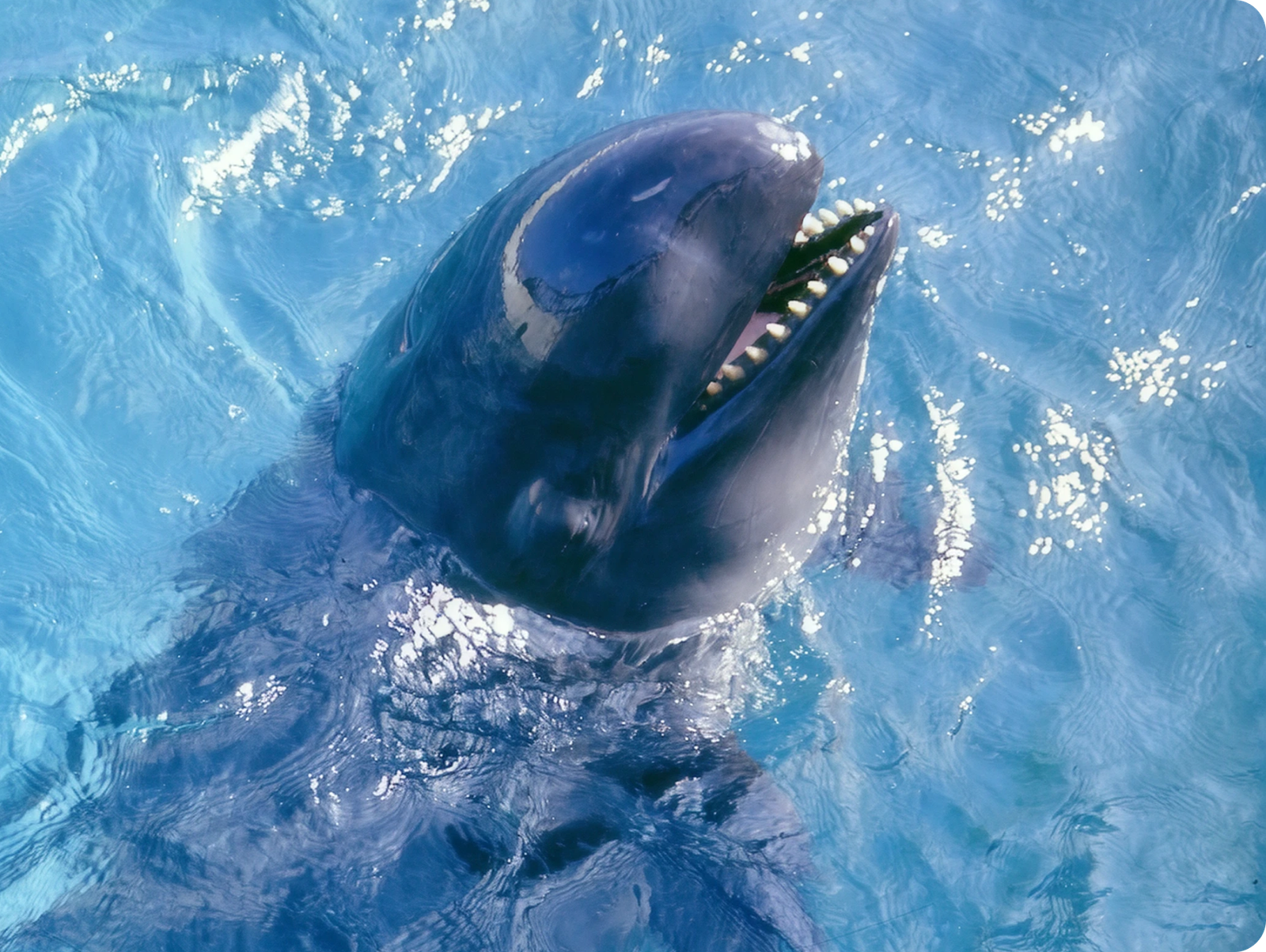
- Despite the name, false killer whales aren’t closely related to killer whales. They were named this way because their skulls look similar.
- Fishers often call them “blackfish,” a nickname also used for pygmy killer whales, melon-headed whales, and short-finned pilot whales.
- Their Hawaiian name palaoa is shared with other toothed whales because Hawaiian and Western classification systems use different criteria.
Key facts:
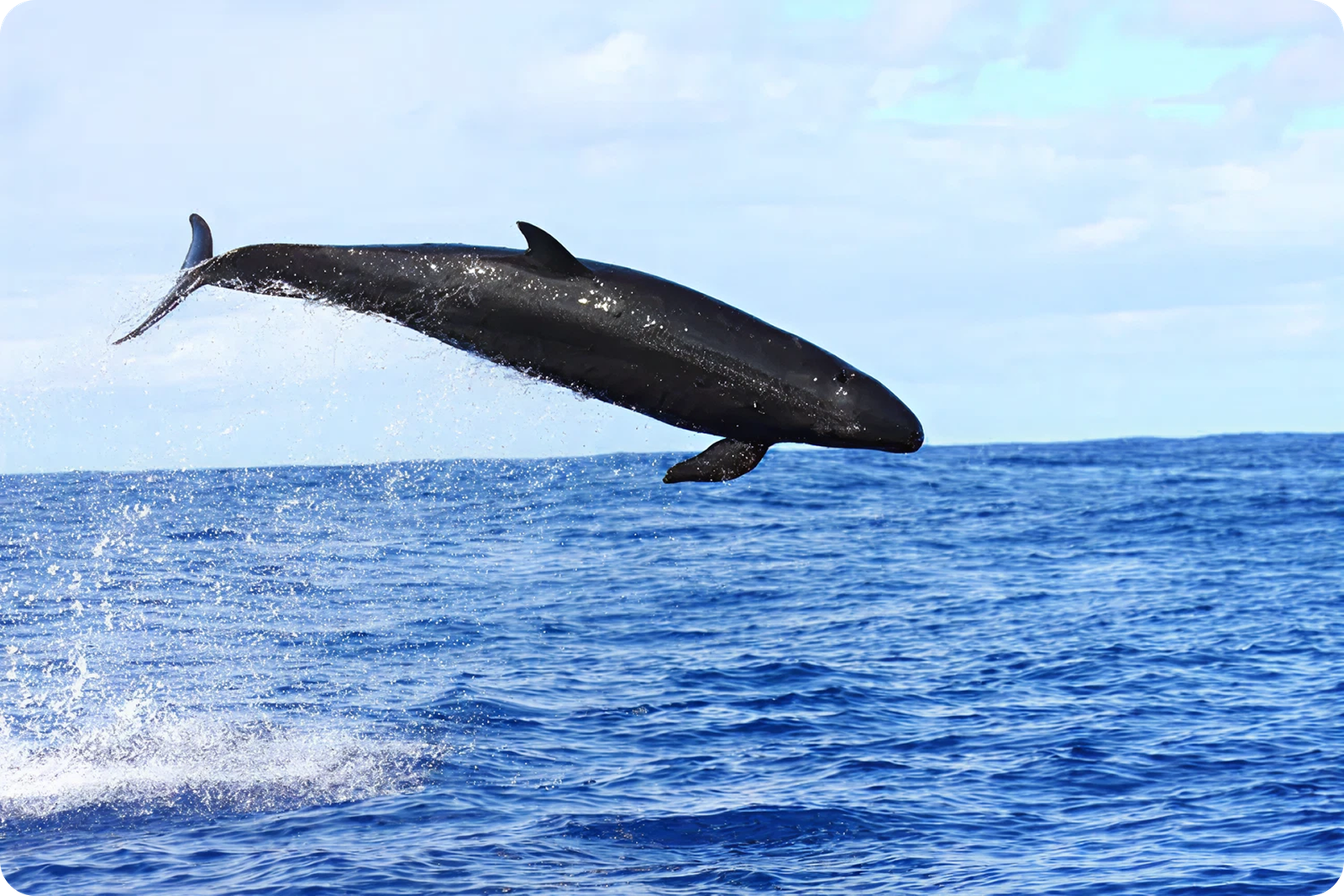
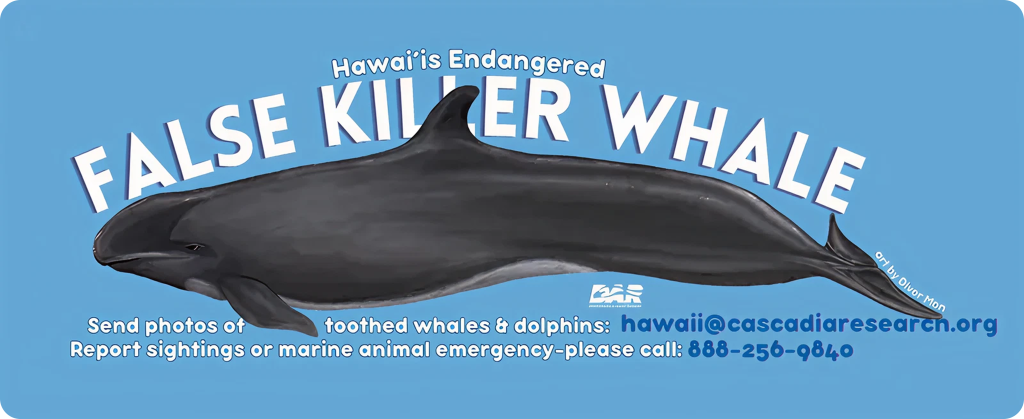
- Adults can reach 17+ feet in length.
- They can live over 60 years.
- They are rare, slow-reproducing, and top predators.
- A 2017 study found they were the least abundant of the 18 toothed whale and dolphin species in Hawaiian waters.
The False Killer Whale
QUICK FACTS
LENGTH
Up to 17 feet
LIFESPAN
Up to 60 years
THREATS
Accumulation of Toxins & Contaminants, Reduction in available food, Fishing Gear Entanglement & Bycatch
Populations
- A 2017 study identified three false killer whale populations in Hawai‘i:
- Northwestern Hawaiian Islands population
- Pelagic population (outside the main Hawaiian Islands)
- Endangered MHI insular population (stays within the main Hawaiian Islands)
- The MHI insular population is the smallest, with around 140 whales.
- Research by Dr. Robin Baird shows this group is genetically distinct and made up of long-term residents, unique to Hawai‘i.
Population trends:
- The MHI insular population is now half the size it was in 1980.
- Aerial surveys (1993–2003) showed a sharp drop in sightings.
- Long-term surveys indicate the decline has continued for decades.
- In 2023, scientists estimated the population is declining ~5% per year.
Status and Protection
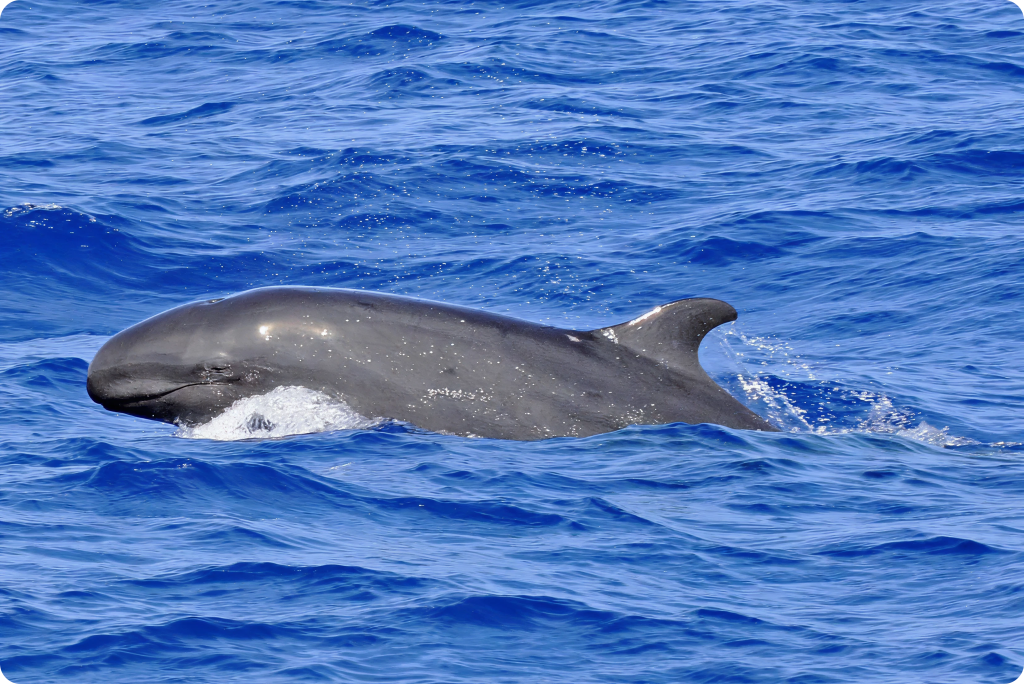
Due to its small population size, low reproductive rate, and continuing decline, the MHI insular “distinct population segment” was listed as endangered under the Endangered Species Act (ESA) in November 2012. The endangered insular population is protected federally by both the ESA and the Marine Mammal Protection Act (MMPA), and locally by the Hawai‘i Revised Statutes (HRS) Chapter 195D and Hawai‘i Administrative Rules (HAR) 13-124.The entire species was listed as “near threatened” on the International Union for Conservation of Nature’s (IUCN) Red List of Threatened Species in 2018. All the FKW populations are federally protected by the MMPA.
Diet and Habitat
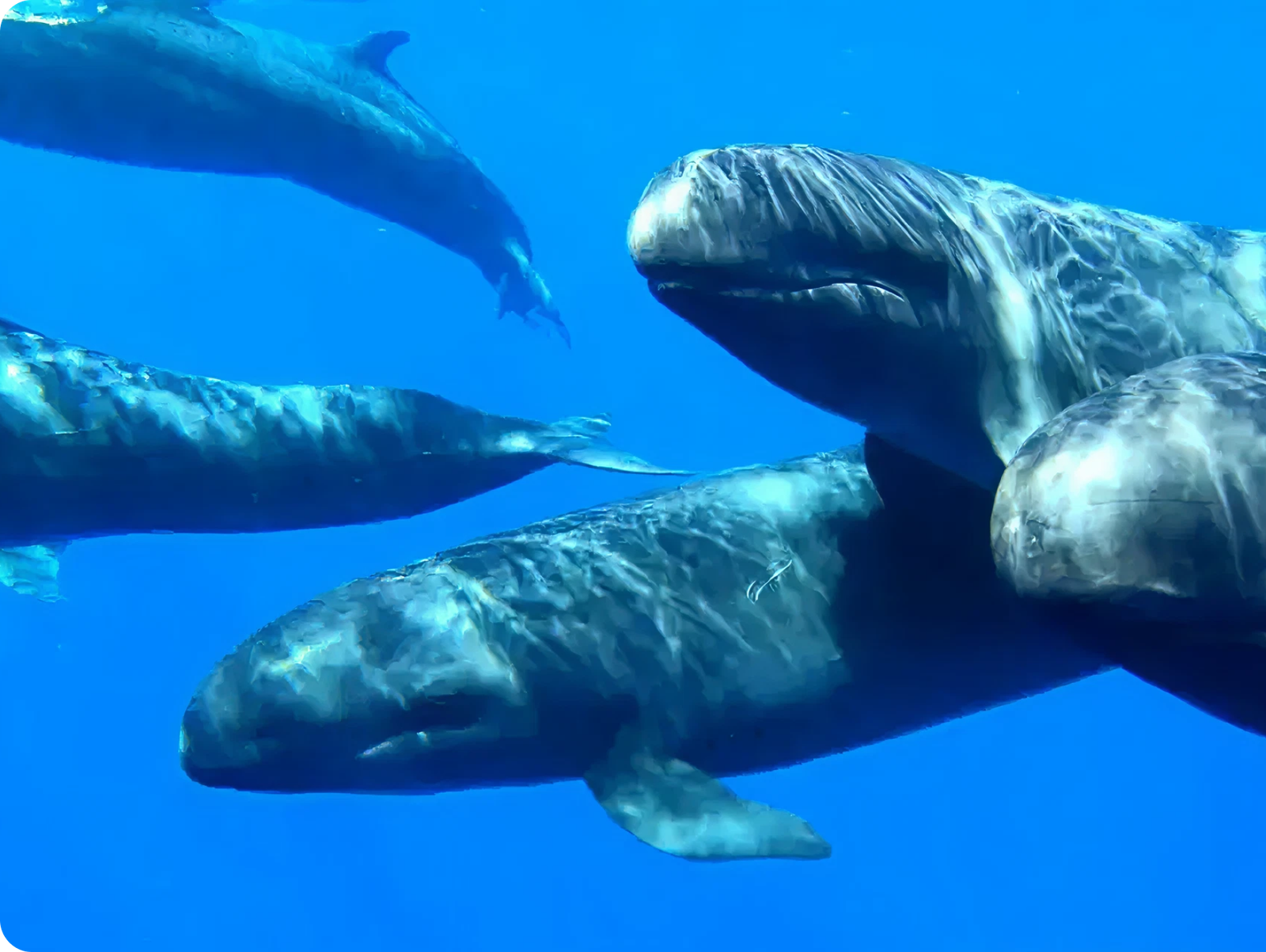
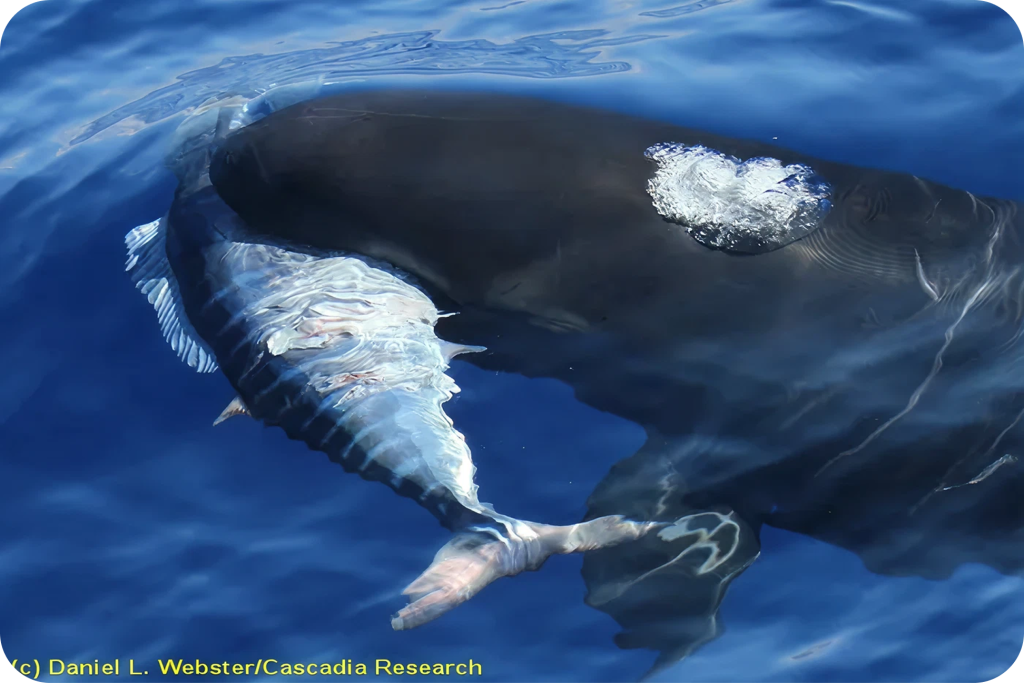
- False killer whales are highly social and form long-term bonds within their groups.
- Their diet includes fish also eaten by humans, such as ahi (tuna), ono (wahoo), and kajiki (swordfish/marlin).
- They share food often, usually giving the best portions to the oldest whales.
- Older individuals pass down cultural knowledge and help care for calves.
Reproduction
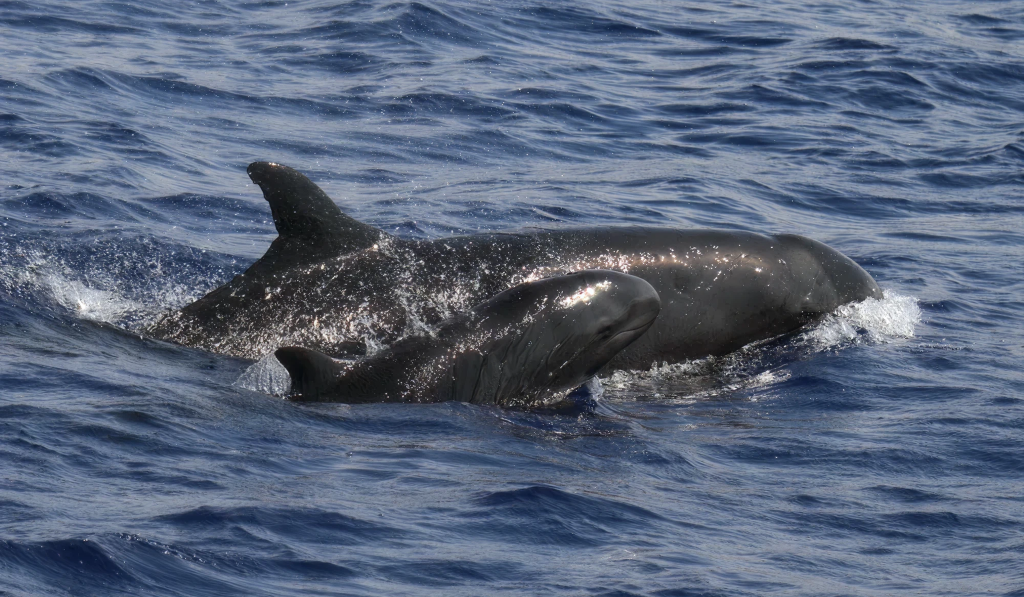
- False killer whales grow slowly and reproduce rarely.
- Males reach sexual maturity at about 10 years old.
- Females mature much later, around 18 years old.
- Females give birth to one calf every 6–7 years.
- Females enter menopause in their 40s.
- Lifespan: about 58 years for males and 62 years for females.
Threats – Fisheries Interactions
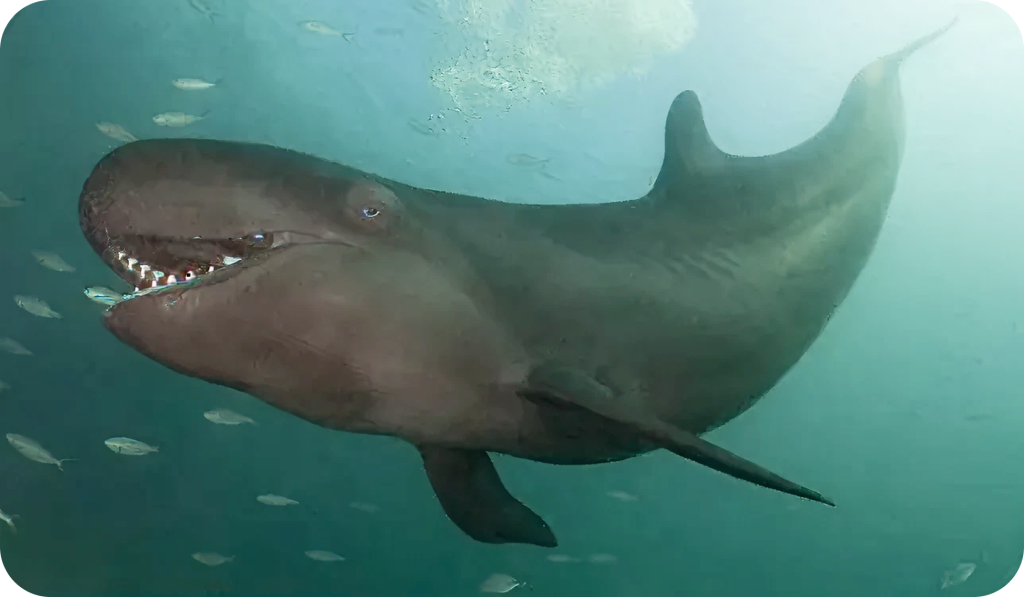
- False killer whales sometimes take fish or bait off fishing lines, a behavior documented since the 1960s.
- Photo studies by Dr. Baird show:
- Out of 73 whales with clear head photos, 23% had mouth scars linked to hook-and-line encounters.
- Out of 165 whales with clear dorsal fin photos, 9% had fin injuries consistent with fishing line cuts.
- It’s still unknown how often these interactions result in fatalities.
Report False Killer Whale Sightings
We need your help to better understand false killer whale populations. Any photos, videos, or location details are valuable and can make a real impact.
How to Report:
- Email photos or videos to: hawaii@cascadiaresearch.org
- Call: 1 (888) 256-9840, option #5
Your reports help researchers monitor the population and improve responses when whales are caught in fishing gear.
Check out a video about the False Killer Whale, presented by the PSP program:
Report Injured or Entangled Whales
If you spot an injured or entangled whale in Hawaiian waters, call the 24-hour NOAA Marine Wildlife hotline: 1-888-256-9840 (Option 3).
To learn more about the Hawaiian Islands Humpback Whale National Marine Sanctuary and the Large Whale Entanglement Response program, click here.
Literature Cited
1. NOAA Fisheries. (2017, June). False killer whales: Sentinels of ocean health .
2. Baird, R.W., A.M. Gorgone, D.J. McSweeney, D.L. Webster, D.R. Salden, M.H. Deakos, A.D. Ligon, G.S. Schorr, J. Barlow and S.D. Mahaffy. 2008. False killer whales (Pseudorca crassidens) around the main Hawaiian Islands: long-term site fidelity, inter-island movements, and association patterns. Marine Mammal Science 24:591–612 .
3. Reeves, R. R., Leatherwood, S., & Baird, R. W. (2009). Evidence of a possible decline since 1989 in false killer whales (Pseudorca crassidens) around the main Hawaiian Islands. Pacific Science, 63(2), 253–261 .
4. Bradford, A. L., Forney, K. A., Oleson, E. M., & Barlow, J. (2017). Abundance estimates of cetaceans from a line-transect survey within the U.S. Hawaiian Islands exclusive economic zone. Fishery Bulletin, 115(2), 129–142 .
5. Baird, R.W., S.D. Mahaffy, A.M. Gorgone, K.A. Beach, T. Cullins, D.J. McSweeney, D.S. Verbeck and D.L. Webster. 2017. Updated evidence of interactions between false killer whales and fisheries around the main Hawaiian Islands: assessment of mouthline and dorsal fin injuries. Document PSRG-2017-16 submitted to the Pacific Scientific Review Group.
6. NOAA Fisheries. (2023, January). Sperm whale .
7. Olivera, Joylynn. 2001. The Cultural Significance of Whales in Hawai‘i. Hawaiian Islands Humpback Whale National Marine Sanctuary, Kīhei, HI. 4 pp.
8. Weinberg, Elizabeth. (2018, September). Humpback whales are navigating an ocean of change . Office of National Marine Sanctuaries.
9. US Department of Commerce, NOAA Fisheries. (2014, May). National marine sanctuaries. Hawaiian Islands Humpback Whale 2010 Condition Report .
10. Harvey, M., R. Finn, E. Lyman. Health and Risk Assessment Monitoring Program 2022–2023 Season-End Report. Hawaiian Islands Humpback Whale National Marine Sanctuary, Kīhei, HI. 21 pp.