

Learn & Explore/Species/Marine Mammals/Sperm Whale
Sperm Whale
Hawaiian name: Ka Palaoa
Scientific name: Physeter Macrocephalus
Description and Natural History
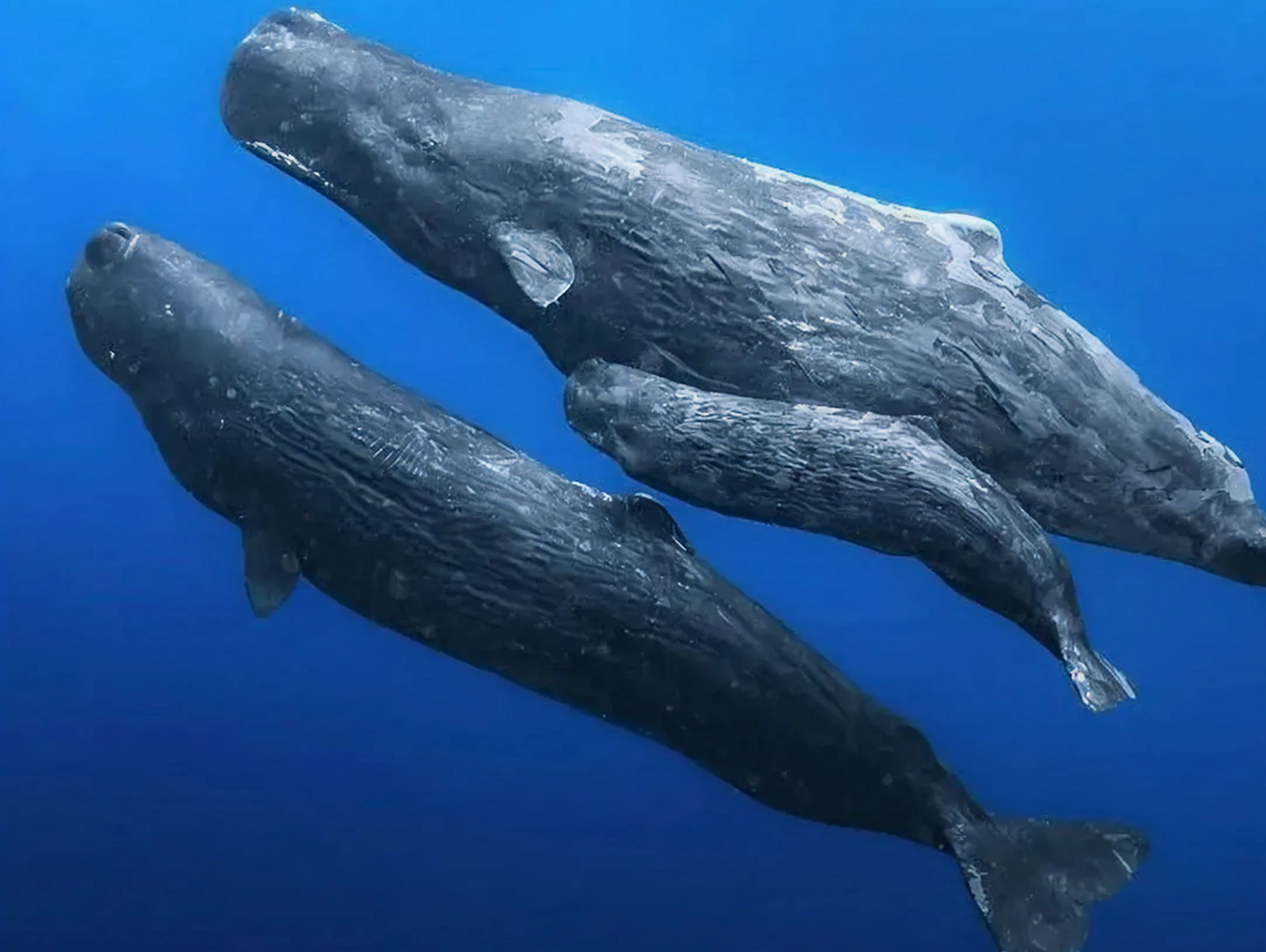
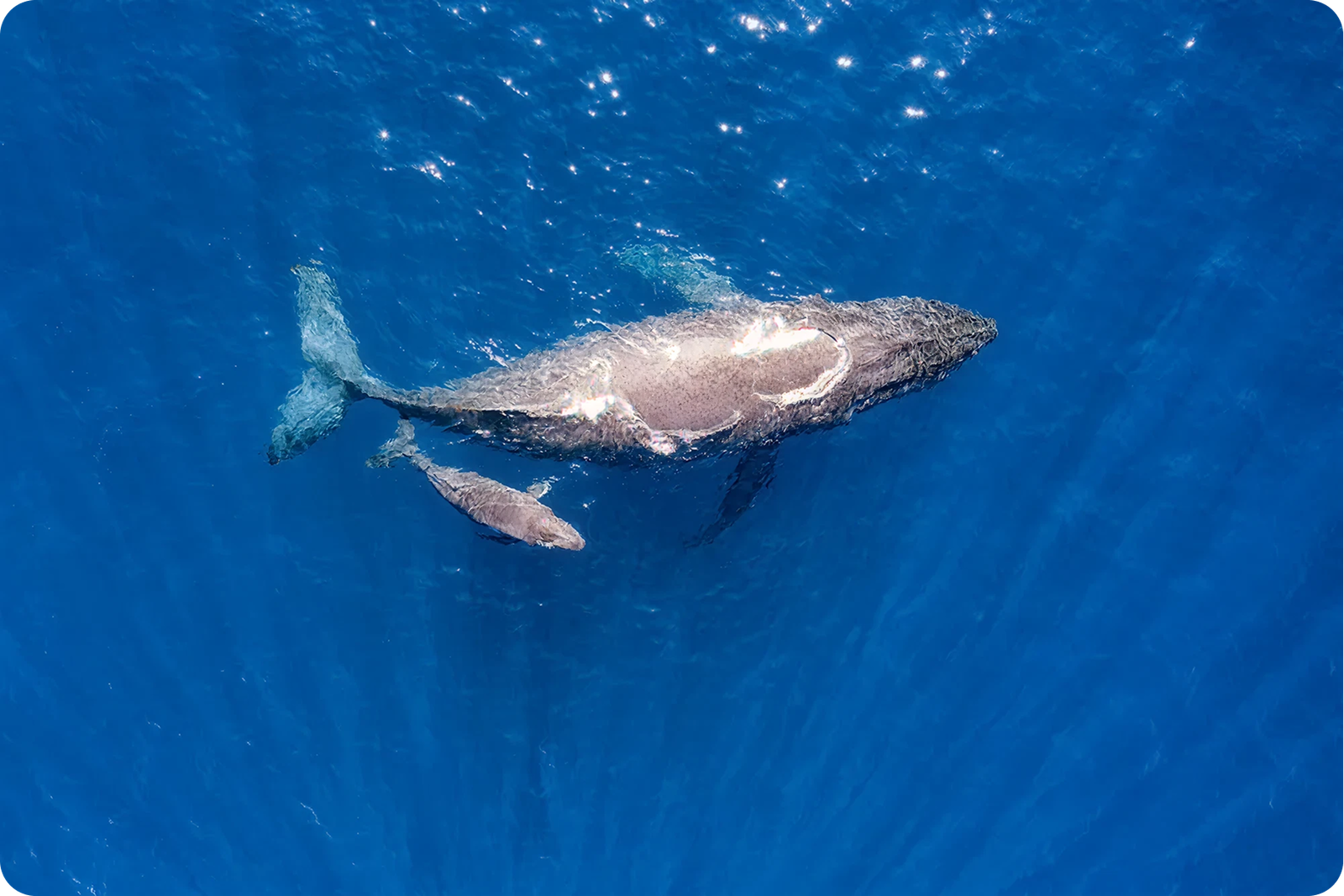
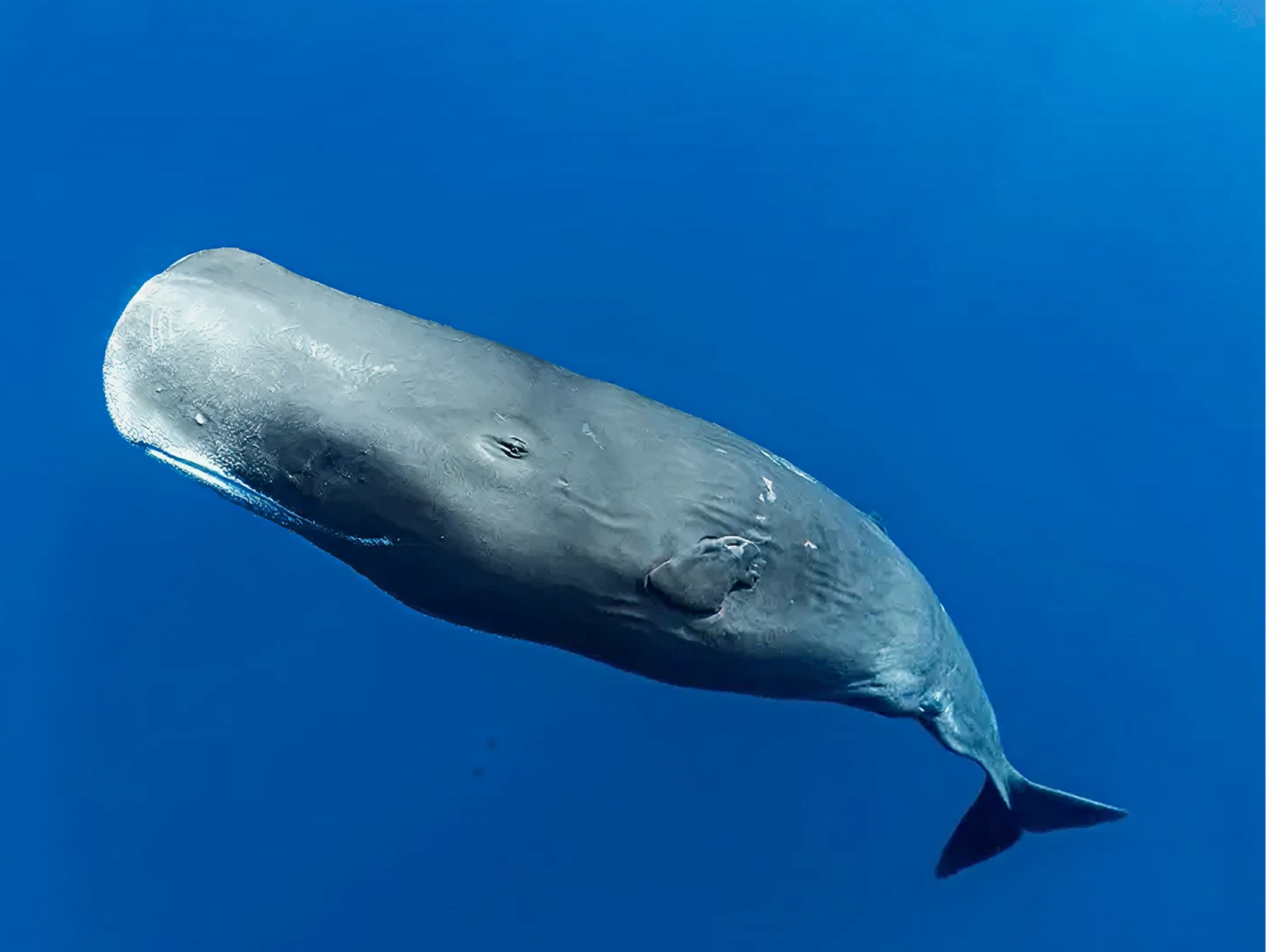
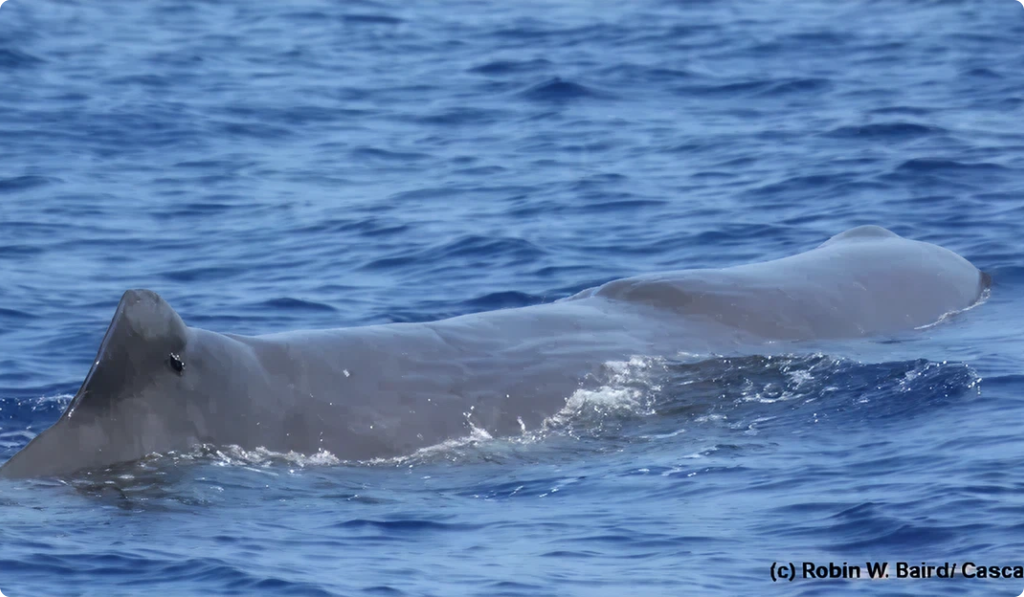
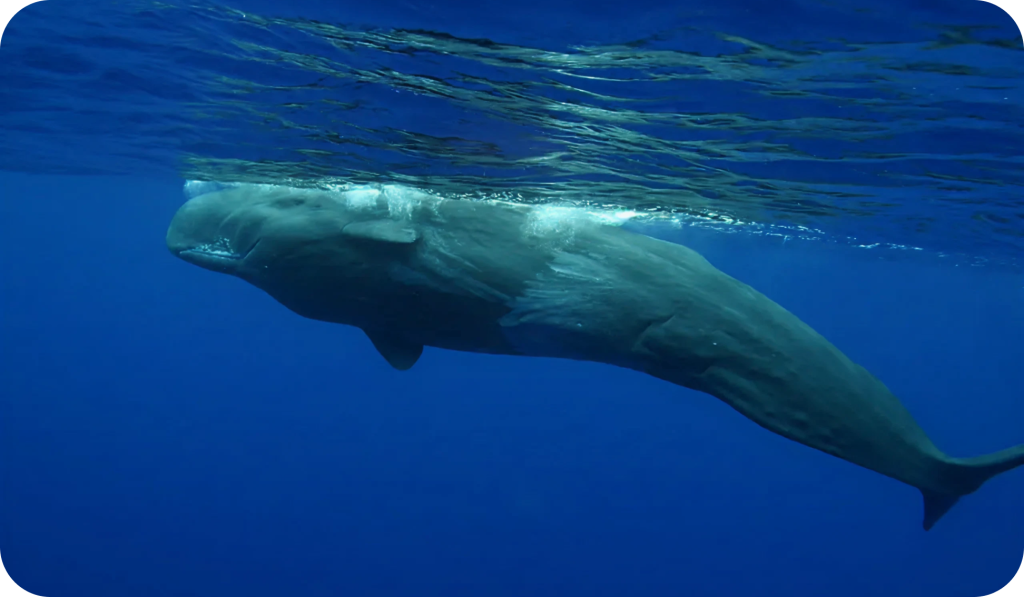
- Largest toothed whales; males grow up to 52 ft and 80 tons.
- Easy to spot thanks to their huge rounded heads and the biggest brain on Earth.
- Their heads contain spermaceti, a waxy substance that helps them focus sound.
- Males are 30–50% longer and 3× heavier than females.
- Lifespan: 60+ years.
History & Cultural Significance:
- From 1800–1987, over 300,000 were hunted in Hawaiian waters.
- Hunted for oil, blubber, ivory, spermaceti, and ambergris (used in lamps and perfume).
- They were easy targets because they often approached ships.
- Washed-up whales provided materials for lei niho palaoa, sacred necklaces made from whale teeth and human hair.
- These were worn only by ali‘i (royalty) and symbolized leadership and authority.
The Sperm Whale
QUICK FACTS
LENGTH
Up to 52 feet
LIFESPAN
Up to 60 years
THREATS
Climate Change, Entanglement in Fishing Gear, Marine Debris, Anthropogenic Ocean Noise, Accumulation of Toxins & Contaminants, Vessel Strikes
Status and Protection
Sperm whales are listed as endangered under the ESA. They are also federally protected by the MMPA. If sperm whales are found within three nautical miles of the Main Hawaiian Islands (MHI), they are also protected by Hawai‘i Revised Statutes (HRS) Chapter 195D and Hawai‘i Administrative Rules (HAR) 13-124. They are also listed as vulnerable under the IUCN Red List.
The best available population estimate for the sperm whales in Hawai‘i is from a 2010 shipboard line-transect survey by Dr. Amanda Bradford and her colleagues in an area 200 miles from both the main Hawaiian islands and the northwestern Hawaiian islands (in the Hawai‘i Exclusive Economic Zone, or EEZ) [4]. The survey estimated an abundance of about 5,000 sperm whales within the Hawai‘i EEZ.
Diet and Habitat
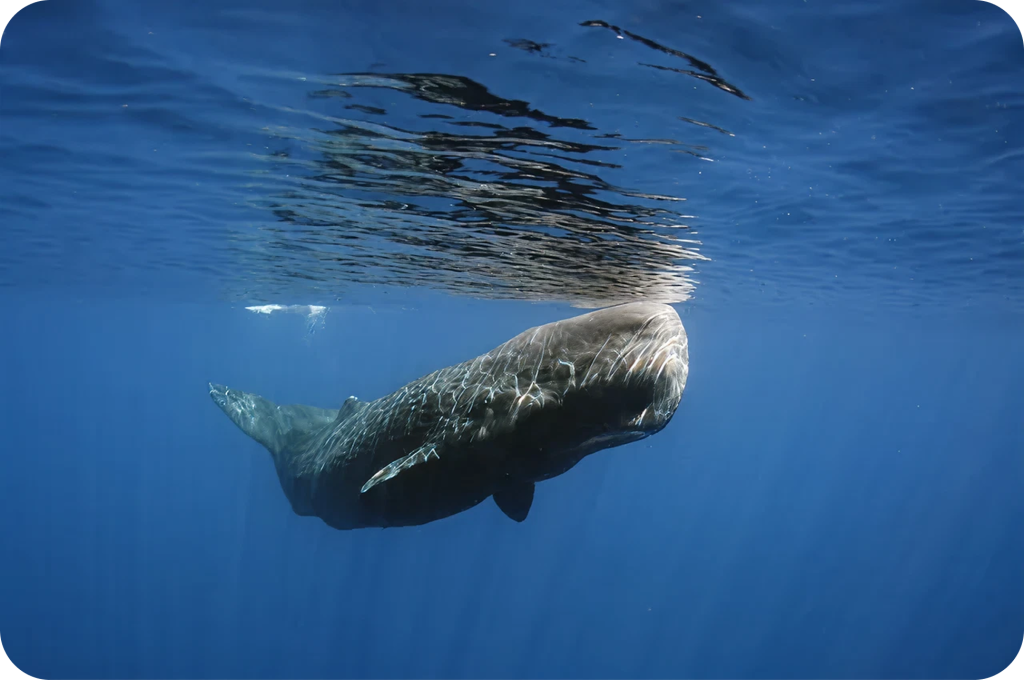
- Sperm whales are the largest toothed whales and powerful hunting predators.
- Their diet mainly includes squid and fish.
- They dive extremely deep, reaching 6,561 ft (2 km).
- They can stay underwater for up to 45 minutes.
- Their surface breaks last only about nine minutes, making them difficult to track and study.
Reproduction
- Courtship is intense; males fight for the chance to mate with multiple females.
- Sperm whales mature slowly and reproduce infrequently.
- Females reach sexual maturity at 8–10 years old.
- They produce one calf every 5–7 years.
- Females may mate every 4–20 years until around age 40.
- Birth is a social event — the pod forms a protective circle around the mother during delivery.
Threats
Like most cetacean species, sperm whales face many human-caused threats, including entanglement, vessel strikes, acoustic disturbance, habitat degradation, marine debris, and environmental changes affecting food resources.
If you see an injured or entangled whale in Hawaiian waters please call the 24-hour NOAA Marine Wildlife hotline at 1-888-256-9840 (Option 3)
Literature Cited
1. NOAA Fisheries. (2017, June). False killer whales: Sentinels of ocean health .
2. Baird, R.W., A.M. Gorgone, D.J. McSweeney, D.L. Webster, D.R. Salden, M.H. Deakos, A.D. Ligon, G.S. Schorr, J. Barlow and S.D. Mahaffy. 2008. False killer whales (Pseudorca crassidens) around the main Hawaiian Islands: long-term site fidelity, inter-island movements, and association patterns. Marine Mammal Science 24:591–612 .
3. Reeves, R. R., Leatherwood, S., & Baird, R. W. (2009). Evidence of a possible decline since 1989 in false killer whales (Pseudorca crassidens) around the main Hawaiian Islands. Pacific Science, 63(2), 253–261 .
4. Bradford, A. L., Forney, K. A., Oleson, E. M., & Barlow, J. (2017). Abundance estimates of cetaceans from a line-transect survey within the U.S. Hawaiian Islands exclusive economic zone. Fishery Bulletin, 115(2), 129–142 .
5. Baird, R.W., S.D. Mahaffy, A.M. Gorgone, K.A. Beach, T. Cullins, D.J. McSweeney, D.S. Verbeck and D.L. Webster. 2017. Updated evidence of interactions between false killer whales and fisheries around the main Hawaiian Islands: assessment of mouthline and dorsal fin injuries. Document PSRG-2017-16 submitted to the Pacific Scientific Review Group.
6. NOAA Fisheries. (2023, January). Sperm whale .
7. Olivera, Joylynn. 2001. The Cultural Significance of Whales in Hawai‘i. Hawaiian Islands Humpback Whale National Marine Sanctuary, Kīhei, HI. 4 pp.
8. Weinberg, Elizabeth. (2018, September). Humpback whales are navigating an ocean of change . Office of National Marine Sanctuaries.
9. US Department of Commerce, NOAA Fisheries. (2014, May). National marine sanctuaries. Hawaiian Islands Humpback Whale 2010 Condition Report .
10. Harvey, M., R. Finn, E. Lyman. Health and Risk Assessment Monitoring Program 2022–2023 Season-End Report. Hawaiian Islands Humpback Whale National Marine Sanctuary, Kīhei, HI. 21 pp.