

Learn & Explore/Programs & Initiatives/Coral Restoration Nursery
Coral Restoration Nursery
Grow and outplant large native corals to restore degraded Hawaiian reefs.
Coral Restoration Nursery
Hawai‘i’s coral reefs are home to diverse marine life, but they face big challenges from storms, pollution, climate change, and human activity. The Coral Restoration Nursery (HCRN) works to bring damaged reefs back to life.
What We Do
- Grow Coral Faster: We use special techniques like microfragmentation to help corals grow quickly in land-based tanks.
- Protect Rare Species: Our “Rare Hawaiian Coral Ark” keeps unique corals safe so they don’t disappear.
- Restore Reefs: Healthy corals are carefully planted back into the ocean to rebuild reef habitats.
- Keep It Safe: We follow strict rules to prevent disease and protect the ocean environment.
- Track Progress: Every coral is documented and monitored to make sure restoration works.
Why It Matters
Coral reefs protect our shores, support fish and wildlife, and are part of Hawai‘i’s culture. By restoring reefs, we help keep our ocean healthy for future generations.
Get Involved
Learn more about our work, follow updates, and discover how you can help protect Hawai‘i’s reefs.
Coral Restoration Process
Take a closer look at the coral restoration journey — from collection and care to outplanting and long-term reef recovery.

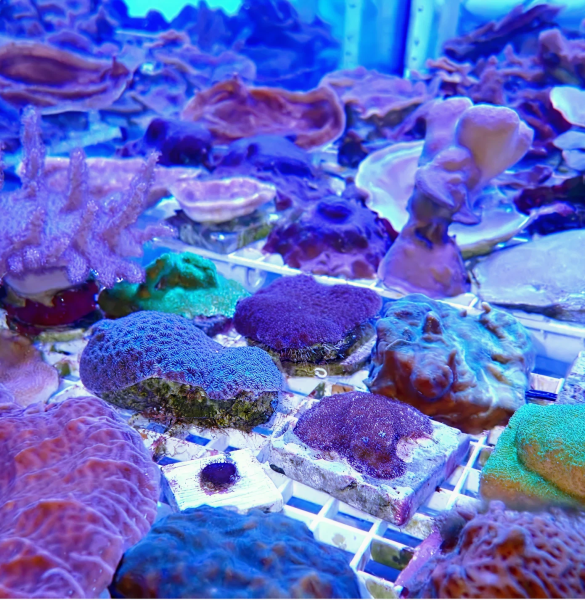
Rare Hawaiian Coral Ark
A living safeguard for Hawaiʻi’s rare and endemic corals, protecting species found nowhere else and supporting their return to native reefs.
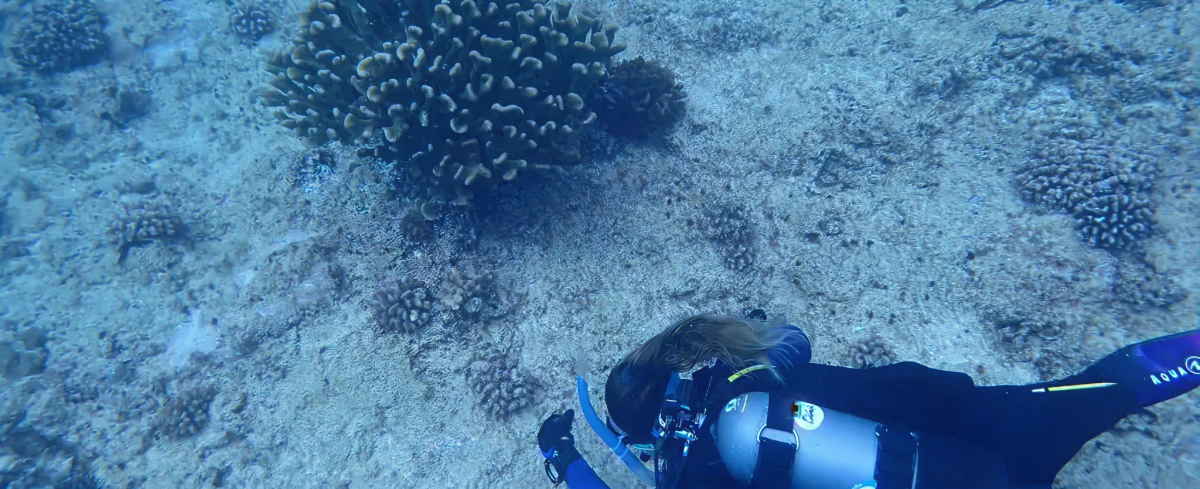
O'ahu Coral Outplanting Project
Restoring Oʻahu’s reefs by outplanting nursery-grown corals at priority nearshore sites.
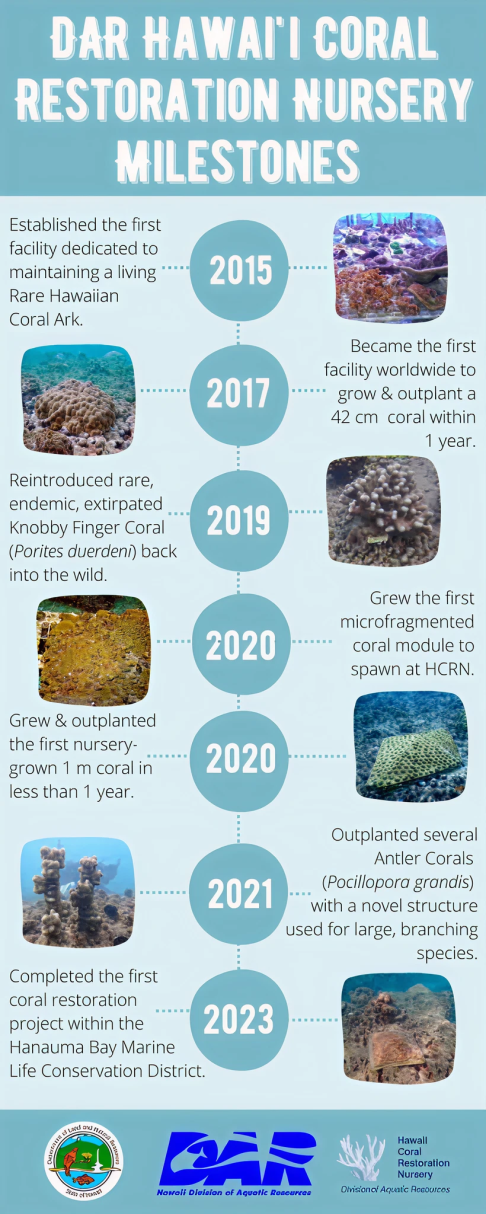
Coral Restoration Nursery Milestones
Key moments that mark HCRN’s progress in coral restoration — from groundbreaking firsts to successful reef recovery across Hawaiʻi.
HCRN In The News
Frequently Asked Questions
What makes Hawaiian corals unique?
In the Kumulipo, the Hawaiian creation chant, coral (ko‘a) is recognized as one of the very first living organisms to exist. It was created alongside the first man and woman, highlighting how deeply coral is woven into Hawaiian culture and origins of life. This early recognition reflects an understanding, hundreds of years ago, of how essential coral reefs are to marine ecosystems and to people.
Hawaiian corals are unique and require special care in restoration efforts. One major challenge is their extremely slow growth rate. Reef-building corals in Hawaiʻi grow only about 1–2 cm per year, compared to much faster-growing corals in places like the Caribbean or the Great Barrier Reef. Because natural recovery can take decades, restoration efforts in Hawaiʻi must rely on innovative techniques to help corals grow and recover more efficiently.
Hawaiʻi’s reefs also have relatively low biodiversity, with only around 60 coral species found in the main Hawaiian Islands. Many of these species are rare, which makes maintaining coral diversity a critical focus of restoration work.
Unlike many reefs dominated by branching corals, Hawaiian reefs are mainly made up of massive, plating, and small branching corals. To support these growth forms, restoration teams use specially designed structures that mimic natural coral shapes while reducing damage from waves and sediment.
Finally, Hawaiʻi has one of the highest levels of coral endemism in the world. About 20% of its coral species are found nowhere else on Earth. Because there is no external population to replace them, protecting and carefully managing these endemic corals is essential to ensuring the long-term survival of Hawaiʻi’s reef ecosystems.
Why does the State of Hawaiʻi need a coral nursery?
Although corals in Hawaiʻi are fully protected by law, there was limited action in the past to repair reefs after direct damage occurred. Several major human-caused incidents, including the M/V Cape Flattery grounding in 2005 and the USS Port Royal grounding in 2009, caused extensive harm to coral reefs.
In response to these events, the Division of Aquatic Resources established the Hawaiʻi Coral Restoration Nursery (HCRN) to actively restore damaged reefs and reduce long-term impacts to coral ecosystems.
Why is the HCRN a land-based nursery?
In many parts of the world, coral nurseries are ocean-based (in situ), meaning corals are grown directly in the sea. These nurseries are generally cheaper to operate because they require less infrastructure and maintenance. Most use simple rope or fishing-line systems that suspend corals in the water, a method well suited for fast-growing branching corals like Acropora.
However, this approach works best in calm waters and with species that grow quickly. In Hawaiʻi, coral growth is naturally much slower, and reefs are exposed to strong wave energy. As a result, ocean-based nurseries would not be able to produce large, restoration-ready corals within a reasonable timeframe.
For these reasons, the HCRN operates as a land-based (ex situ) nursery, where corals are grown in controlled tanks on land. This setup allows staff to use specialized fast-growth techniques, enabling the production of large, healthy adult corals that can be successfully used for reef restoration.
How successful are the coral outplants?
Across all restoration sites on O’ahu, the HCRN has approximately 90% survival of all coral outplants. This is one of the highest known success rates in the world for coral nursery outplants.
Want to provide feedback?
Fill out this Google Form to help us improve our website.
Meet the Team
We are a small team with specialized and diverse backgrounds who are dedicated to restoring coral reefs in Hawai‘i.
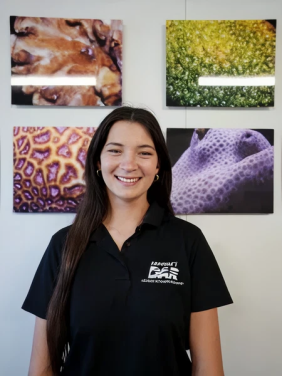
Christina Jayne
Coral Nursery Curator
Christina Jayne earned a B.S. and M.Sc. in Marine Biology from Scripps Institution of Oceanography at University of California San Diego. She has worked professionally with corals and marine aquaria since 2010 and has been with the Nursery since 2018. As the Nursery’s Curator, she oversees coral husbandry operations, restoration projects, and husbandry staff.
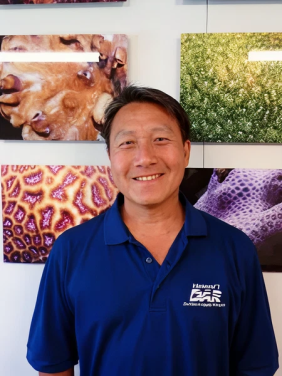
Norton Chan
Coral Restoration Specialist
Norton Chan earned a B.A. in Zoology from the University of Hawaiʻi at Mānoa and has been with the Nursery since 2015. He was previously a professional Aquarist for over 20 years at the Waikīkī Aquarium where he worked with various fishes, invertebrates, and corals from Hawaiʻi and the Indo-Pacific. Norton oversees coral husbandry in the coral module grow-out rooms, field operations, and facility maintenance.
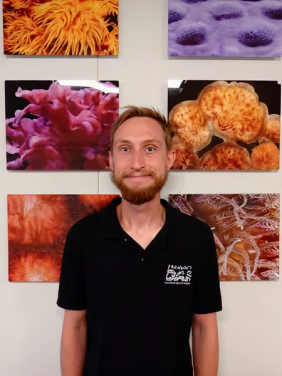
Taylor Engle
Coral Restoration Specialist
Taylor Engle earned a B.A. in Biology from the University of Northern Iowa and started working in public aquariums in 2015. He has been with the Nursery since 2019 and oversees coral husbandry in the coral module grow-out rooms, water quality, and quarantine.
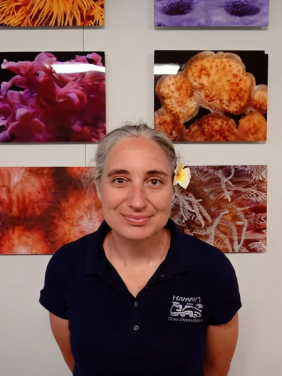
Hélène Meehl
Coral Restoration Technician
Hélène Meehl earned a B.A. in Biology from the University of Hawai’i at Mānoa. She was previously an aquarist at the Waikiki Aquarium and Sea Life Park, where she worked with fish, shark, rays, sea turtles and marine invertebrates from Hawai’i and the Indo-Pacific. She has been with the Nursery since March 2024 and focuses on the husbandry of fast-growth coral modules.
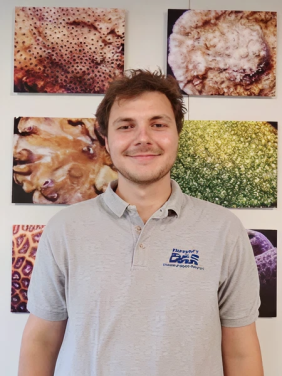
Nicolo Cohen
Coral Restoration Technician
Nicolo Cohen earned a B.S. in Marine Biology with a concentration in Conservation from the University of North Carolina Wilmington. While in school he was able to work in Dr. Fogarty’s REEF Lab, which studied ex-situ coral reproduction and early life stage development of Caribbean coral species. He joined the Nursery in March of 2024 and mainly works in the coral module grow-out rooms.
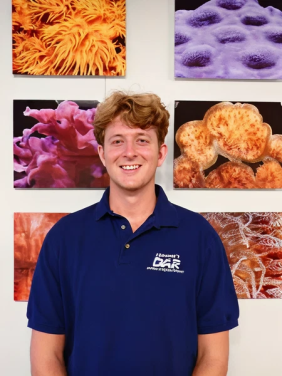
Andy Kramer
Coral Restoration Technician
Andy Kramer earned a B.S. in Marine Science and Biology from the University of Tampa, studying seagrass and coral reef ecology and ecosystem services. He was previously a coral biologist at SeaWorld Orlando, and joined the Nursery staff in April 2024. He focuses on quarantine of collected corals and husbandry of corals in the grow-out rooms.
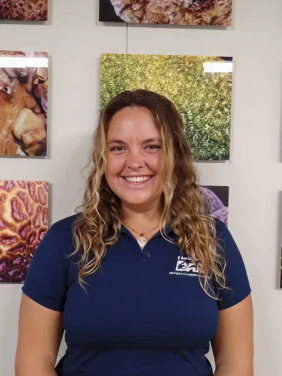
Sydney Lewandowski
Coral Restoration Technician
Sydney Lewandowski earned a B.S. in Natural Resources and Environmental Management with a specialization in Coastal Resource Management from the University of Hawaiʻi at Mānoa. She started off as a volunteer for the Nursery before joining the staff as a Junior Technician in 2023 and started her current role in early 2025. She focuses mainly on the husbandry of fast-growth coral modules within the grow-out rooms.
Contact Us
Hawaiʻi Coral Restoration Nursery Curator
Christina Jayne, christina.r.jayne@hawaii.gov
Volunteer Opportunities/Get Involved
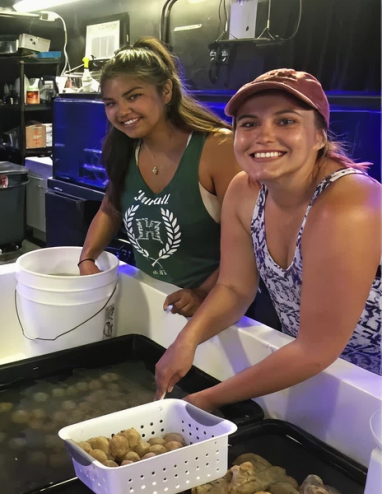
The HCRN relies on a dedicated team of volunteers to help care for corals and invertebrates in the outdoor holding tanks, collect and maintain data, assist with various small projects throughout the facility, and occasionally participate in fieldwork. This opportunity provides valuable hands-on experience working with Hawaiian corals in an aquarium setting for restoration efforts.
We typically accept 1-2 new volunteers each school semester. Our current Volunteer Interest Form is closed. Please email dar-restoration@hawaii.gov with any questions.
The HCRN periodically hosts full-time interns through the KUPU Conservation Leadership Development Program. In this 11-month program, members have to opportunity to work directly with professional coral restoration staff and receive practical training on coral husbandry, aquarium design and construction, coral outplanting and monitoring, larval rearing, phytoplankton culturing, and complete a directed research project under the supervision and guidance of DAR and Nursery staff.