

Know the Rules/Fishing Regulations/Marine Managed Areas/Hawai‘i Marine Life Conservation Districts/Kealakekua Bay
Hawai‘i - Kealakekua Bay Marine Life Conservation District (MLCD)
- Hawai‘i Island — HAR 13‑29
- 315 acres | Established 1969
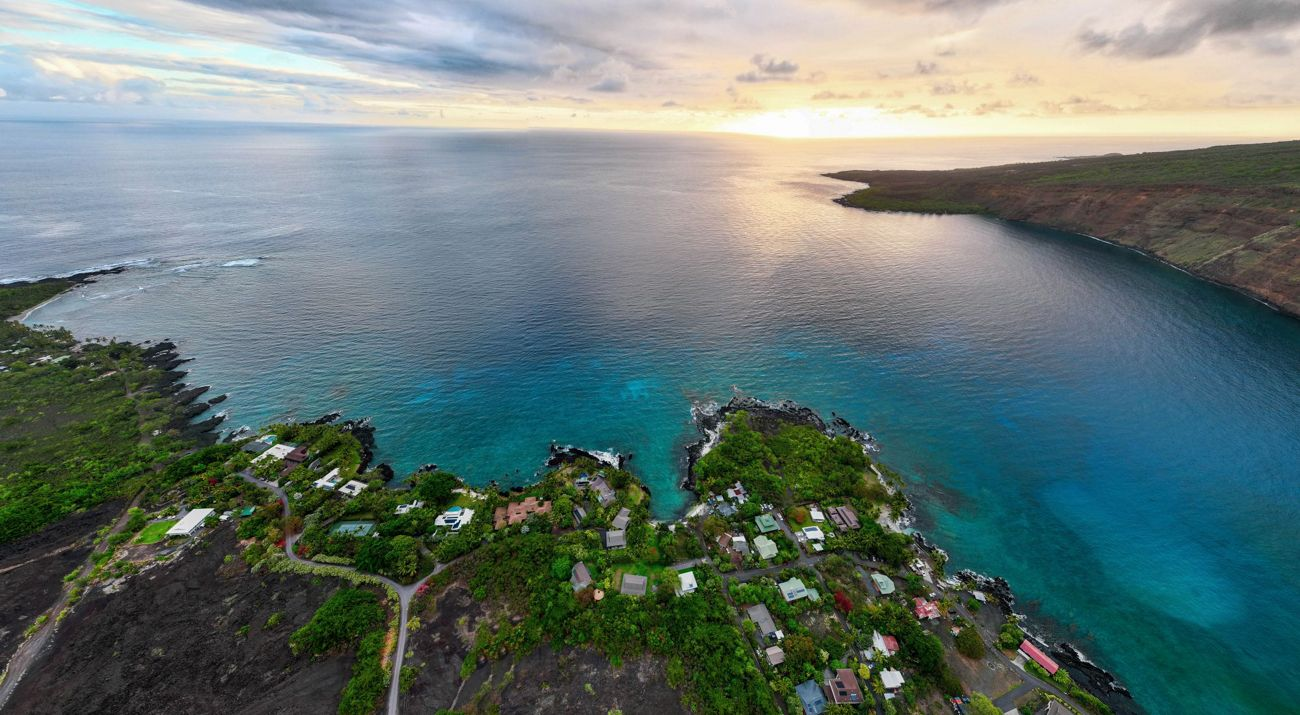
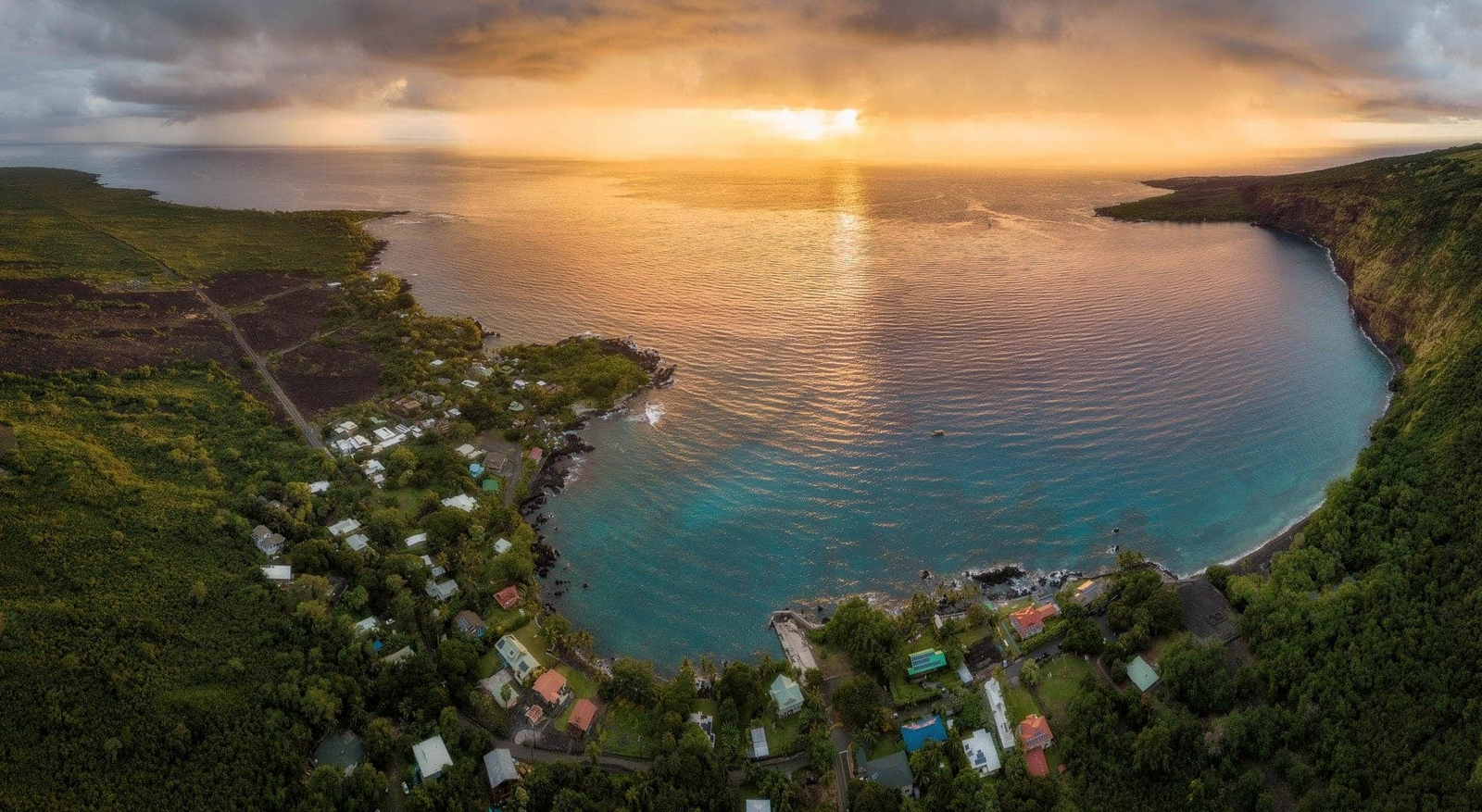
Located on the west coast of Hawai‘i Island near the village of Captain Cook, Kealakekua Bay is one of the most historically and biologically significant bays in the state. The bay lies about 30 minutes south of Kailua‑Kona, with vehicle access available only to the Nāpō‘opo‘o Beach area on the eastern shoreline.
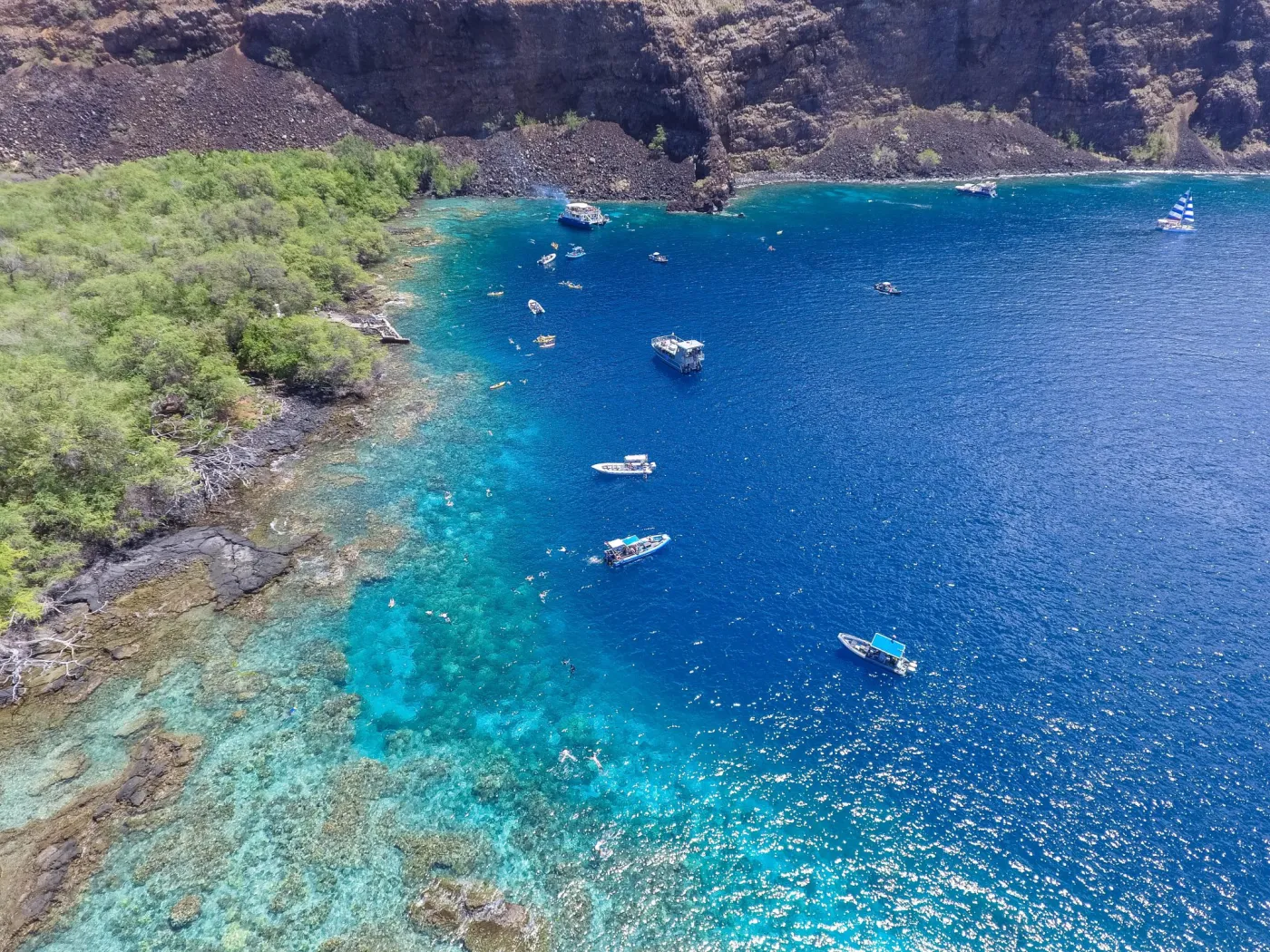
To reach the bay, take Highway 11 south from Kailua‑Kona for approximately 18 miles to the Nāpō‘opo‘o turnoff. Follow the road downhill for about 4 miles. The northern area of the bay—Ka‘awaloa Cove—is accessible only by boat, and several permitted dive and snorkel tour operations serve the region.
MLCD Boundaries
The Kealakekua Bay MLCD extends from the highwater mark to a line running from Cook Point to Manini Beach Point.
Another line from Cook Point to the north end of Nāpō‘opo‘o Beach divides the district into:
- Subzone A – Northern portion, including Ka‘awaloa Cove
- Subzone B – Southern portion, including Nāpō‘opo‘o
Each subzone has its own regulations designed to protect sensitive habitats while allowing limited fishing activities in specific areas.
Natural & Cultural Significance
Kealakekua Bay is renowned for its pristine waters and extraordinary marine biodiversity. Sheer sea cliffs along the northern shoreline—Pali‑kapu‑o‑Keoua—are marked with numerous lava tubes, some historically used as burial sites.
The bay also holds deep cultural and historical importance. British explorer Captain James Cook arrived here in 1779 and was welcomed with great honor. A month later, he was killed during a conflict between his crew and local Hawaiians in Ka‘awaloa Cove. A 27‑foot monument, erected in 1878, stands near the site of his death, with the ruins of the ancient village of Ka‘awaloa nearby.
Marine Environment
Nāpō‘opo‘o (Southern Side / Subzone B)
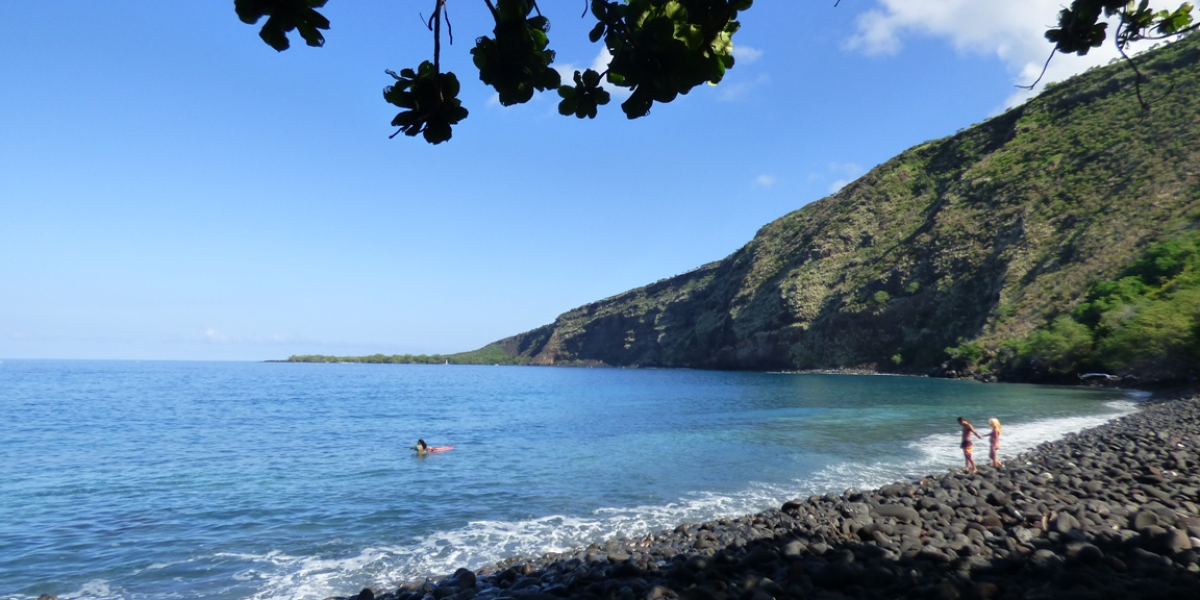
Nearshore waters are generally shallow with limited coral cover, but conditions improve farther from shore where:
- Coral starts to increase
- Caves and ledges become more common
- Depths reach about 30 feet
The area between the Nāpō‘opo‘o landing and Manini Beach Point is especially scenic and diverse.
Northern Pali & Ka‘awaloa Cove (Subzone A)
The northeastern coastline below the pali offers excellent snorkeling in calm conditions, with:
- Abundant coral growth
- Rich marine life in water as shallow as 5 feet
The best diving in the entire bay is found in Ka‘awaloa Cove, where depths range from 5 to 120 feet. Here, coral diversity is exceptional, fish are unusually tame, and underwater visibility is often outstanding.
Spinner dolphins frequently rest and travel inside the bay.
Safety Considerations
Conditions can become hazardous during:
- Southern (kona) storms
- High surf events
However, Ka‘awaloa Cove is typically calmer than the southern shoreline.
There are no lifeguards on duty at Nāpō‘opo‘o Beach.
Facilities
- Restrooms
- Showers at Nāpō‘opo‘o Beach Park
Regulations
Permitted Activities
Within Subzone B only:
- Fishing for, taking, or possessing finfish using hook‑and‑line or thrownet
- Using any legal fishing gear (except traps) for taking akule, ‘ōpelu, and crustaceans
Within the entire MLCD:
- Possessing a knife, shark billy, bang stick, powerhead, or CO₂ injector
- Conducting scientific or propagation activities with a valid permit
Prohibited Activities
- Fishing for, taking, or injuring any marine life (including eggs) except as allowed in Subzone B
- Taking or altering sand, coral, or geological features
- Feeding or attempting to feed fish
- Anchoring boats in Subzone A
- Anchoring in Subzone B except on sand or in a manner that avoids damaging coral