

Learn & Explore/Habitats/Coral Reefs
Coral Reefs: Lifelines Beneath the Waves
Why Hawai‘i reefs are important
Why do coral reefs matter?
Coral reefs are among the most biologically diverse and valuable ecosystems on Earth. They provide:
- Food and Jobs – Supporting fisheries and local livelihoods
- Coastal Protection – Acting as natural barriers against waves and storms
- Cultural Significance – Integral to Native Hawaiian traditions, genealogy, and community wellbeing
- Economic Value – Hawaiʻi’s reefs are valued at $863 million annually just in coastal protection benefits, and additionally bring in over $800 million each year through tourism
Unfortunately, reefs worldwide are facing severe threats from climate change, disease, and other human activities. Global projections show that coral cover may decline by up to 70-90% within this century if temperatures continue to increase at the current rate.
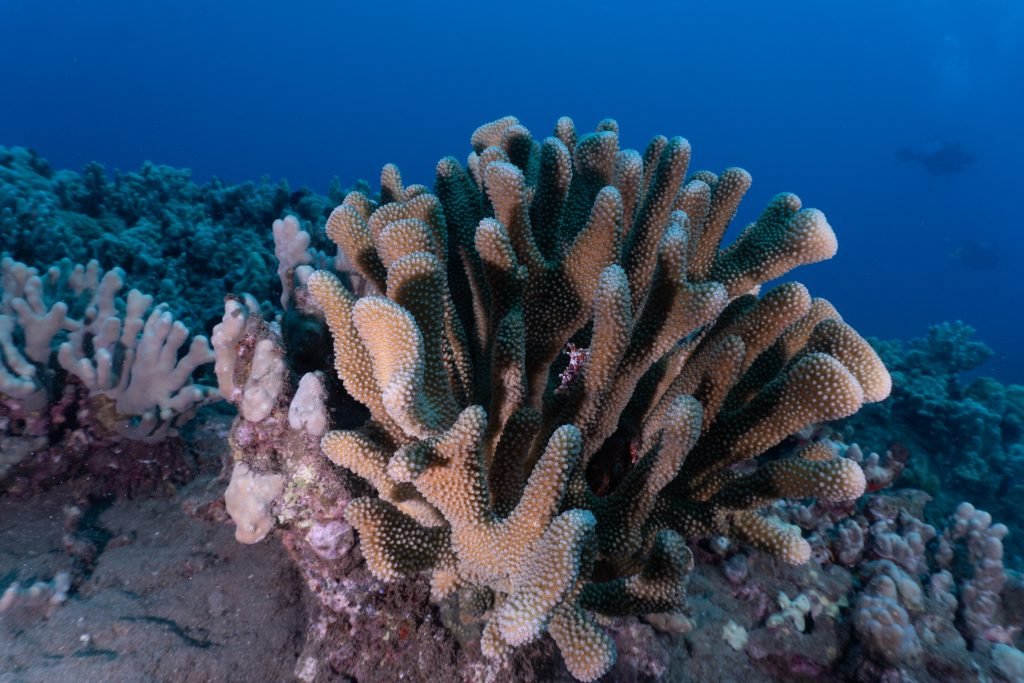
Common Hawaiian Corals
Explore places where land and sea meet, discover Hawaii’s aquatic life, and learn how our waters shape culture, recreation, and community.
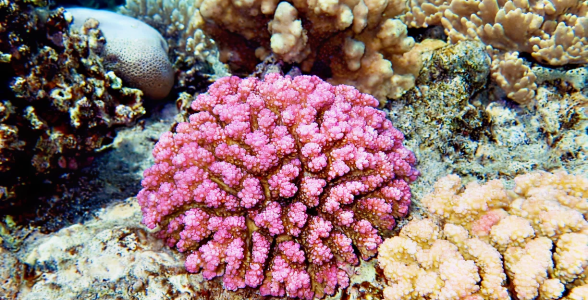
Rose or Cauliflower Coral
Pocillopora Meandrina
The most common Pocillopora in Hawai‘i, this coral prefers wave-agitated environments, and is found at depths to about 150 feet. Commonly called “rose coral” or “cauliflower coral,” the colonies form cauliflower-shaped heads about 10 to 20 inches in diameter.
Branches are heavy and leaf-like, and fork bluntly near the ends. All branches have wart-like projections called verrucae that are covered with calices. Color of living colonies ranges from brown to pink.
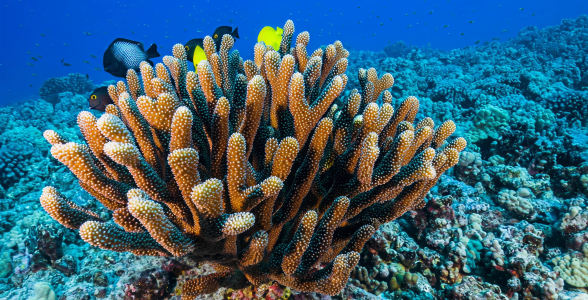
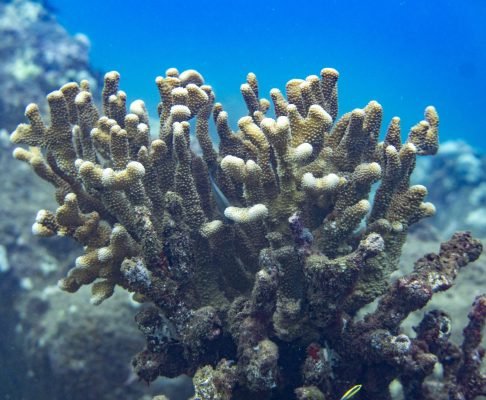
Antler Coral
Pocillopora Eydouxi
Colonies consist of thick pipe-like branches that resemble moose antlers. This species also possesses verrucae and is usually found in depths of 35 to 150 feet. Live colonies are brown in color and usually darker than other Pocilloporid corals.
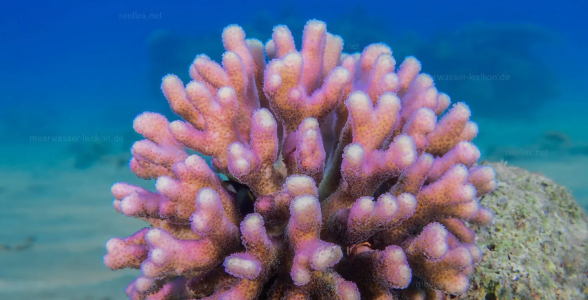
Finger Coral
Porites Compressa
Distinguishing features are the finger-like branching and shallow snowflake-shaped calices. This species is most common in wave-protected areas like bays or deeper reef slopes to depths of about 150 feet.
It has many growth forms, but all of them show some sort of fingerlike branching. Color of live colonies ranges from light brown to light yellowish-green.
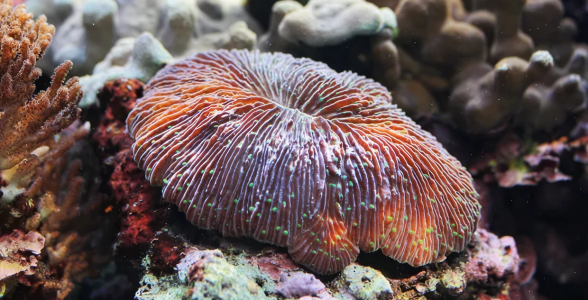
Mushroom or Razor Coral
Fungia Scutaria
This solitary (single polyp), free-living (unattached) coral is most commonly found on reef flats, frequently between cracks and crevices. It has also been found at depths of over 75 feet. Its disk-like, elliptical shape resembles a mushroom cap and ranges from 1-1/2 to 7 inches in diameter. Some adults may form a high arch in the middle. Immature forms are attached to the substrate or an adult mushroom coral by a stalk.
It grows into a disk and, when large enough, breaks off the stalk and becomes free-living. The color of live specimens ranges from pale brown in bright sunlight to dark brown in shady areas or deeper water.
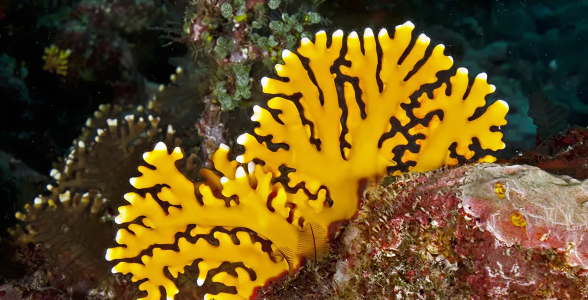
Lace Coral
Pocillopora Damicornis
This delicate and fragile coral forms small bushy clumps up to about 6 inches in diameter. Colonies consist of fine branches covered with calices. These branches range from long and slender in calm waters to more robust forms in areas of wave action. Sometimes the skeleton will create pocket formations around a crab that lives among the branches.
Usually found in protected areas and inner portions of large reef flats, this species appears to strongly depend on sunlight, as it is rarely found below about 30 feet. Colonies range in color from light brown in shallow waters to dark brown in deeper waters.
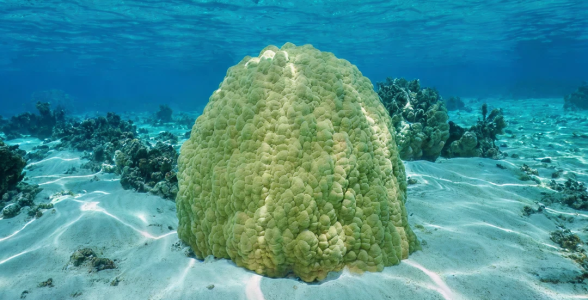
Lobe Coral
Porites Lobata
This coral produces many encrusting or massive forms on the reef from the intertidal zone to depths of over 180 feet. Long narrow cracks found on the coral heads are produced by a type of alpheid shrimp.
Calices have a snowflake-like appearance and are shallow and flush to the surface. Living colonies range in color from yellowish-green to brown and sometimes blue.
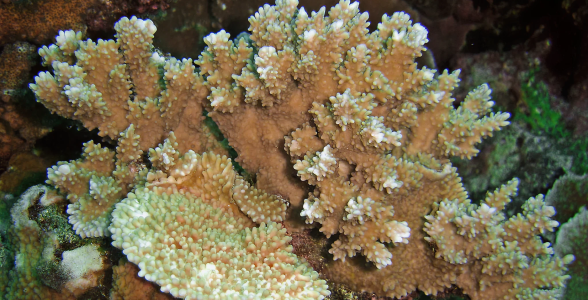
Rice Coral
Montipora Capitata
The most obvious characteristic of this coral is the nipple-like projections (papillae) that cover the surface. These papillae are smooth with no calices on them. Calices are found on the upper surface of the coral between the papillae. The image of the calices and papillae create a “rice & pepper” appearance.
This species is found at depths up to about 150 feet. It has a number of growth forms ranging from platelike to branchlike and encrusting types. Color of living colonies is usually brown. If the colony is growing in a plate form, the edges may be white.
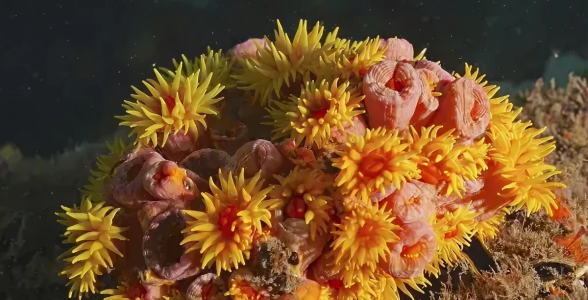
Cup or Tube Coral
Tubastraea Coccinea
This is a common non-reef building coral found in shallow Hawaiian waters. This species forms large calices and occurs in clumps that are 2 to 4 inches in diameter.
Living tissue is usually bright orange in color, but may also appear pink or even black. The bright coloration is not produced by zooxanthellae. This coral is usually found on steep ledges, in caves and in shady tidepools.
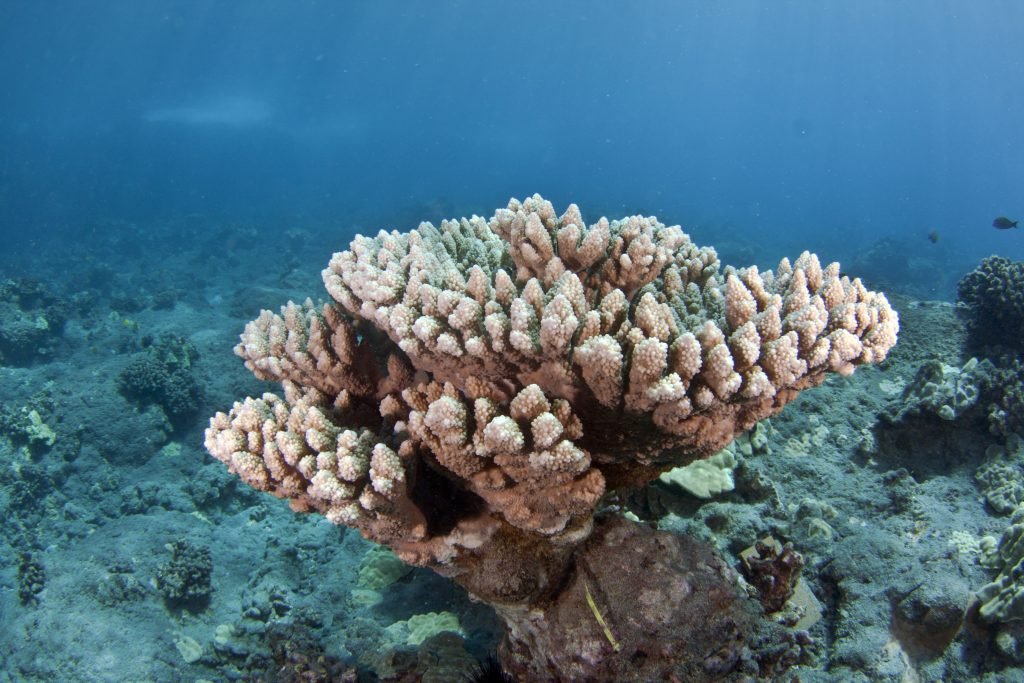
Benefits of Healthy Reefs
- Habitat for nearshore fisheries
- Protection of coastlines from erosion and storm damage
- Support for tourism and fishing industries worth billions
- Provides resources that perpetuate Native Hawaiian traditional and cultural practices
- Feeds our local communities
Threats to Hawaiʻi’s Coral Reefs
- Bleaching Events – Mass coral bleaching events are happening more frequently, with past incidents resulting in up to 50% reef mortality in some areas
- Climate Change – Rising temperatures, sea level rise, and stronger and more frequent storms
- Human Impacts – Coastal development, pollution, sediment runoff, sewage discharge, unsustainable fishing, and physical damage from overuse and vessel groundings
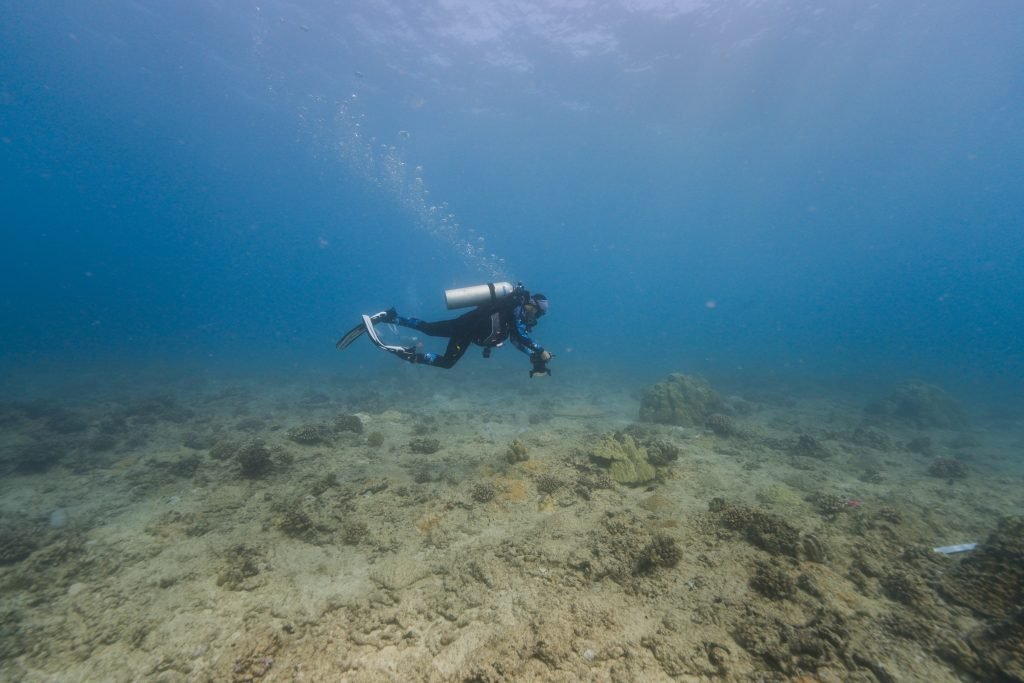
Help Protect our Reefs
- Be careful when swimming
- Don’t stand on, touch, or kick corals. Even fins can hurt them
- Anchor boats wisely
- Only anchor in sand or designated mooring buoys, not on reefs
- Keep our ocean clean
- Don’t leave trash on beaches
- Refrain from buying products that have unnecessary plastic packaging which may end up as trash in our ocean
- Prevent chemicals and other pollutants from entering storm drains and streams that eventually empty out into the ocean
- Eat less processed meat
- Reduce eating mass-produced meat to significantly cut greenhouse gas emissions that contribute to climate change and minimize wasting precious land and water resources
- Use reef-safe sunscreen
- Pick sunscreens that don’t have oxybenzone or octinoxate
Our Strategy
The Division of Aquatic Resources (DAR) works to:
- Advance planning and community action
- Promote awareness and education
- Support scientific research with management applications
- Implement on-the-ground projects to protect reefs
Key Outcomes: Stronger enforcement of reef protections and better understanding of threats at priority sites.
Rules & Resources
- Visit the Coral & Live Rock rules page for more information about regulations on coral and live rock in Hawai‘i.
- Visit the Coral & Invertebrates page to learn more about the common coral species you can encounter here.