

Know the Rules/Fishing Regulations/Fishing Around Protected Species
Fishing Around Protected Species
Fishing is important to our way of life and livelihoods in Hawaiʻi. Below you can find best practices for how to catch fish and avoid harming protected species.
Fishing Around Sea Turtles
Line entanglement around flippers, head or neck is the greatest threat to sea turtles. Please follow the steps below if you accidentally catch a sea turtle on your fishing line.
- Call the NOAA Marine Wildlife Hotline: 1-888-256-9840 for technical guidance while you remove the line.
- Reel in turtle with care. Do the best you can to land the animal carefully. DO NOT drag a turtle up a cliff.
- Hold the turtle by its shell and/or flippers.
- Cutline close to hook, as short as possible.
- Remove the hook only if it can be done without injury to you or the turtle. If the hook’s barb is exposed, smash it down to easily extract the hook and shorten the handling time of the turtle. DO NOT remove the hook if swallowed. If using a barbless hook, the hook should easily come out.
- Remove any line from flippers, head and neck. Try to remove any remaining line from the reef.
- Release turtle with no line attached.
- Dispose of the line in a responsible manner.
Fishing or Spearfishing Around Monk Seals
Hooking is often life threatening for seals. PLEASE REPORT!
If you are spearfishing and see a seal, pull your fish in close and never feed seals, to avoid them following you and getting comfortable getting fed by humans.
If you hook a seal or see a sick or injured seal please call the NOAA Marine Mammal Stranding and Entanglement Hotline: 1-888-256-9840 .
Monk seal sightings are still relatively rare, so we also want to know if you see a monk seal, regardless of injury or entagement. Learn more about monk seals and how to report sightings.

Check out our reflective fishing around protected species decals. To get free decals, please check out our DLNR DAR Instagram page and Barbless circle hook project instagram page to join us at our next event or contact your local DAR office or local NOAA fisheries representative. Stock is limited for these stickers.
Fishing Around Oceanic Whitetip Sharks and Other Shark Species
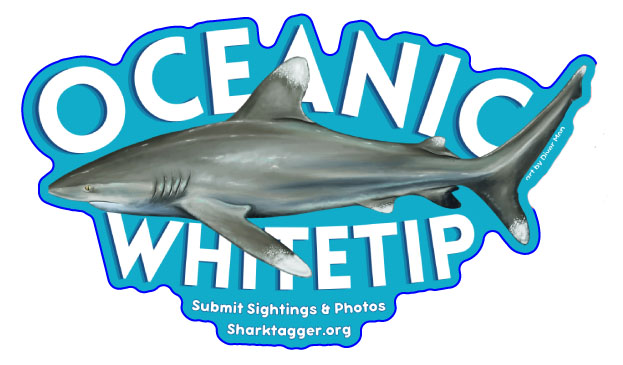
Hookings can be life threatening for oceanic whitetips and other shark species. Reduce fishing interactions through avoidance. If you see an oceanic whitetip shark or other shark species, consider bringing in your line(s) and changing locations. If you are fishing and hook a whitetip, please release them in a manner that minimizes injury: Please cut the line as close to the hook as possible and release them as quickly as possible to give them the best chance at survival. If you see a deceased shark, please call the NOAA Marine Wildlife Hotline: 1-888-256-9840 option 8. Please take pictures of their dorsal (top) fins and report your sightings.
Learn more about oceanic whitetip sharks, and report sightings and submit photos.
Fishing Around False Killer Whales and Other Whale Species
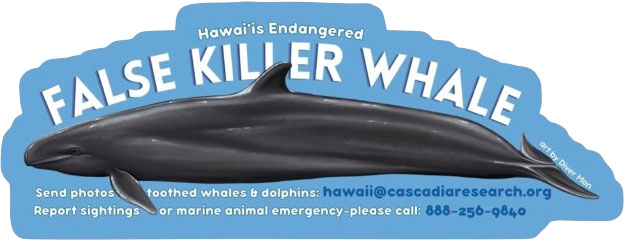
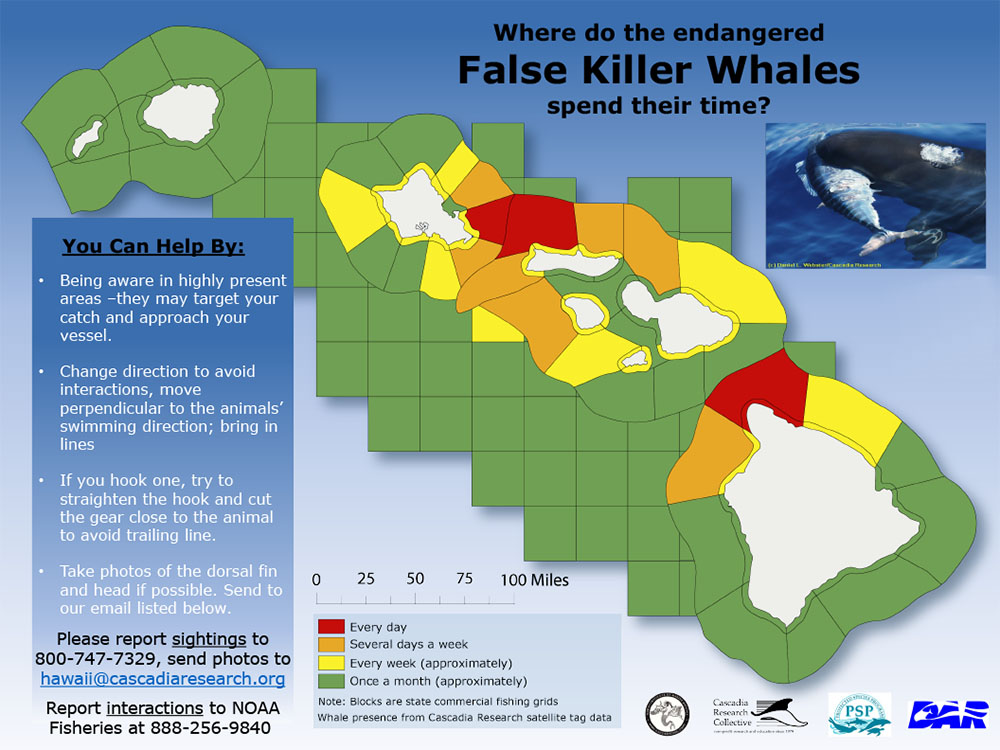
Hookings can be life threatening for false killer whales and other whale species. The best way to avoid fishery interactions is through avoidance. Help conserve endangered False Killer Whales (FKW) by being aware of high-density areas while fishing. If you see FKWs, consider moving locations to avoid interactions and bring in your lines. If you are fishing and you hook one of these species, please straighten the hook and cut the gear close to the animal to avoid any trailing line. If you have a false killer whale sighting or interaction, please call the NOAA Marine Wildlife Hotline: 1-888-256-9840 option 5.
False killer whale sightings are rare, so please take pictures or videos of their dorsal (top) fins and report your sightings.
Learn more about false killer whales, and report sightings and submit photos.
If you accidently hook a humpback whale or other larger whale species, please do not try to reel the species in, due to their large size, clipping the line as soon as possible keeps you and your vessel safe. If you do acciendelty hook a humpback or other larger whale species, please report it to the NOAA Marine Wildlife Hotline: 1-888-256-9840.
Fishing Around Oceanic Manta Rays and Other Rays
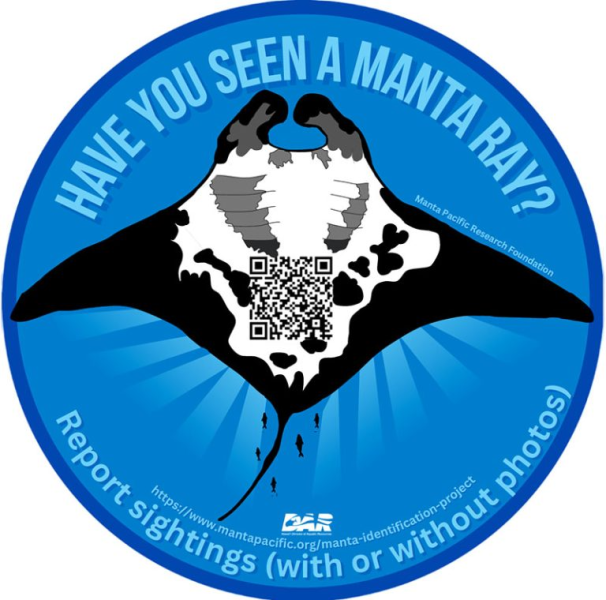
Hookings can be life threatening for oceanic manta rays and other ray species in Hawai’i. When going fishing, please be aware of high ray use areas: areas where there is a lot of upwelling – usually a steep drop off. Consider moving locations or bringing in lines if you see a ray in the area to help avoid entanglements. If you do hook one of these animals, please cut the line as close to the hook as possible, and release as quickly as possible to reduce harm to these species. If you have an oceanic manta ray fishing interaction, please call the NOAA Marine Wildlife Hotline: 1-888-256-9840 option 8.
Oceanic manta ray sightings are rare, so please take pictures of their bellies and report your sightings.
Learn more about oceanic manta rays, and report sightings and submit photos.
Barbless Circle Hook Project
The Barbless Circle Hook Project is a partnership between the Department of Land and Natural Resources, Division of Aquatic Resources and the National Oceanic Atmospheric Association (NOAA) Fisheries. The project was created to help minimize fishing interactions between fishers and protected species by providing free barbless circle hooks to the community and educating about the importance of using them.
Why use a Barbless Circle Hook?
- It’s better for the fish. It’s easier to quickly release unwanted catch without damaging the fish, which means more and healthier fish for you to catch in the future.
- It’s better for you. Minimize injury to yourself and others, as well as damage to shirt, shorts, and nets.
- It’s better for protected species in Hawaiʻi. If you accidentally hook or entangle an animal, barbless hooks are easier to remove, or the animals may be able to free themselves, which reduces trauma and enables the animal to return to normal activities.
Barbless circle hooks work! Studies on barbless circle hook effectiveness show that they work just as well as barbed hooks, and barbless fishers win tournaments! Check out the Barbless Circle Hook Project on Facebook and Instagram to see more photos of successful barbless circle hook catches.
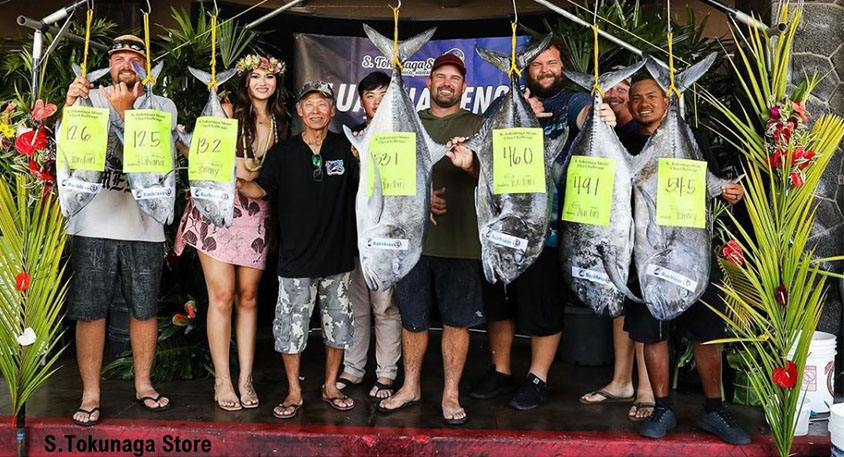
How to make a Barbless Circle Hook:
Use a small hand crimper (for Mustad 16/0 and smaller hooks) or large bench crimper (for Mustad 18/0 and larger hooks) to flatten a circle hook’s barb. A pair of parallel-jawed pliers can also be used in place of a hand crimper to flatten down the barb on smaller hooks.
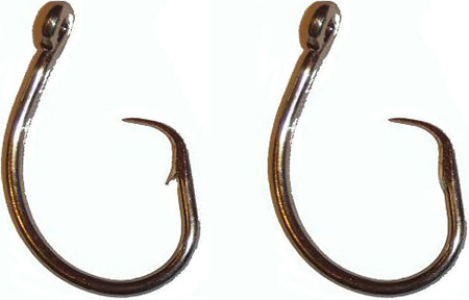
A barbed circle hook converted to a barbless hook using a crimping tool to flatten the barb.
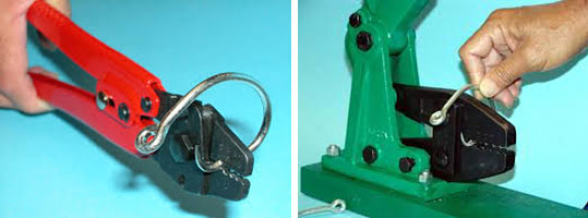
Use a hand crimper for small hooks, and a bench crimper for large hooks.
FREE Barbless Circle Hooks
Check out our instagram page @barblesscirclehookproject to see our next events and or contact your local DLNR DAR Office to ask about free barbless circle hooks and or event sponsorships.