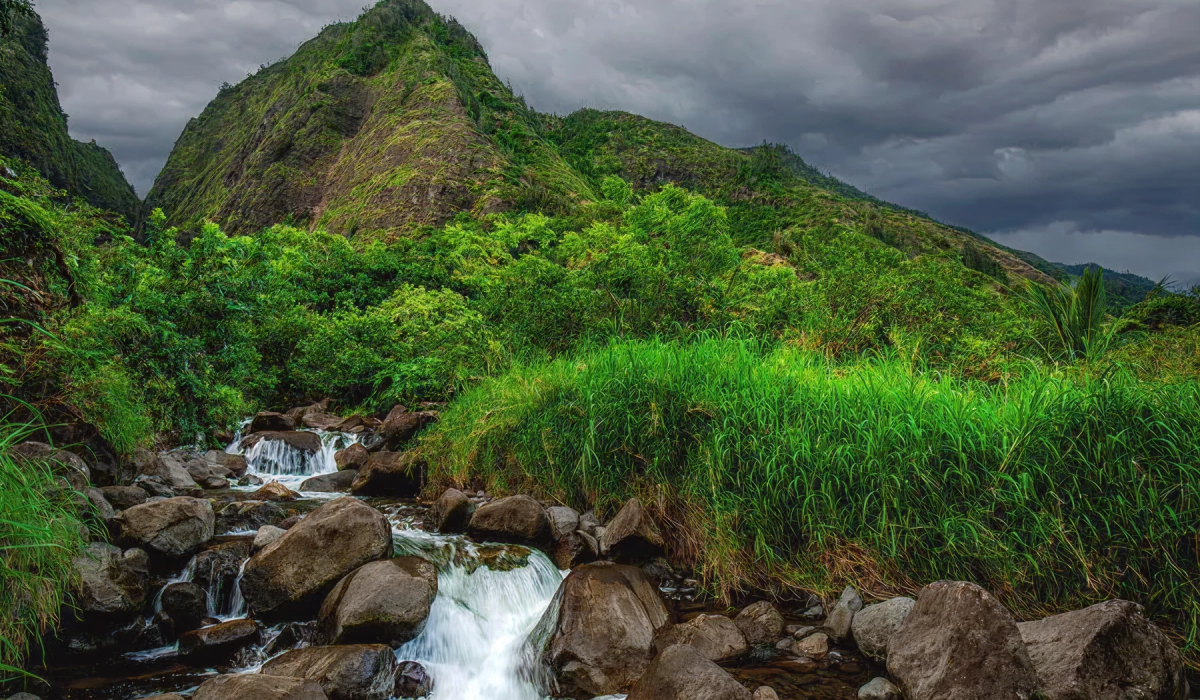
Learn & Explore/Habitats/Streams/Geology of Hawaii Streams
Geology of Hawaii Streams
Explore the volcanic forces and geological processes that created the Hawaiian Archipelago.
Formation of the Hawaiian Islands
Location: The Hawaiian Archipelago is in the north-central Pacific Ocean, stretching about 1,600 miles from Kure Atoll (NW) to the island of Hawai‘i (SE).
Formation
- Islands formed ~70 million years ago from lava at a stationary “hot spot” on the ocean floor.
- New islands were created as the Pacific Plate moved northwest.
Island types:
- Northwestern islands: heavily eroded, now mostly coral atolls or low rock/sand islands with no flowing freshwater.
- Southeastern high islands: have abundant freshwater, making them the focus for studying native freshwater animals.

Mountain Streams and Rainfall Patterns
Freshwater on Hawaiian islands:
- Despite being surrounded by saltwater for over 2,000 miles in all directions, the high islands have freshwater.
- Northeast trade winds push moist air up mountain slopes.
- At 2,000–3,000 feet, cooler temperatures cause condensation, producing orographic rain that keeps streams flowing year-round.
Rainfall patterns:
- Average annual rainfall in Hawai‘i: 25–30 inches.
- Windward sides of islands receive 10–15 times more rain than average.
- Leeward (dry) sides may get very little rain, sometimes single-digit inches annually.
- Result: perennial streams on windward sides; intermittent streams in leeward rain shadows.
Storm effects:
- Kona storms (mostly in winter) come from the northwest, disrupting trade winds and causing heavy rain on leeward sides.
- These storms temporarily “green” dry areas and make intermittent streams flow.
- El Niño may also alter trade winds and rainfall patterns, though the mechanism is not fully understood.
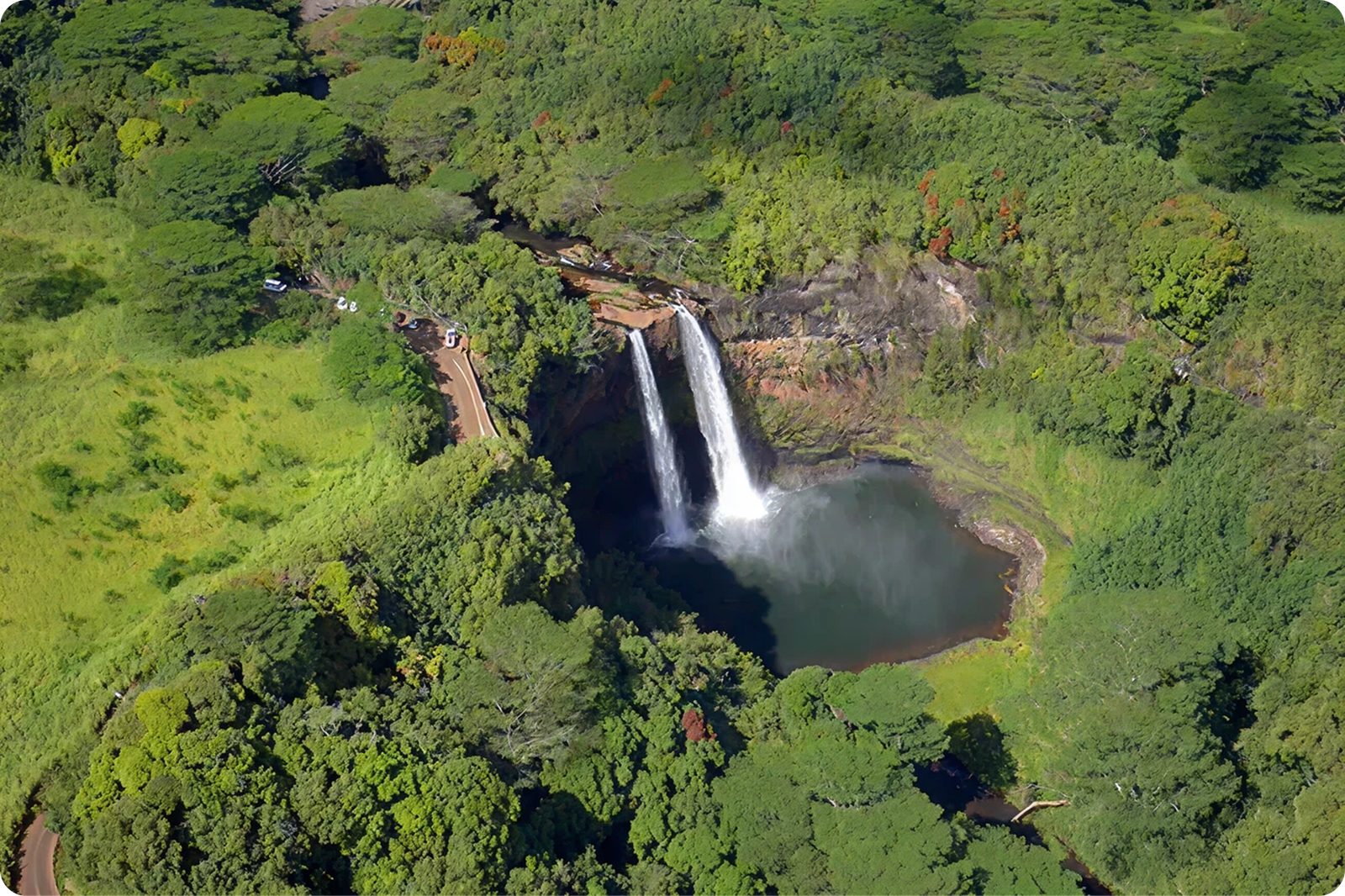
Stream Dynamics and Ecological Importance
Characteristics of high-quality Hawaiian streams:
- Clear, cold, and strong-flowing throughout the year.
- Minimal accumulation of sediment, leaf litter, and debris due to continuous flow and flash floods (freshets) caused by heavy mountain rains or weather fronts, most frequent February–April.
Dynamic nature of streams:
- Streams are constantly recovering from recent floods rather than remaining stable.
- Animals in these streams depend on episodic floods for survival.
Benefits of flash floods:
- Remove decaying organic debris, preventing oxygen depletion.
- Flush away fine sediments, protecting eggs of stream animals.
- Open stream mouths to the sea, helping species with marine larval stages to recruit.
- Floodwaters may provide a biological cue for timing the upstream migration of larvae.
Vegetation and food:
- Continuous flow and floods limit underwater plants to early successional species like navicular diatoms and low-growing green and blue-green algae.
- These algae are essential food for an obligate herbivore fish, important for at least two other fish species, and likely consumed by all stream macroinvertebrates (mollusks and crustaceans).