

Learn & Explore/Habitats/Streams/Survey Data
Survey Data
DAR gathers survey data from streams and waterways to monitor and protect freshwater ecosystems.
Freshwater Survey Data Overview
The Division of Aquatic Resources (DAR) collects multiple types of data to monitor and protect Hawai‘i’s freshwater ecosystems. These surveys include:
- Biological monitoring using the point quadrat count method, drift sampling, and larval trapping
- Additional scientific surveys (e.g., insects, algae) conducted by DAR or partner institutions
- Data use: monitoring, assessing, managing, and protecting freshwater aquatic resources across the State
Point Quadrat Count Method includes
- Surveying stream biota
- Recording native and introduced species of: Fish, Crustaceans, Mollusks, Insects, Algae
- Documenting environmental conditions: Habitat type, Substrate type, Survey area, Temperature, Elevation
DAR Freshwater Database Overview
The Division of Aquatic Resources (DAR) Freshwater Database contains survey data for Hawai‘i’s freshwater systems, including: perennial and intermittent streams, reservoirs, lakes, ponds, ditches, and diversions.
Key Points About the Database
- Historical data: Records date back to the early 1960s.
- Hawai‘i Stream Assessment (HSA): Developed in 1990 as a cooperative project involving:
- Commission on Water Resource Management
- Department of Land and Natural Resources
- National Park Service Cooperative Park Studies Unit, University of Hawai‘i
- National Park Service Rivers, Trails, and Conservation Assistance Program
- Data search: Streams or water bodies can be located using an address, HSA code, or DAR code.
DAR Stream Coding System
DAR Code Breakdown (8 digits, 00000000)
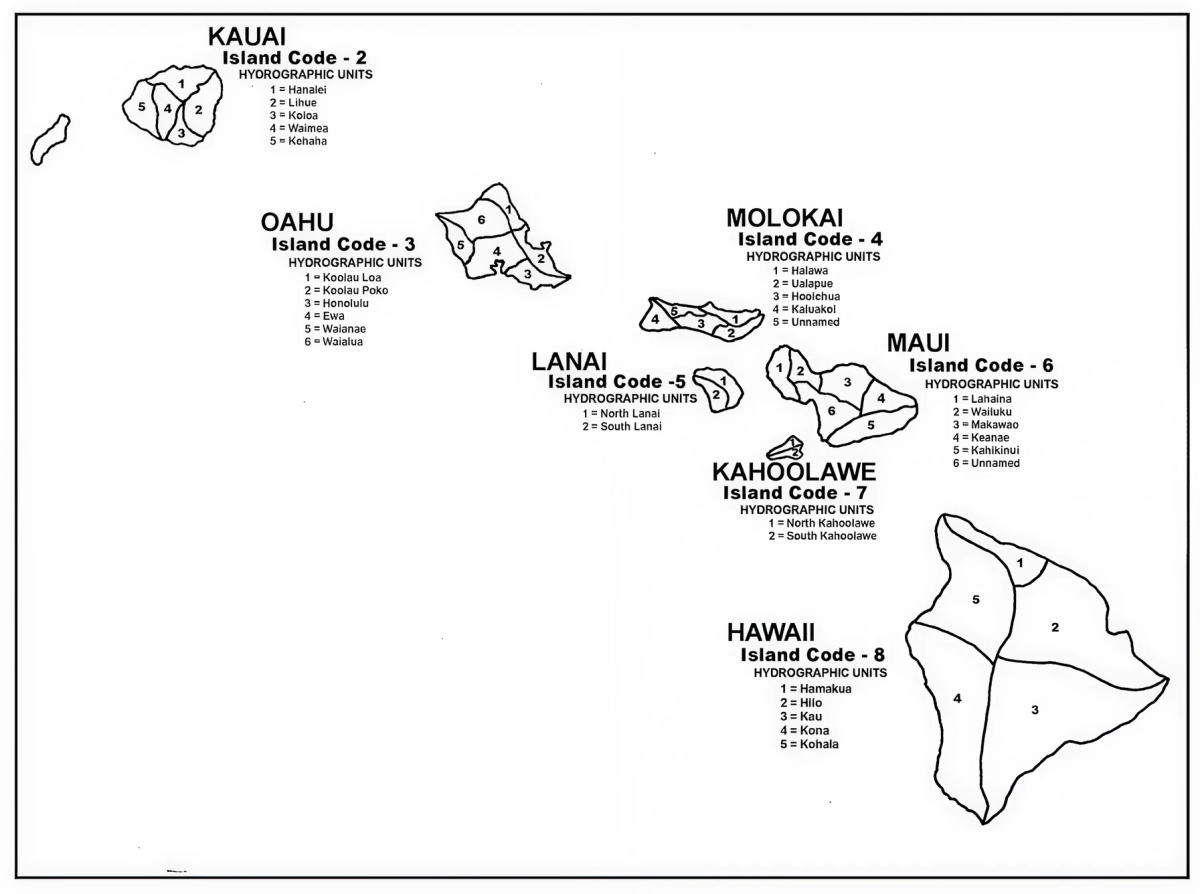
1. First digit : Island
- 2 = Kauai
- 3 = Oahu
- 4 = Molokai
- 6 = Maui
- 8 = Hawai‘i
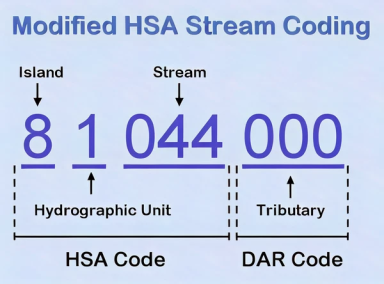
2. Second digit: Hydrographic Unit (HGU)
- Regional drainage areas established in the 1970s by USGS and DOWALD
3. Third–fifth digits: Stream identifier
- Expanded to 3 digits to include intermittent streams and drainage basins
- Coding continues sequentially around the island
4. Sixth–eighth digits: Tributary segment identifier
- Note: Knowing the island and HGU is necessary to locate a specific stream or tributary.
Searching the Database
- First-order streams (no tributaries): Search by stream name.
- Streams with tributaries: Must know the tributary name.
- Filtering in MS Access:
- Highlight the correct HSA_code or DAR_code field
- Use the funnel function to filter out irrelevant data
Reference for stream names: United States Department of Interior, Geological Survey; Topographic Quadrangle Maps, 7.5-minute series, 1983.