Learn & Explore/Programs & Initiatives/Estuaries
Estuaries
Supporting research, conservation, and long-term stewardship of estuarine ecosystems
Healthy Estuaries Support Sustainable Fishing
Estuaries serve as a dynamic crossroads where marine, freshwater, and terrestrial worlds meet. This ecosystem supports a rich tapestry of aquatic life, including species found nowhere else on Earth. As vital nursery grounds, estuaries provide abundant food and shelter young fish need to fuel their rapid growth before venturing into the coastal ocean or stay and thrive as adults in these habitats.
Can we expect healthy adult fish populations if their nursery habitats are in decline?
Healthy estuaries mean sustainable fishing, rich biodiversity, and a stronger economy. At DAR, our dedicated Estuary Team—supported by the State of Hawai’i and Sportfish Restoration—works across the islands to protect and restore these coastal treasures for our community and future generations.
The Hidden Threat to Fisheries
While overfishing gets the headlines, habitat degradation is a silent driver of fishery declines. Estuaries are on the frontline because they are situated in a space between land and sea making them susceptible to threats from both.
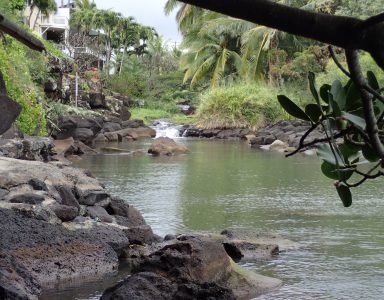
The Interface
Estuaries receive runoff from the land and larval fish from ocean currents.
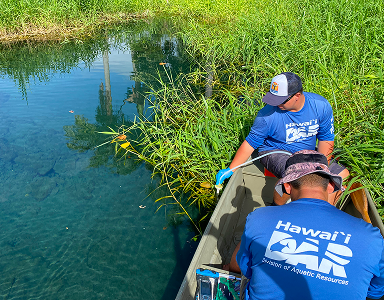
The Stressors
Freshwater diversion, introduced species, pollution, environmental shifts, and shoreline development directly impede estuarine health and productivity.
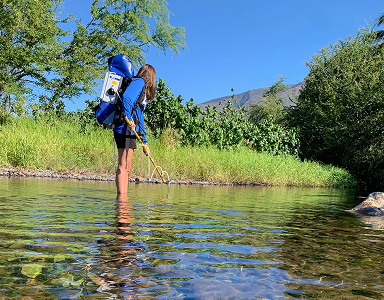
The Result
This distinctive geography makes estuaries the most vulnerable—and the most critical—habitats to protect.
Research in support of fishing opportunities
The DAR Estuary Team conducts targeted research to enhance the conservation, management, and restoration of this vital ecosystem. We work to answer:
-
- Nursery habitats: How do degraded nursery conditions create biological bottlenecks that limit recruitment of juvenile fish into adult populations?
- Ecosystem Connectivity: How do streams, groundwater, and estuaries interact to support productive coastal fisheries?
- Environmental Impact: How do changing estuarine conditions affect the diversity and abundance of fish?
- Species Biology: What are the life history traits of the fish that rely on estuarine habitats?
- Management Solutions: Which strategies best improve the health of these freshwater-dependent ecosystems?
- Ecosystems Restoration: How do native fish populations rebound following estuary restoration efforts?
- Cultural Integration: What is the best way to bridge contemporary research with Hawaiian Traditional Ecological Knowledge to drive solutions?
- Community Engagement: What approaches work best to share our findings, learn from and partner with fishers and local stakeholders?
Health of estuaries is closely tied to the conservation of upland forests, groundwater, and streams.
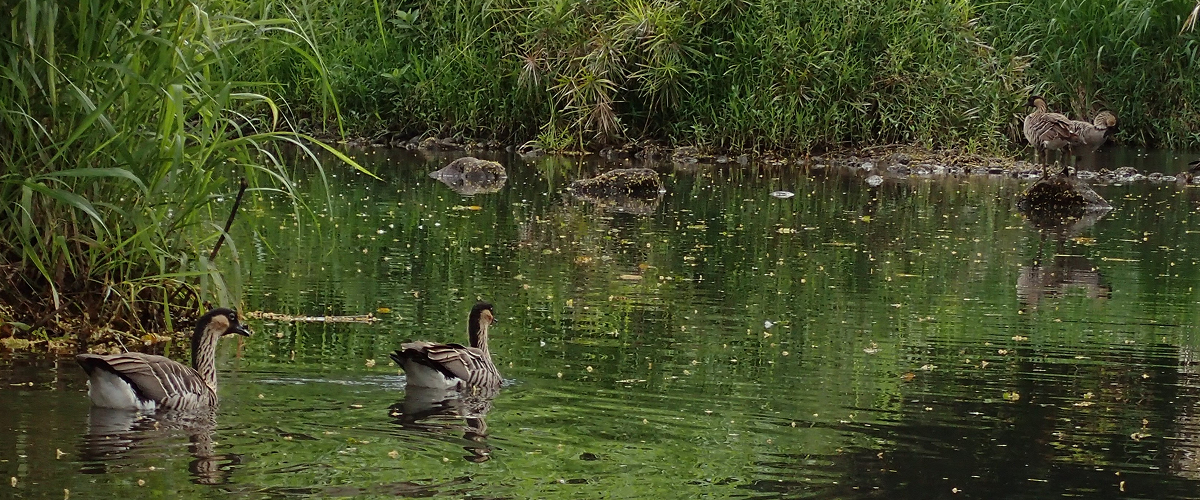
How Do We Measure Ecological Change in Estuaries?
To answer research questions in a dynamic environment like an estuary, we employ a multi-disciplinary approach that combines traditional field sampling with innovative technology. Because estuaries are “edge” ecosystems where fresh and saltwater meet, our data collection must account for high variability and fluctuations in water chemistry, juvenile recruitment, and species movement.
To answer our most critical research questions, DAR estuary team uses a multidisciplinary ‘toolbox.’ Because our islands’ estuaries are so diverse, we combine traditional field methods with modern technology to ensure we are capturing a complete picture of both fish health and habitat conditions. Here is a breakdown of our primary methods:
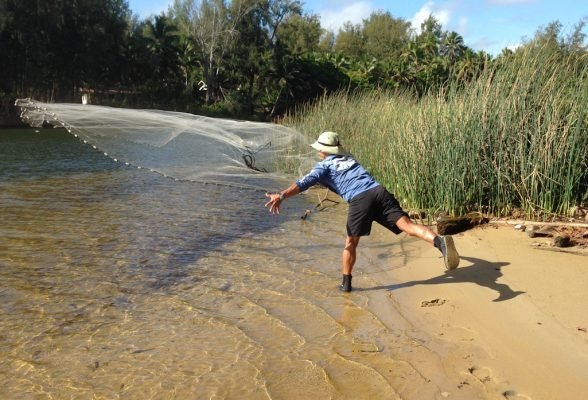
Cast nets hold a deep significance in Hawaiian fishing culture, and they are equally essential to our research. Because they are versatile across various habitats, the DAR Estuary Team relies on small-mesh cast nets to safely collect data. We practice ‘sampling with replacement’: fish are brought to shore in aerated buckets, identified, and measured to the nearest millimeter before being returned safely to the water. This allows us to track fish abundance, biomass, and population health without harming the resources we study.
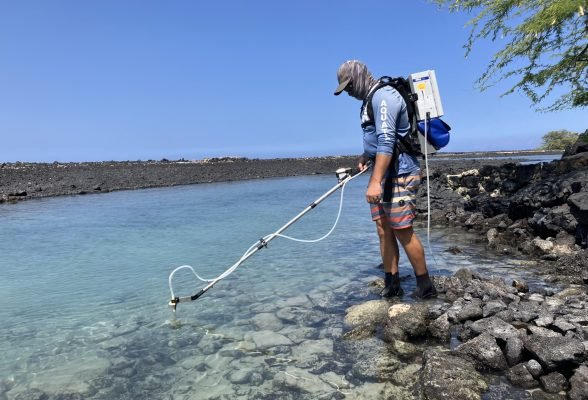
While cast nets are effective, they don’t tell the whole story. Fast-moving and larger predators like barracuda and ulua can easily outswim a sinking net, and introduced species like the To‘au (Blacktail snapper) often hide in deeper pockets just out of reach. To capture a more complete picture of biodiversity, the DAR Estuary Team uses environmental DNA (eDNA). By filtering water samples to collect the microscopic traces—skin cells, mucus, and waste—that fish naturally leave behind, we can identify species present in the area. This “genetic census” ensures that even the most elusive fish are accounted for in each estuary.
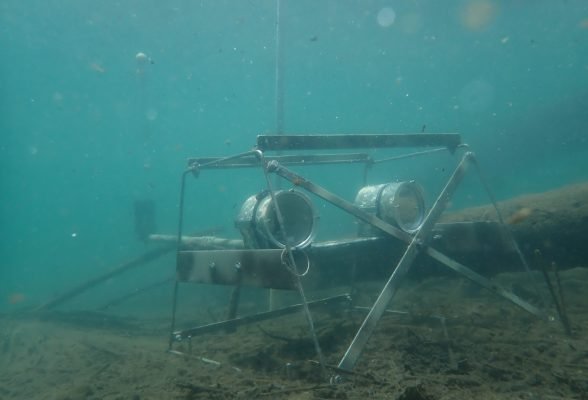
Originally developed in Hawaiʻi for deep-channel and coral reef surveys, Baited Remote Underwater Video (BRUV) technology has been specifically adapted for this project to monitor estuarine environments, particularly in conditions that are not suitable for cast net sampling. These specialized cameras allow us to capture high-resolution data on fish species composition, size, and abundance, while providing unique insights into fish behavior in deeper estuarine waters.