Learn & Explore/Species/Sharks & Rays/Scalloped Hammerhead Shark
Scalloped Hammerhead Shark
Hawaiian name: ka manō kihikihi
Scientific name: Sphyrna lewini
Description and Natural History
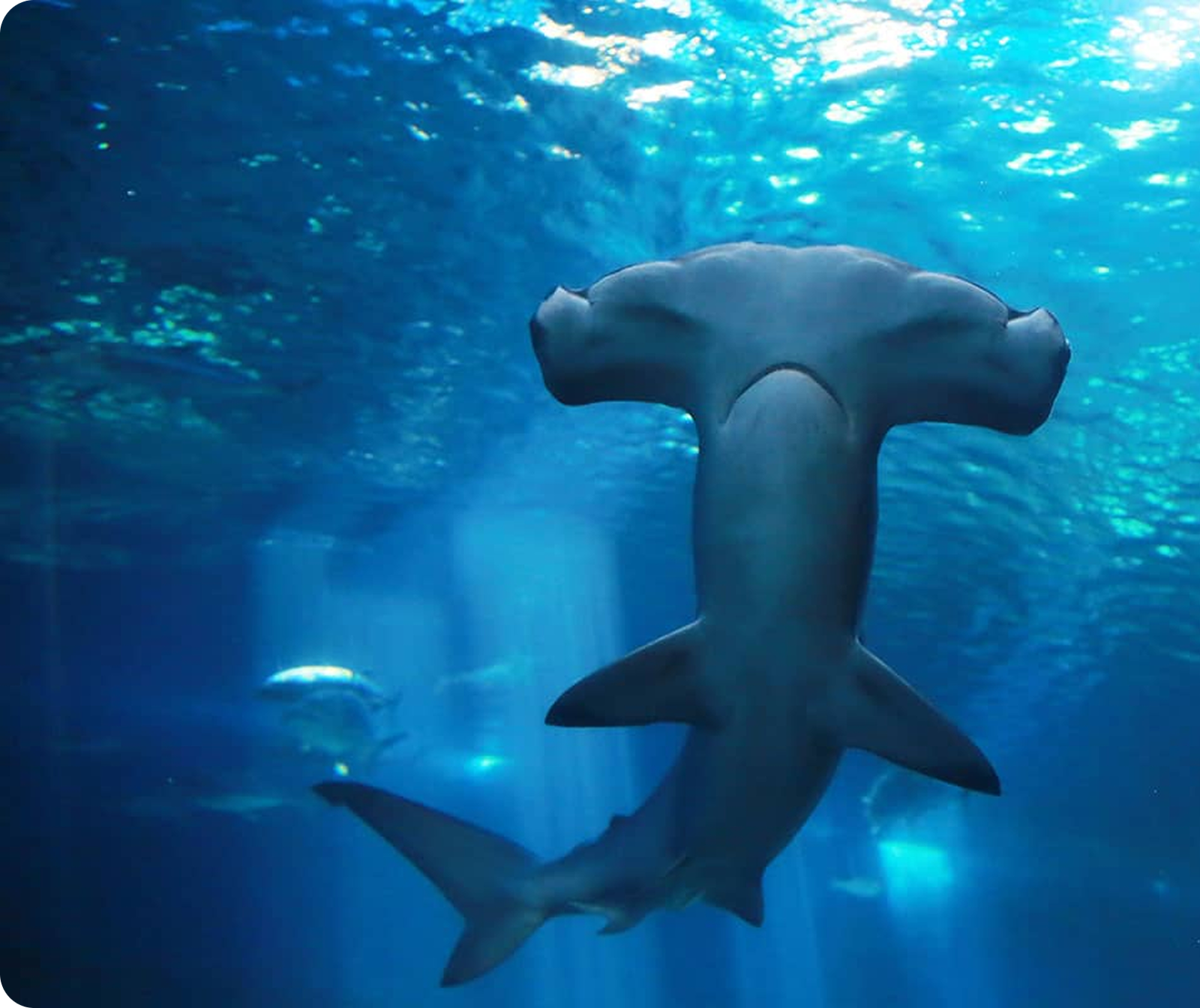
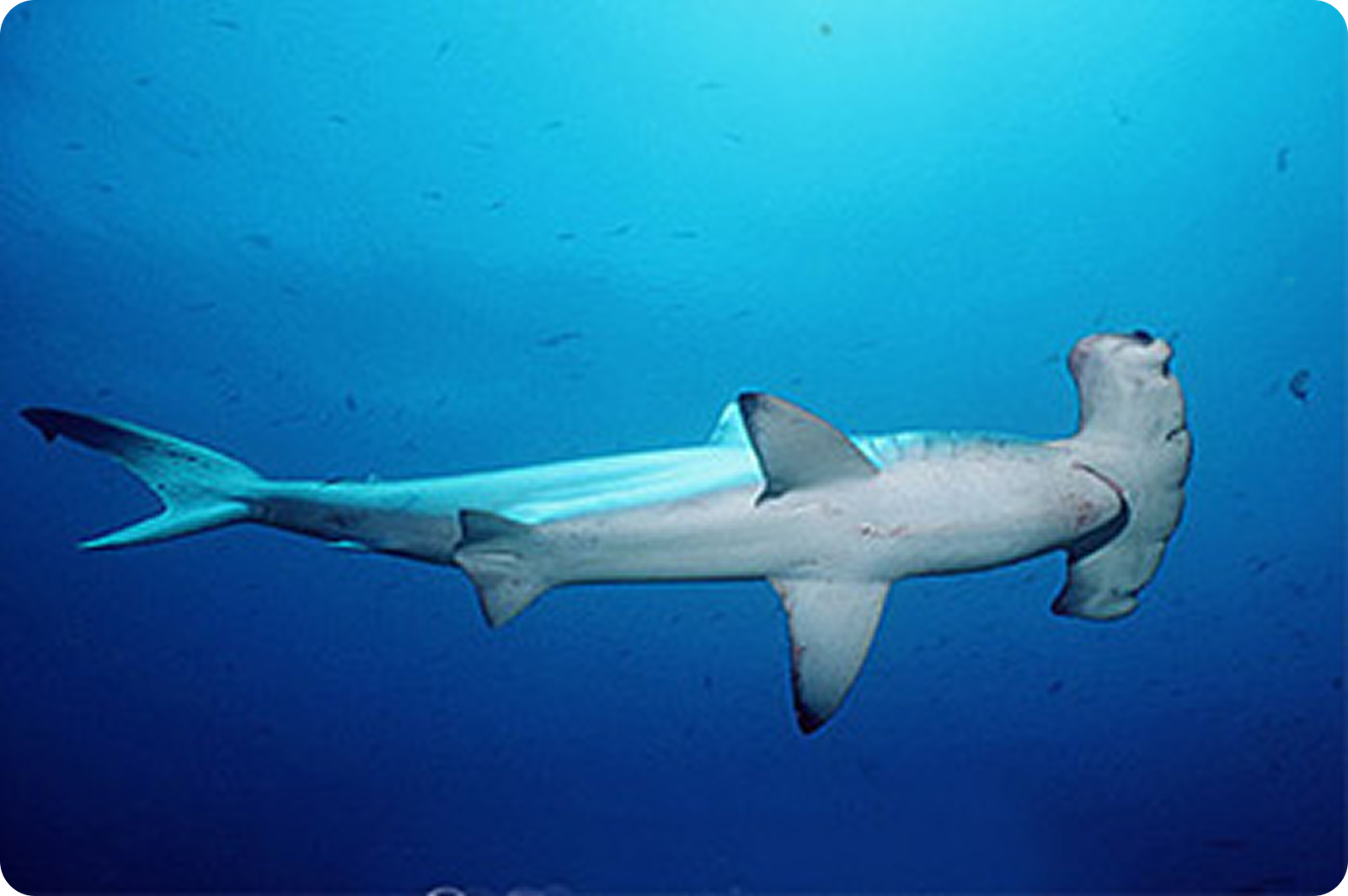
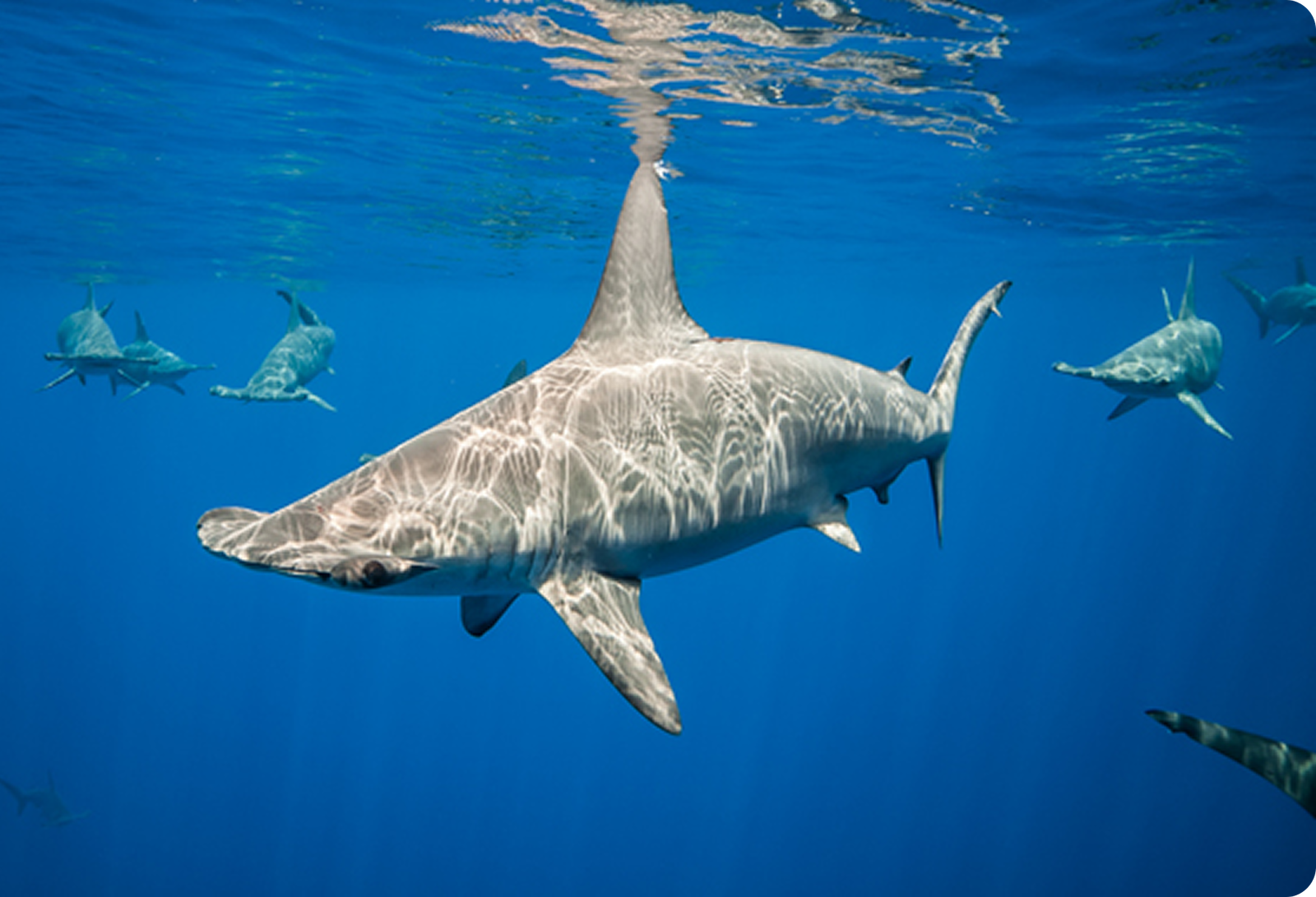
The hammerhead shark is one of our oceans’ most unique and alien-looking shark species. The scalloped hammerheads are recognized by a flattened hammer-like head with four “scallops,” or lobes, between their eyes on the leading edge of the head. Their bodies are gray with lighter underbellies, known as countershading, a widespread trait with offshore species used for camouflage. Adult scalloped hammerheads live offshore and come into shallower areas to pup. These sharks have been recorded as deep as 900 feet [5].
The scalloped hammerhead’s uniquely flattened head serves several functions; it could enhance the sharks’ sense of electroreception (the biological ability to perceive natural electrical stimuli), provide additional maneuverability in the water, and aid their sense of smell [6].
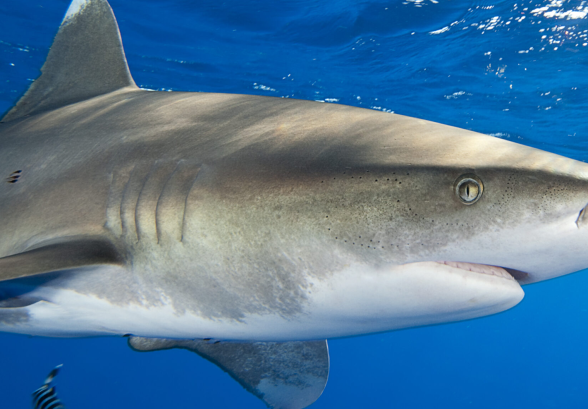
The Oceanic White Tip Shark
QUICK FACTS
LENGTH
Up to 14 feet
LIFESPAN
Up to 30 years
THREATS
Bycatch & International Harvest
Status and Protection
The global population of scalloped hammerheads is listed as critically endangered under the IUCN. The scalloped hammerhead has many Distinct Population Segments (DPS), two of them being the Eastern Atlantic and the Eastern Pacific. Both populations are listed as endangered under the ESA [7]. Another two scalloped hammerhead DPS are the Central & Southwest Atlantic and the Indo-West Pacific populations. These populations are listed as threatened under the ESA. Hawai‘i’s scalloped hammerhead population is part of the Central Pacific DPS and is not listed under the ESA.
Diet and Habitat
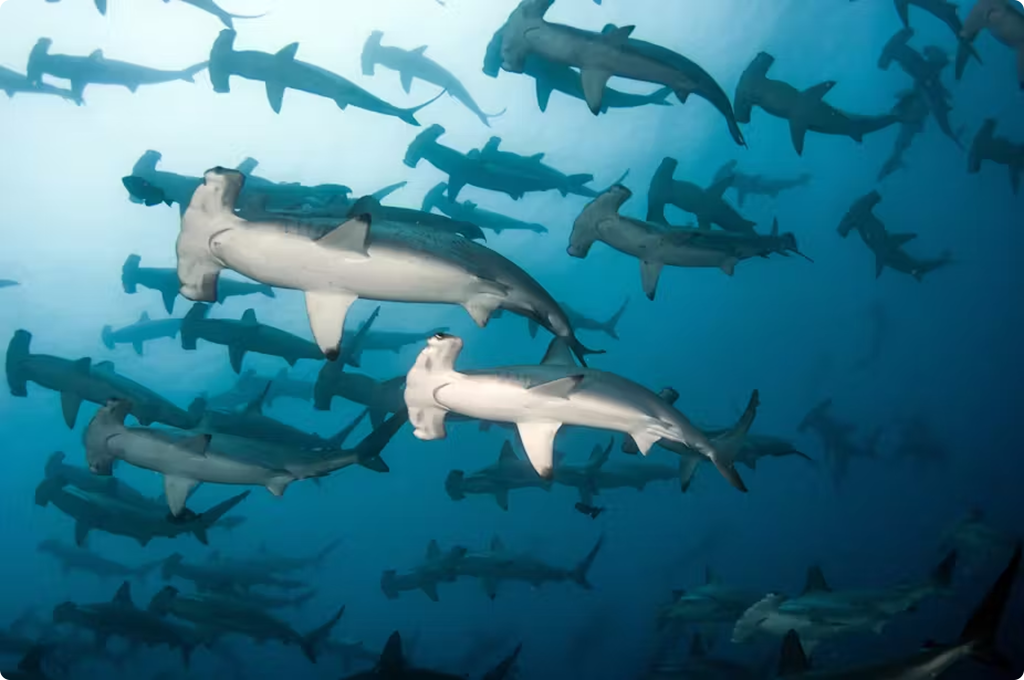
Juvenile scalloped hammerhead sharks primarily feed on bony fish and squid, while adult diets range from bony fish, squid, and other sharks and rays [5]. Hammerheads are often seen alone; however, they are also often seen in larger schools. The scalloped hammerhead shark is considered a shy and docile species. They are often not likely to approach divers or swimmers.
Reproduction
Like most species of sharks, the adult scalloped hammerheads live offshore and come into shallower waters of protected bays in Hawai’i to pup. Adult scalloped hammerheads have been recorded inshore between April and October for birthing and breeding. This shark species is viviparous, meaning their eggs hatch inside their body, where the pups feed off the yolk sac placenta until they are born. Common pupping sites in Hawai’i are Hilo Bay, Kane’ohe Bay, and Waimea Bay [5]. The gestation period is 11-12 months and litter size ranges from 15-31 pups. The pups spend three to four months in the bay and then return to deeper waters. The total number of pups passing through Kane’ohe Bay has been recorded to be as high as 10,000 per year. Adult scalloped hammerheads can reach up to lengths of 13 feet and average six to eight feet in the Hawaiian Islands.
Threats
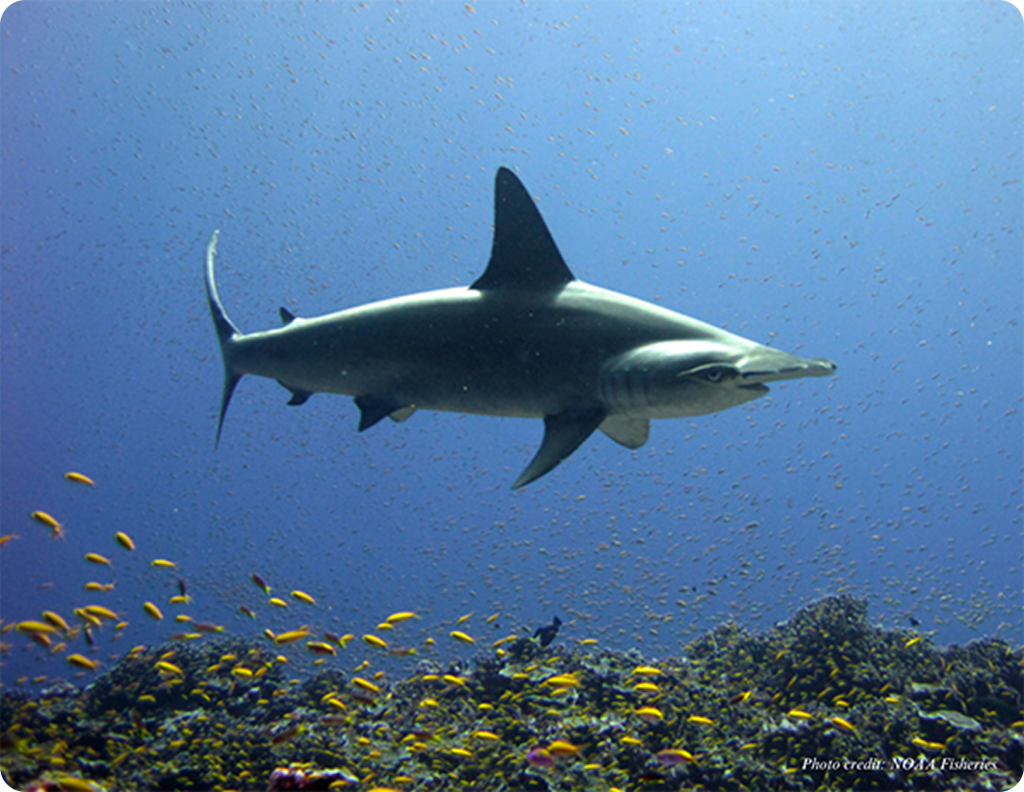
Scalloped hammerhead sharks are fished commercially for food and their fins. They are mainly threatened by overutilization by industrial/commercial and artisanal fisheries, habitat degradation, minimal fishing regulations, and their vulnerability to fishing pressure due to the scalloped hammerheads’ schooling behavior [7]. Shoreline degradation and habitat loss may also be a factor in their decline because scalloped hammerheads are born in shallow coastal waters.
Identification
Literature Cited
1. Young, C.N., Carlson, J., Hutchinson, M., Hutt, C., Kobayashi, D., McCandless, C.T., Wraith, J. (2017, December). Status review report: oceanic whitetip shark (Carcharhinius longimanus). Final Report to the National Marine Fisheries Service, Office of Protected Resources.
2. NOAA Fisheries (2023, August 30). Oceanic Whitetip Shark.
3. SharkTaggers. (2019). Hawai‘i community tagging program: HCTP. Hawai‘i Community Tagging Program.
4. Seki T., Taniuchi T., Nakano H. and Shimizu M. (1998). Age, growth and reproduction of the oceanic whitetip shark from the Pacific Ocean.
5. Maui Ocean Center. (2023). Scalloped Hammerhead Shark.
6. Miller P., Domingo A., Forselledo R., & Mas F. (2022). Scalloped Hammerhead.
7. NOAA Fisheries (2023, January 30). Scalloped Hammerhead Shark.
8. William T. White, Shannon Corrigan, Lei Yang, Aaron C. Henderson, Adam L. Bazinet, David L. Swofford, Gavin J. P. Naylor. (2018, January 1). Phylogeny of the manta and devilrays (Chondrichthyes: Mobulidae), with an updated taxonomic arrangement for the family.
9. NOAA Fisheries (2023, September 11). Giant Manta Ray.
10. Marshall, A.D., Compagno, L.J.V., and Bennett, M.B. (2009). Redescription of the genus Manta with resurrection of Manta alfredi (Krefft, 1868) (Chondrichthyes; Myliobatoidei; Mobulidae). Zootaxa.
11. Kashiwagi T., Marshall A.D., Bennett M.B., Ovenden J.R. (2012, July). The genetic signature of recent speciation in manta rays (Manta alfredi and M. birostris).
12. Miller, M.H., and C. Klimovich. (2017, September 1). Endangered Species Act Status Review Report: Giant Manta Ray (Manta birostris) and Reef Manta Ray (Manta alfredi). Report to National Marine Fisheries Service, Office of Protected Resources, Silver Spring, MD.
13. Kitchen-Wheeler A-M. (2013). The behavior and ecology of Alfred mantas (Manta alfredi) in the Maldives (Doctoral dissertation). Newcastle University, School of Biology. April 2013.
Explore two other important species