Learn & Explore/Species/Sharks & Rays/Oceanic Whitetip Shark
Oceanic Whitetip Shark
Hawaiian name: ka manō
Scientific name: Carcharhinus longimanus
Description and Natural History
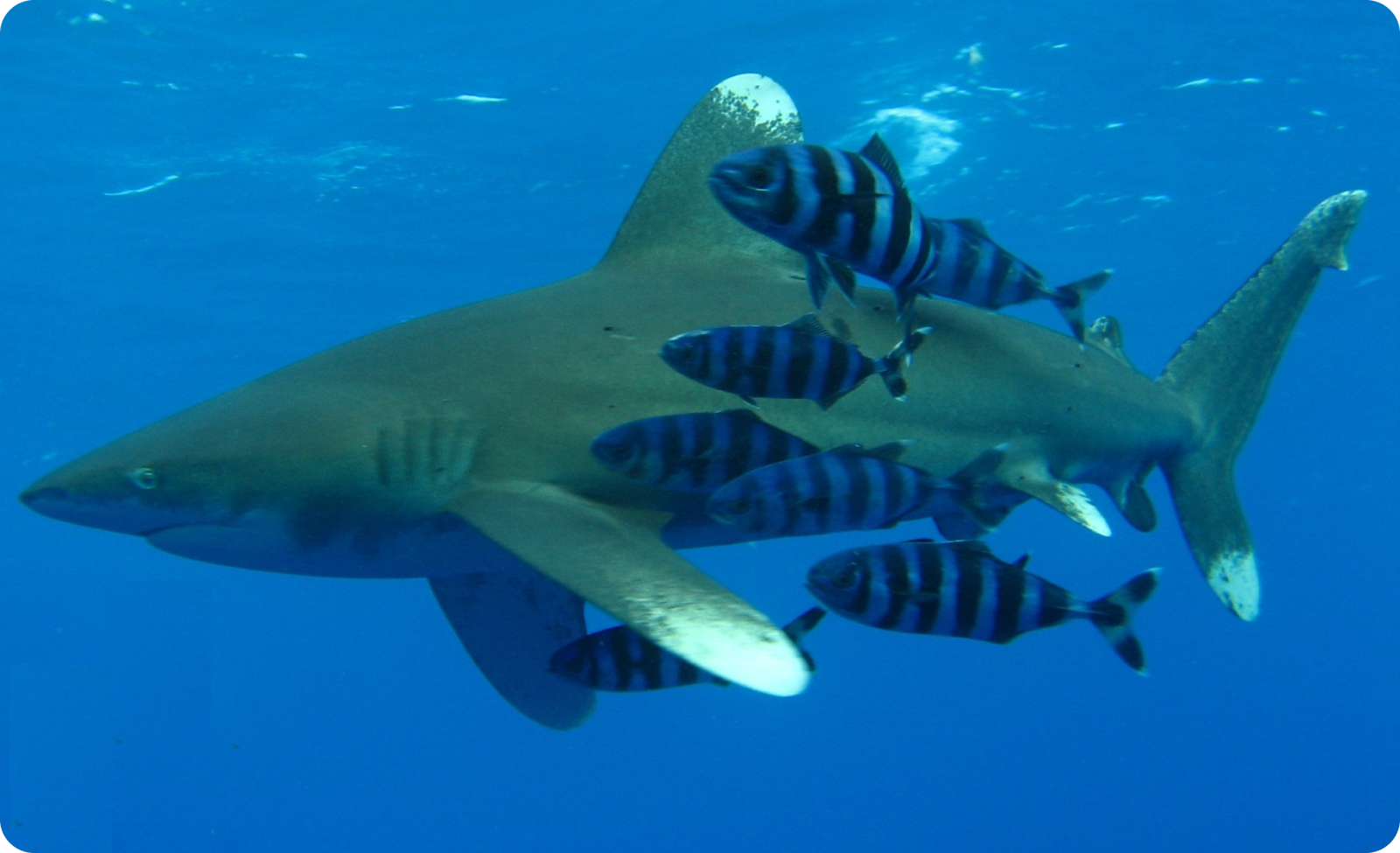
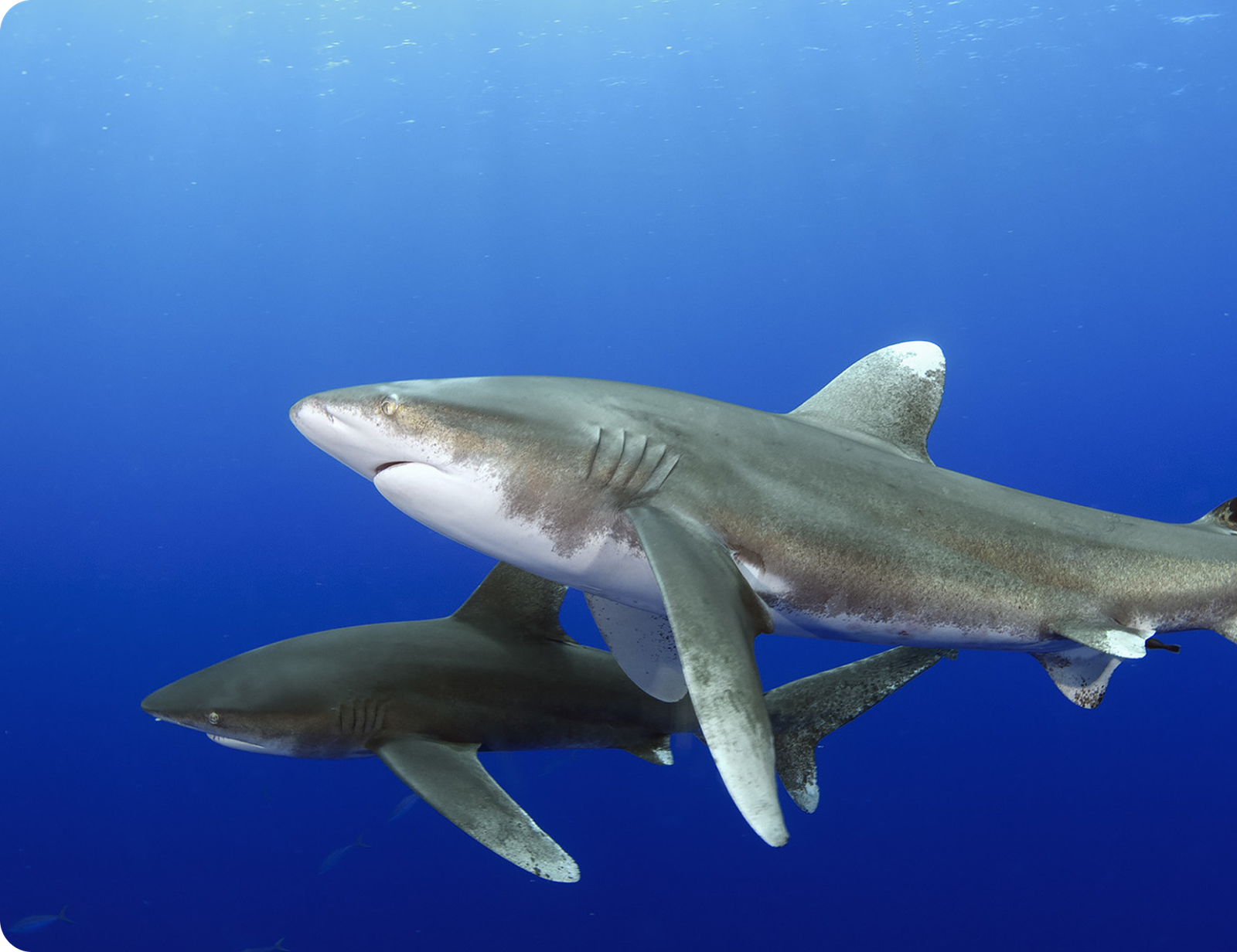
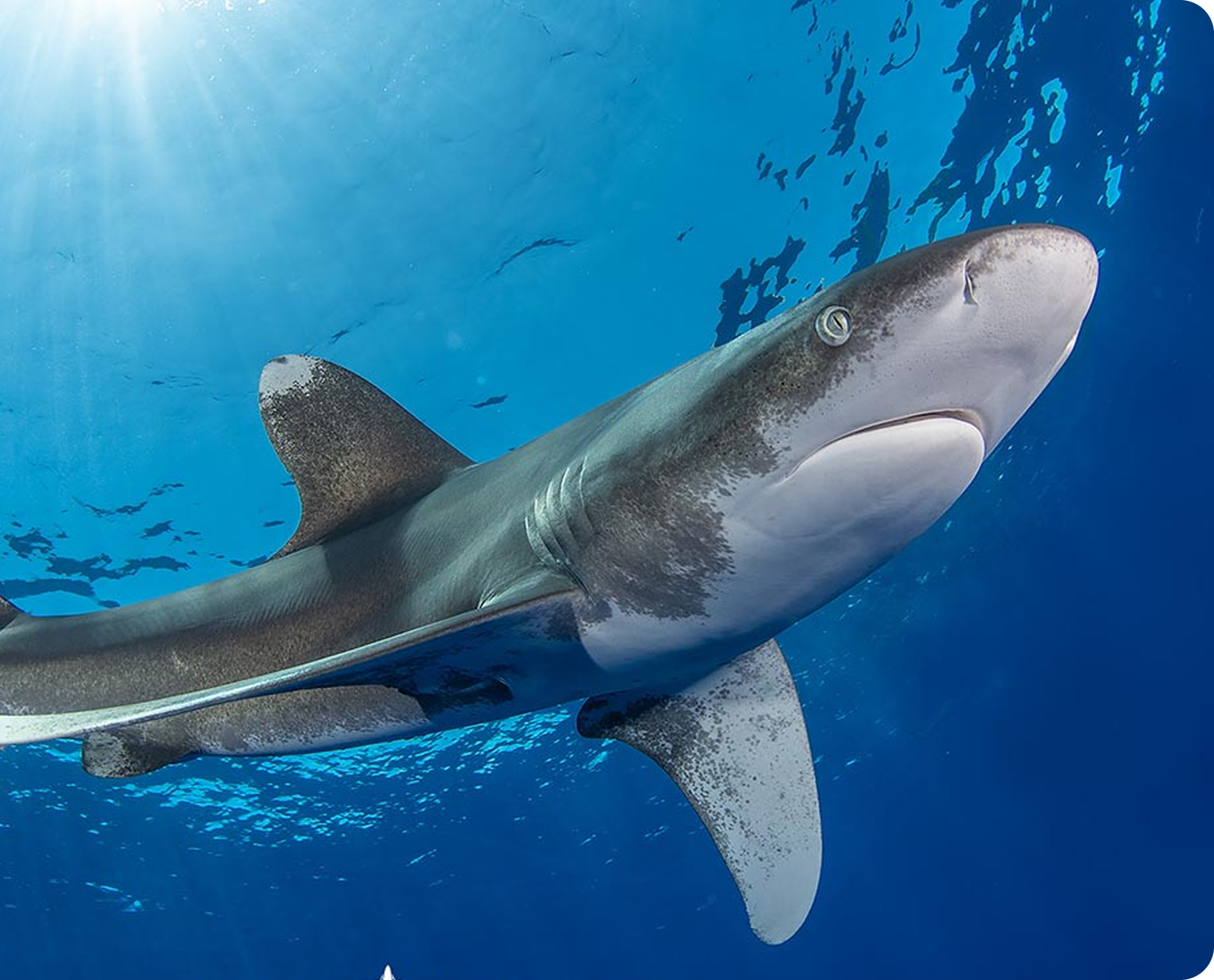
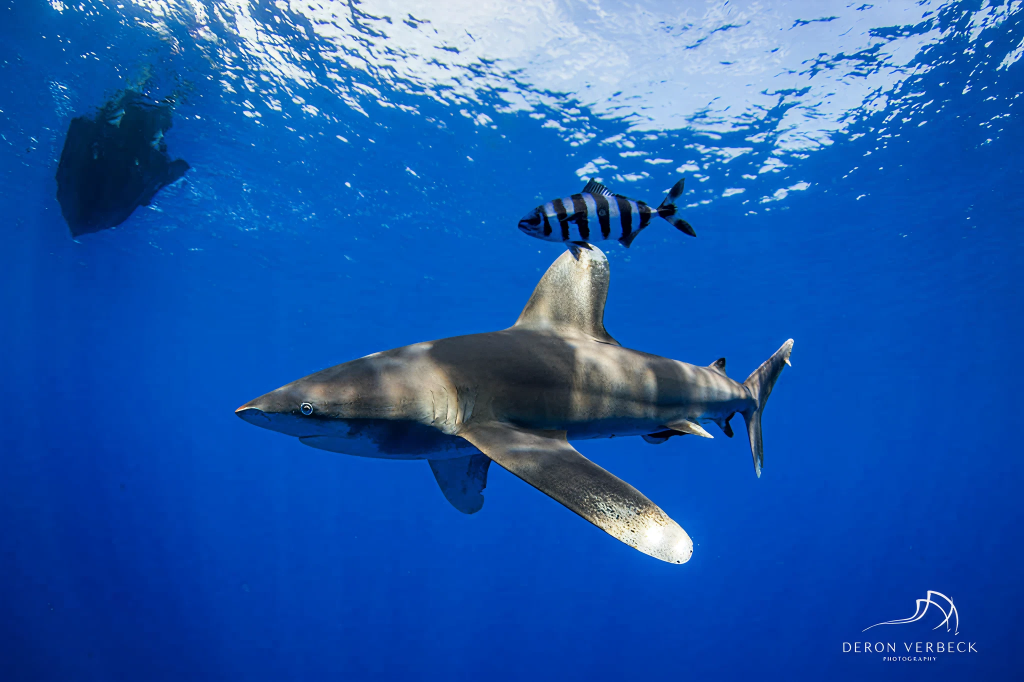
The oceanic whitetip shark (Carcharhinus longimanus) is often found offshore in the open waters of all tropical oceans worldwide. This is the only oceanic shark of its genus. They can easily be confused with silky sharks (C. falciformis), coastal blacktip sharks (C. limbatis), and Galapagos sharks (C. galapagensis). A fundamental way to identify oceanic whitetips is their unique white-mottled markings at the tips of their dorsal (top), pectoral (side), and caudal (tail) fins.
The Oceanic White Tip Shark
QUICK FACTS
LENGTH
Up to 13 feet
LIFESPAN
Up to 25 years
THREATS
Bycatch & International Harvest
Status and Protection
In 2018, the oceanic whitetip was listed as threatened under the Endangered Species Act (ESA). The International Union for Conservation Nature (IUCN) lists them globally as critically endangered, meaning they face an extremely high risk of extinction [1]. It is known that their populations have dramatically declined due to bycatch in commercial fisheries combined with the rise in demand for shark fins internationally [2]. However, there is not much research currently available about the population dynamics of these sharks.
In 1996, the International Commission for the Conservation of Atlantic Tunas (ICCAT) began requesting shark data that included the oceanic whitetip shark. These international reports have included data from countries such as Brazil, Mexico, Spain, St. Lucia, the United States, and even Japanese long-line fleets. The overall evaluation of their conservation is limited by the standardized catch and abundance data and the resulting absence of stock assessment studies. As more fisheries report to ICCAT, the prospects for assessing the impact on oceanic whitetip stocks will improve.
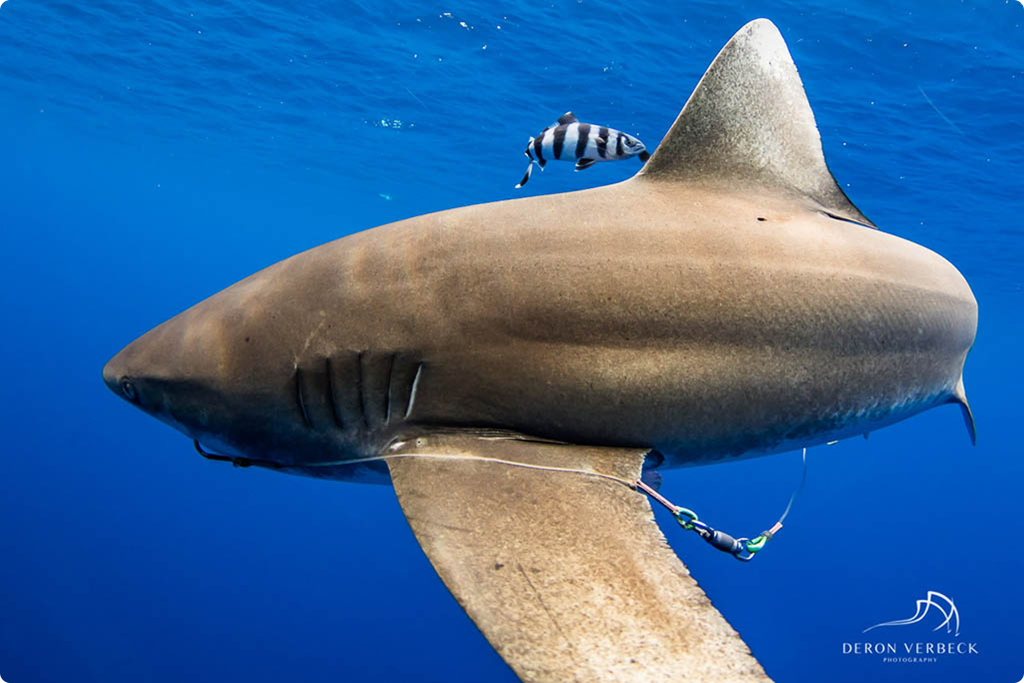
DAR is currently collaborating with the Hawai‘i Shark Tagger team to help with photo identification of the oceanic whitetip sharks to better understand their population size and structure around Hawaiʻi [2]. The Shark Tagger team uses photographic identification methods using fin markings, coloration, and scarring to establish baseline information on oceanic whitetip shark demographics in the Hawaiʻi region. Please submit your photos to the Shark Tagger website.
Diet and Habitat
Oceanic whitetip sharks are a top predator species but are opportunistic feeders. This means they feed on various prey and often eat what’s available, they have also been observed eating the scraps of Pilot Whale catches. Their typical diet consists of bony fish and cephalopods, such as squid, cuttlefish, and octopus. They have also been seen foraging on large pelagic game fish, like tuna, and prey on sea birds, sharks and rays, marine mammals, and marine debris [2].
The oceanic whitetip shark is found worldwide in tropical and subtropical waters [9]. They are found from surface level to at least 200 meters in depth and can be found in pelagic (open ocean) waters. However, catch rates suggest that oceanic whitetips are found in shallow waters more commonly than other pelagic sharks. Little is known about the overall migrations and movements of these species.
Reproduction
Oceanic whitetip sharks live up to 25 years. They give birth every other year to a litter of pups ranging from one to 14. Their gestation period, or when the female is pregnant, is 10 to 12 months, and when they do give birth, it is live birth. The females take about four to five years to reach sexual maturity [4].
There are few studies on the reproduction of oceanic whitetip sharks. A study found that there is no specific parturition period, when the females give birth, in the North Pacific. There were pregnant individuals observed almost every month of the year [4].
Threats – Bycatch and International Harvest
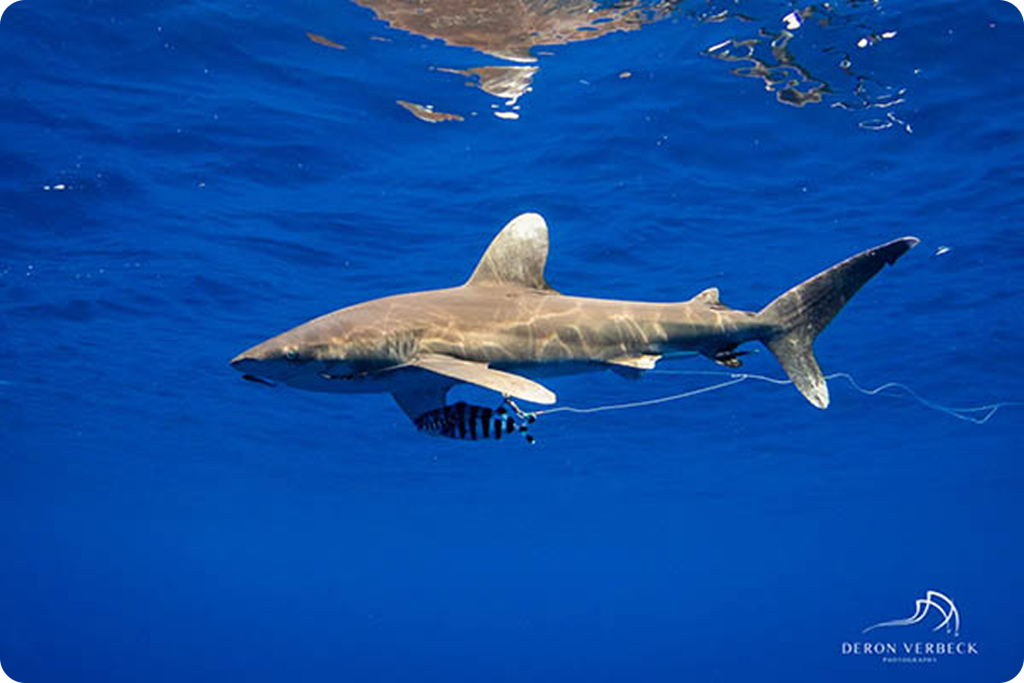
Oceanic whitetip sharks are highly susceptible to being caught as bycatch in many Hawai‘i fisheries especially longline, purse seine, and gillnet [2]. Oceanic whitetips are also targeted internationally and illegally for several different products. Their meat and skin are used for human consumption, their hides can be used for leather, and their liver oil can provide Vitamin A. Their fins are the most highly valued in the international trade for shark products. Many consider shark fin soup a delicacy, prepared by boiling the fin cartilage until it breaks into long stringy strands that look like noodles. It is illegal to possess, sell, offer for sale, trade, or distribute shark fins anywhere in Hawai‘i (HAR 188-40.7). Anyone who sees any of these activities is asked to call the DLNR hotline at 643-DLNR (643-3567) or to report it via the free DLNRTip app.
These populations have been declining due to these issues but, because the oceanic whitetip species is highly migratory, it is hard to interpret trends, overall impacts, and remaining numbers for these sharks.
Literature Cited
1. Young, C.N., Carlson, J., Hutchinson, M., Hutt, C., Kobayashi, D., McCandless, C.T., Wraith, J. (2017, December). Status review report: oceanic whitetip shark (Carcharhinius longimanus). Final Report to the National Marine Fisheries Service, Office of Protected Resources.
2. NOAA Fisheries (2023, August 30). Oceanic Whitetip Shark.
3. SharkTaggers. (2019). Hawai‘i community tagging program: HCTP. Hawai‘i Community Tagging Program.
4. Seki T., Taniuchi T., Nakano H. and Shimizu M. (1998). Age, growth and reproduction of the oceanic whitetip shark from the Pacific Ocean.
5. Maui Ocean Center. (2023). Scalloped Hammerhead Shark.
6. Miller P., Domingo A., Forselledo R., & Mas F. (2022). Scalloped Hammerhead.
7. NOAA Fisheries (2023, January 30). Scalloped Hammerhead Shark.
8. William T. White, Shannon Corrigan, Lei Yang, Aaron C. Henderson, Adam L. Bazinet, David L. Swofford, Gavin J. P. Naylor. (2018, January 1). Phylogeny of the manta and devilrays (Chondrichthyes: Mobulidae), with an updated taxonomic arrangement for the family.
9. NOAA Fisheries (2023, September 11). Giant Manta Ray.
10. Marshall, A.D., Compagno, L.J.V., and Bennett, M.B. (2009). Redescription of the genus Manta with resurrection of Manta alfredi (Krefft, 1868) (Chondrichthyes; Myliobatoidei; Mobulidae). Zootaxa.
11. Kashiwagi T., Marshall A.D., Bennett M.B., Ovenden J.R. (2012, July). The genetic signature of recent speciation in manta rays (Manta alfredi and M. birostris).
12. Miller, M.H., and C. Klimovich. (2017, September 1). Endangered Species Act Status Review Report: Giant Manta Ray (Manta birostris) and Reef Manta Ray (Manta alfredi). Report to National Marine Fisheries Service, Office of Protected Resources, Silver Spring, MD.
13. Kitchen-Wheeler A-M. (2013). The behavior and ecology of Alfred mantas (Manta alfredi) in the Maldives (Doctoral dissertation). Newcastle University, School of Biology. April 2013.
Explore two other important species
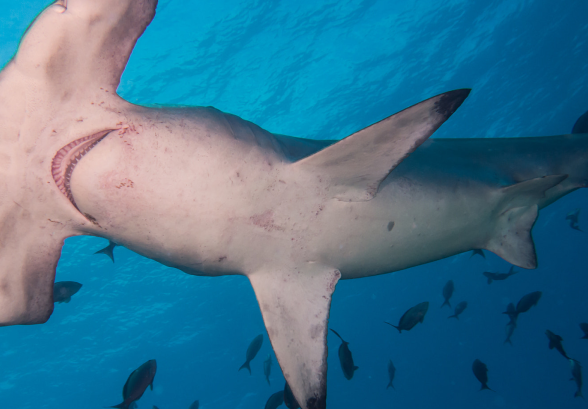
Scalloped Hammerhead Shark
Hawaiian name: ka manō kihikihi
Scientific name: Sphyrna lewini