Learn & Explore/Species/Sharks & Rays/Giant Oceanic Manta Ray
Giant Oceanic Manta Ray
Hawaiian name: ka hāhālua
Scientific name: Mobula birostris
Description and Natural History
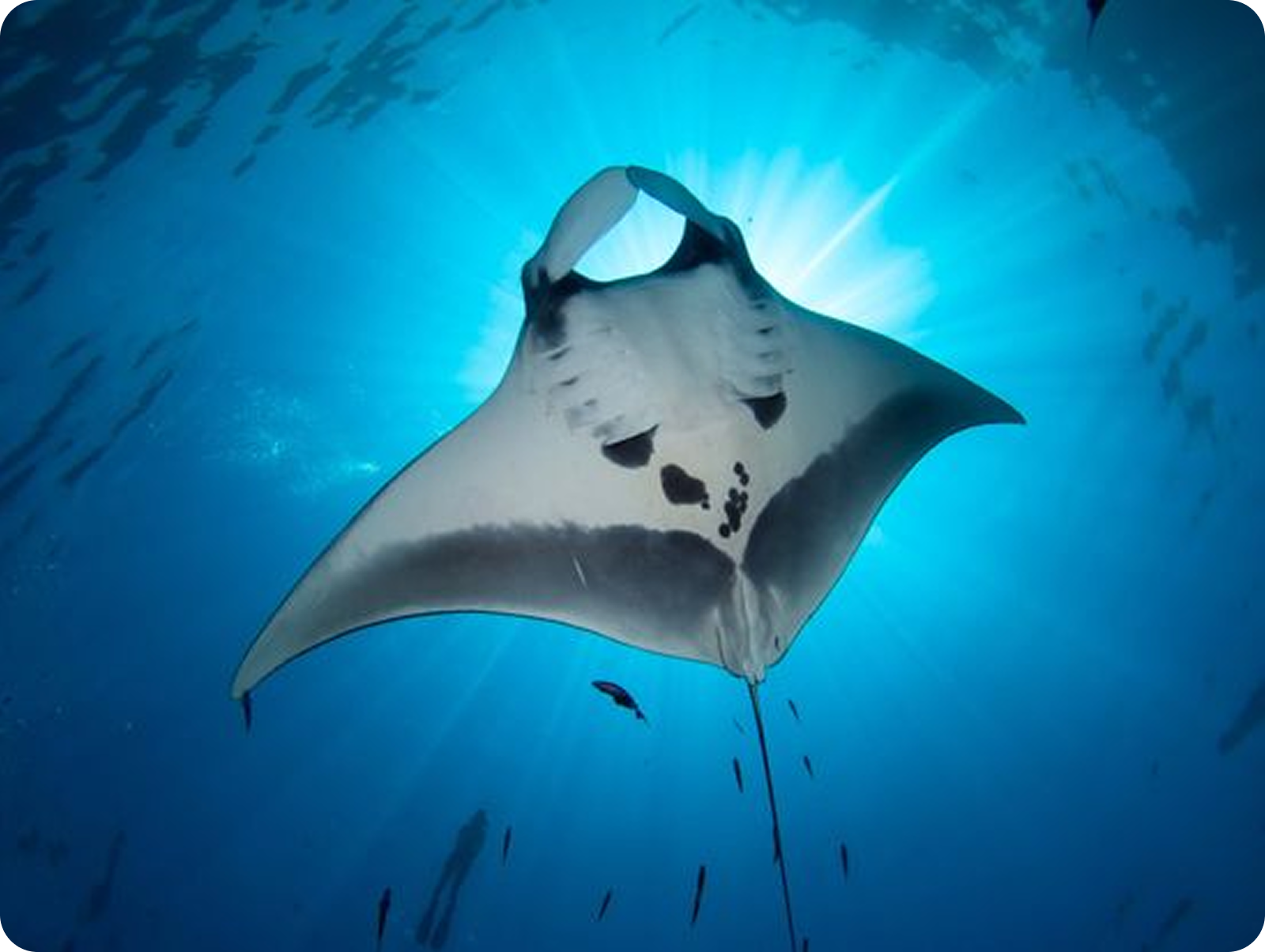
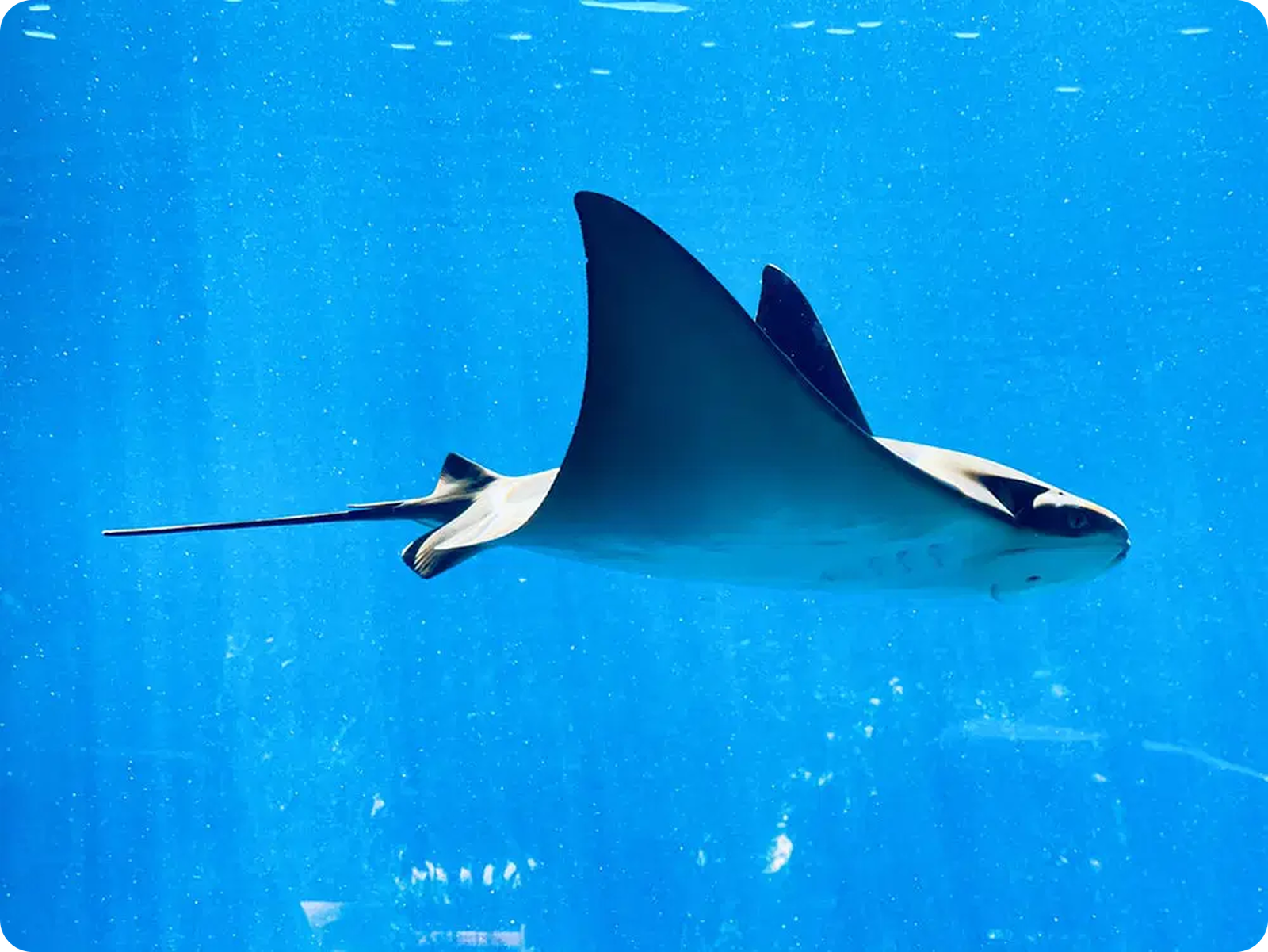
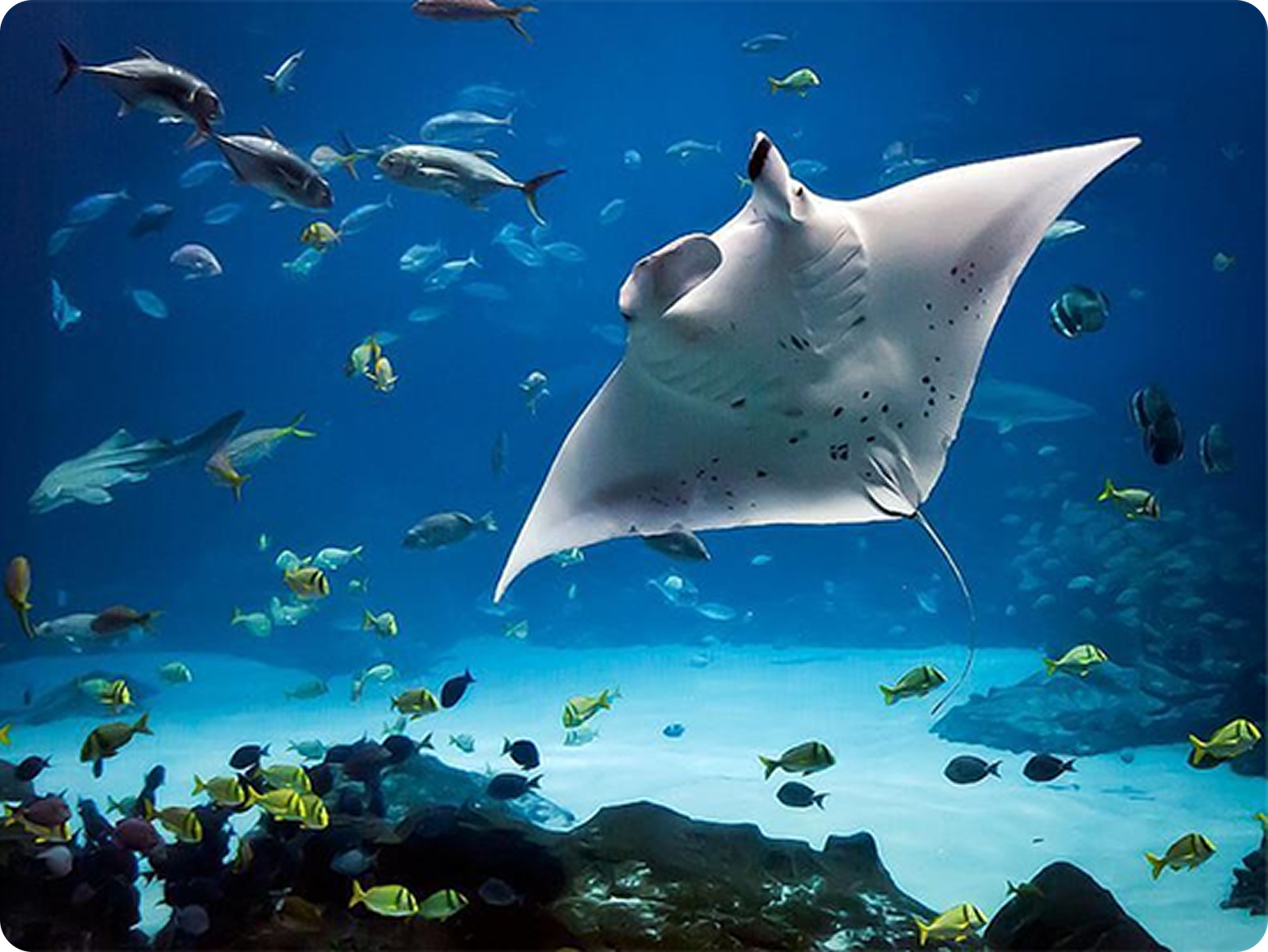
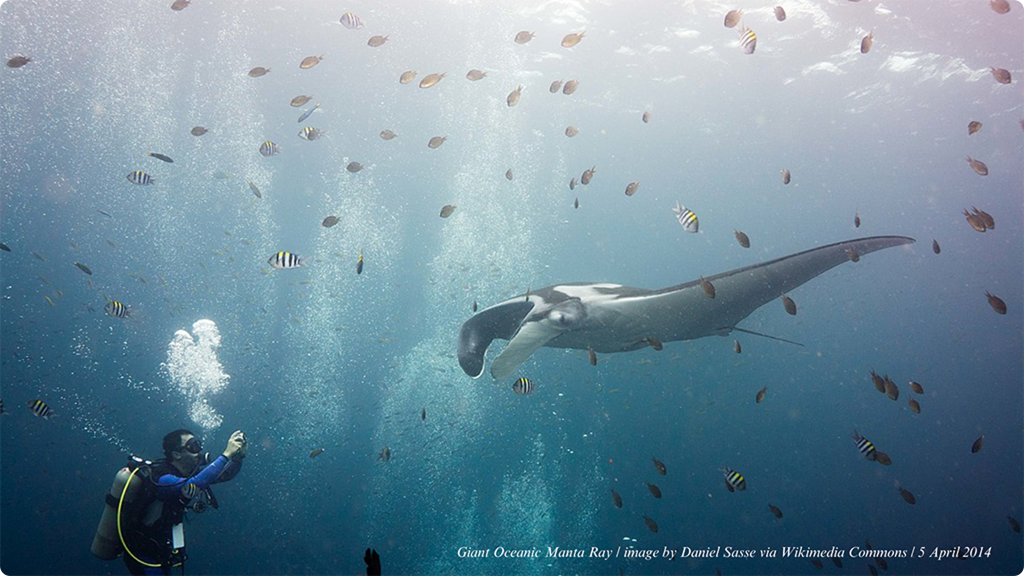
Giant oceanic manta rays (Mobula birostris) [8] are cold-blooded fish with flat diamond-shaped bodies. The oceanic manta is the world’s largest ray, with a wingspan of up to 26 feet across and weighing up to 5,300 pounds [9]. They can live over 45 years, based on photo-identification records. They are often solitary most of their lives, but aggregate around food resources, cleaning stations, or in mating trains. They have the largest brain-to-body mass of any fish, making them very intelligent. They each have a spot pattern on their ventral (under) side that makes each one unique, like a human’s fingerprint, allowing them to be monitored over time using photo identification. In 2009, Dr. Andrea Marshall and her team described the visually distinct differences between oceanic mantas and reef mantas [10]. In 2011, Dr. Tom Kashiwagi and his colleagues analyzed and confirmed the genetic difference between the two species [11].
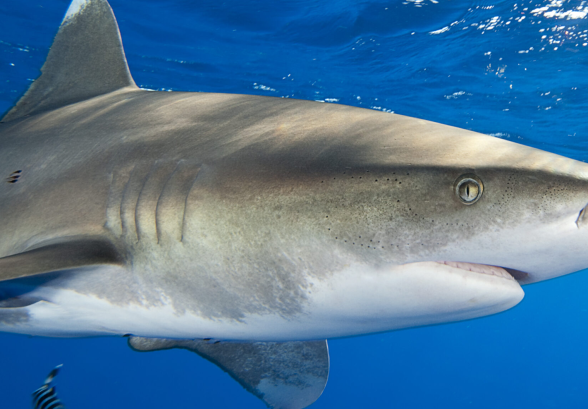
The Oceanic White Tip Shark
QUICK FACTS
LENGTH
Up to 26 feet
LIFESPAN
Up to 45 years
THREATS
International Fishing, Boat Strikes, Bycatch, Entanglement
Status and Protection
In 2018, the oceanic manta ray was listed as threatened under the Endangered Species Act [12]. Globally, their populations have declined primarily due to bycatch in commercial fisheries combined with the rise in demand for gill rakers internationally [9]. Due to its pelagic nature, the oceanic manta ray can be difficult to study, so there is still much to learn about their ecology and home range.
Diet and Habitat
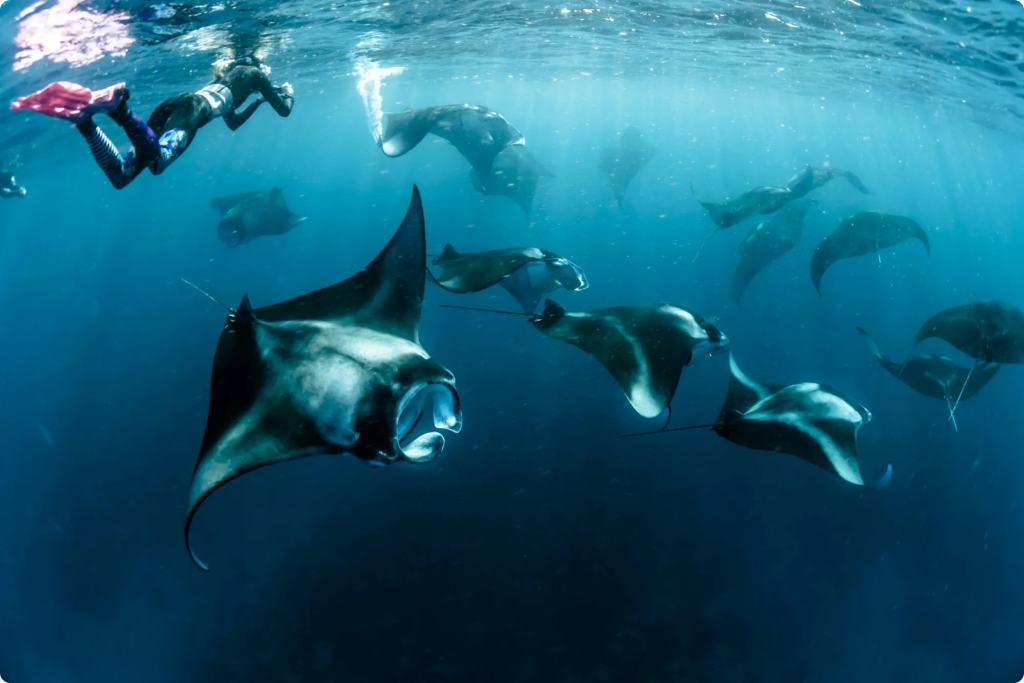
These large, filter-feeding elasmobranchs (sharks, skates and rays) are thought to spend most of their time in deep water but are occasionally seen coming close to shore. They primarily feed on plankton by creating a funnel with their cephalic fins in an “O” shape and then opening their mouths. This allows them to push large volumes of water, through their mouth and over their gill rakers, which filter and divert the plankton into their stomach. They are commonly seen barrel rolling and creating feeding chains to maximize feeding efficiency [9].
What is plankton?
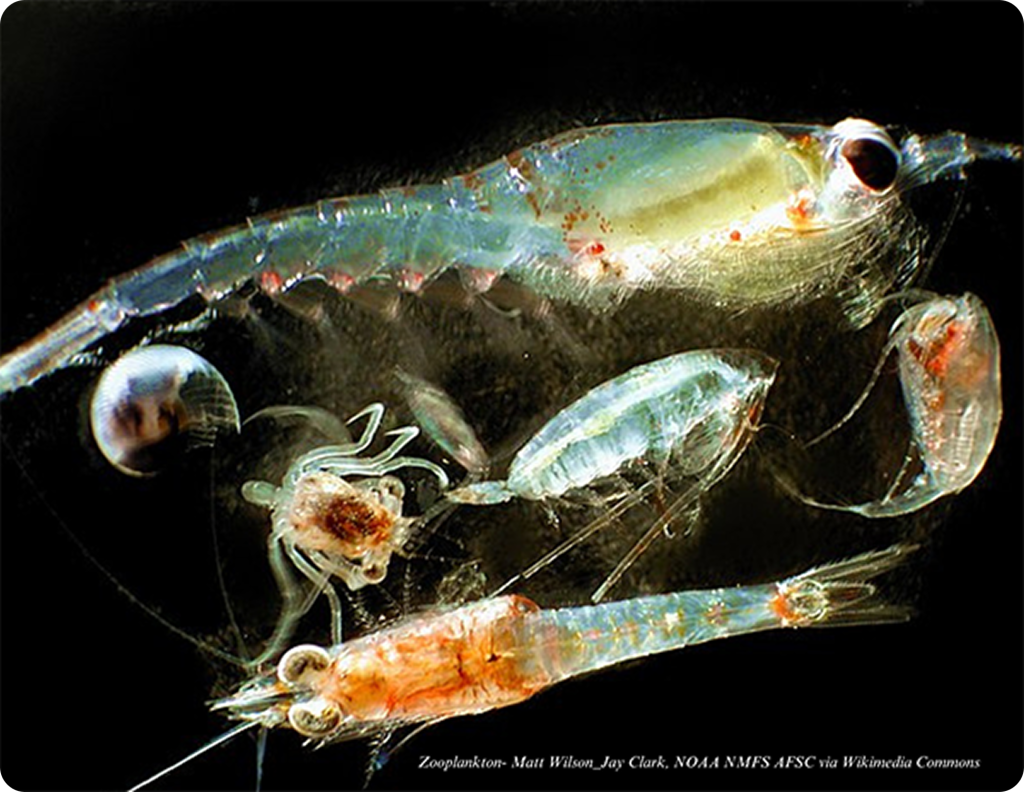
Plankton is any organism that drifts in the ocean currents. There are two types of plankton, phytoplankton (plankton that photosynthesize) and zooplankton (plankton that eat smaller plankton). Phytoplankton are at the base of the oceanic food chain and some zooplankton engage in one of the earth’s largest migrations. Billions of these tiny creatures swim vertically as a mass movement from the sea’s depths towards the ocean’s surface. They swim upward as far as 1,500 feet each evening and then return to the dark depths in the morning to avoid predation.
Reproduction
Although oceanic mantas are suspected to live beyond 45 years, very little is known about their life history. It was found that in their close cousins, the reef-associating manta rays, gestation (how long the female is pregnant) takes 12-13 months [13]. They have among the lowest fecundity of all elasmobranchs (sharks, skates, and rays), typically giving birth to a single pup every couple years. Reef-associating manta rays have been born in captivity measuring just under 6 feet wide [13]. A wild birth has never been observed; please record this event if you see it.
Threats
The oceanic manta rays are often targeted by global fisheries for their highly prized gill rakers or accidentally caught as bycatch. Due to their large bodies, they are highly susceptible to entanglement, often associated with the purse-seine and artisanal gillnet fisheries and recreational fisheries in nearshore waters [9]. The international fishing trade catches oceanic mantas strictly for their gill rakers, then sells them illegally for “healing tinctures”. They can also be injured from boat strikes while feeding or traveling just below the surface. They can also become entangled in nets or other fishing gear, accidentally ingest microplastics, or lose prey resources due to ocean acidification.
The only natural predators to oceanic manta rays are presumed to be large sharks and killer whales based on photo evidence of bites
If you see an oceanic manta ray, please do not disturb their natural behavior by touching or chasing them.
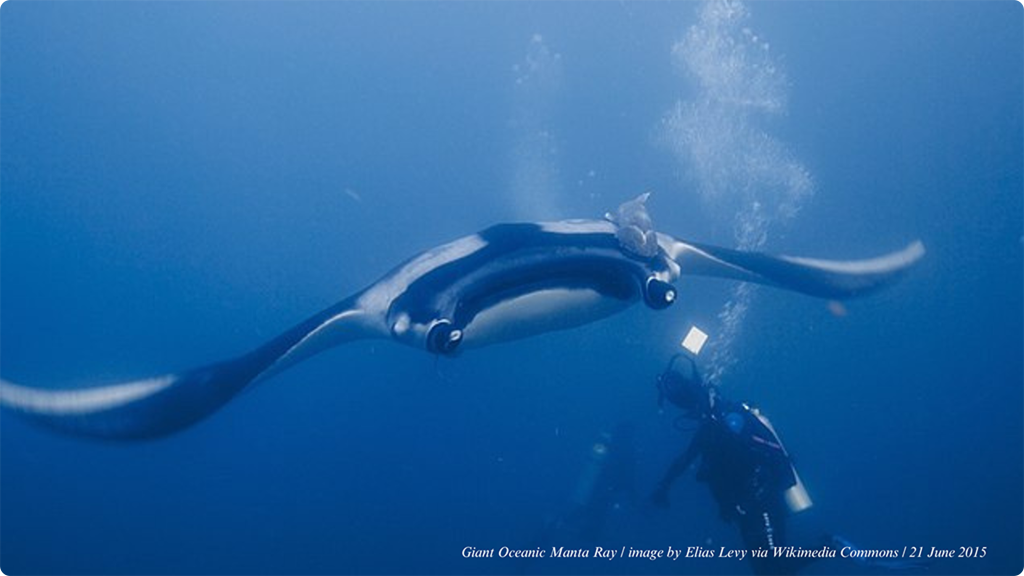
Oceanic manta rays: The dorsal surface (topside) of the oceanic manta ray is dark with two white triangular markings and marked without a gradient. The line of separation between these two white areas forms a “T.” Their ventral (underside) has a white coloration with black spots clustered below their gills (but not between the gills). The edges of their bodies tend to have dark margins including their cephalic fins and around their mouth. See image below.
Reef manta rays: The reef manta ray has a dark dorsal surface also with two lighter areas on top of the head, forming a gradient of its dark back coloration to white or gray, making a sort of “Y” in the darker back area between the patches. The reef manta ray also has a white belly, often with dark spots primarily between and below the gills but also along the margins of the belly. See image below.
Help us identify and track mantas by reporting any sightings.
You can report sightings by going on Manta Pacific Research Foundation or Hawai‘i Association for Marine Education and Research websites. If able, please take photos of the underside of the manta, showing their spot pattern. They will help you identify which manta species it is, and if it is a new one, you can name it
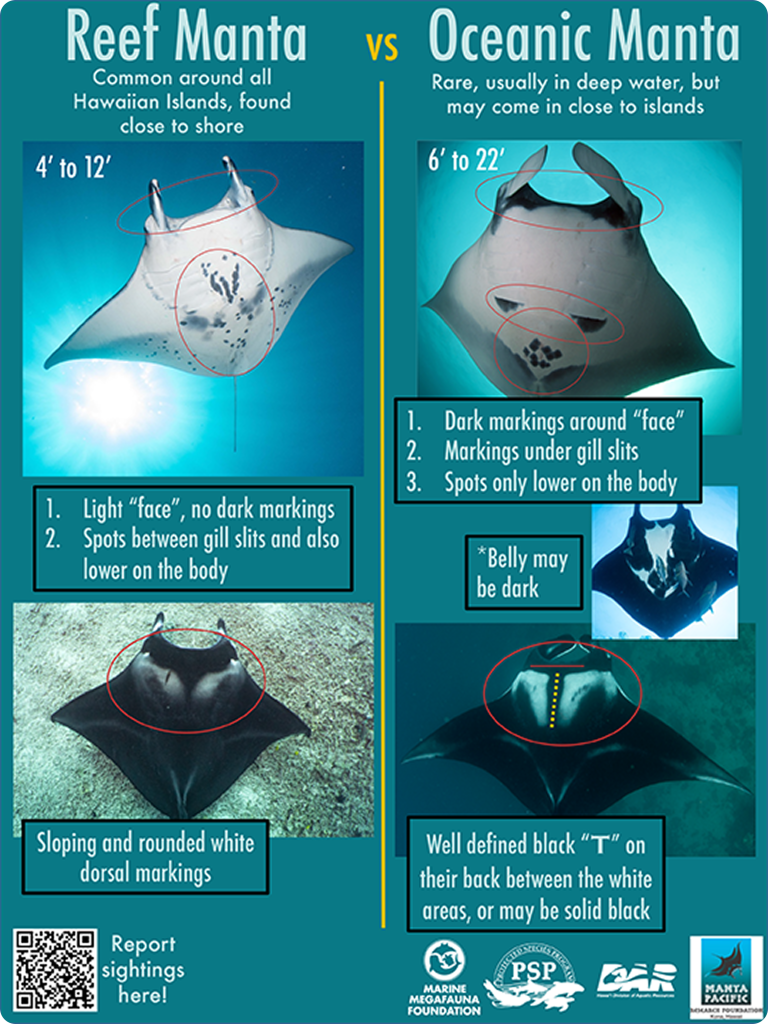
How to spot key differences between the oceanic manta ray (Mobula birostris) and the reef manta (Mobula alfredi) (hāhālua)
Check out a video about the Giant Oceanic Manta Ray, presented by the PSP program.
Literature Cited
1. Young, C.N., Carlson, J., Hutchinson, M., Hutt, C., Kobayashi, D., McCandless, C.T., Wraith, J. (2017, December). Status review report: oceanic whitetip shark (Carcharhinius longimanus). Final Report to the National Marine Fisheries Service, Office of Protected Resources.
2. NOAA Fisheries (2023, August 30). Oceanic Whitetip Shark.
3. SharkTaggers. (2019). Hawai‘i community tagging program: HCTP. Hawai‘i Community Tagging Program.
4. Seki T., Taniuchi T., Nakano H. and Shimizu M. (1998). Age, growth and reproduction of the oceanic whitetip shark from the Pacific Ocean.
5. Maui Ocean Center. (2023). Scalloped Hammerhead Shark.
6. Miller P., Domingo A., Forselledo R., & Mas F. (2022). Scalloped Hammerhead.
7. NOAA Fisheries (2023, January 30). Scalloped Hammerhead Shark.
8. William T. White, Shannon Corrigan, Lei Yang, Aaron C. Henderson, Adam L. Bazinet, David L. Swofford, Gavin J. P. Naylor. (2018, January 1). Phylogeny of the manta and devilrays (Chondrichthyes: Mobulidae), with an updated taxonomic arrangement for the family.
9. NOAA Fisheries (2023, September 11). Giant Manta Ray.
10. Marshall, A.D., Compagno, L.J.V., and Bennett, M.B. (2009). Redescription of the genus Manta with resurrection of Manta alfredi (Krefft, 1868) (Chondrichthyes; Myliobatoidei; Mobulidae). Zootaxa.
11. Kashiwagi T., Marshall A.D., Bennett M.B., Ovenden J.R. (2012, July). The genetic signature of recent speciation in manta rays (Manta alfredi and M. birostris).
12. Miller, M.H., and C. Klimovich. (2017, September 1). Endangered Species Act Status Review Report: Giant Manta Ray (Manta birostris) and Reef Manta Ray (Manta alfredi). Report to National Marine Fisheries Service, Office of Protected Resources, Silver Spring, MD.
13. Kitchen-Wheeler A-M. (2013). The behavior and ecology of Alfred mantas (Manta alfredi) in the Maldives (Doctoral dissertation). Newcastle University, School of Biology. April 2013.
Explore two other important species
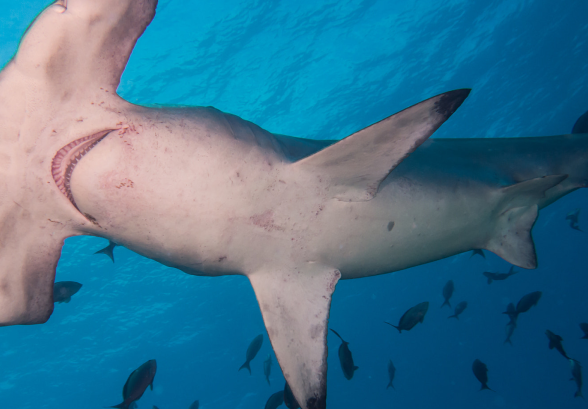
Scalloped Hammerhead Shark
Hawaiian name: ka manō kihikihi
Scientific name: Sphyrna lewini